
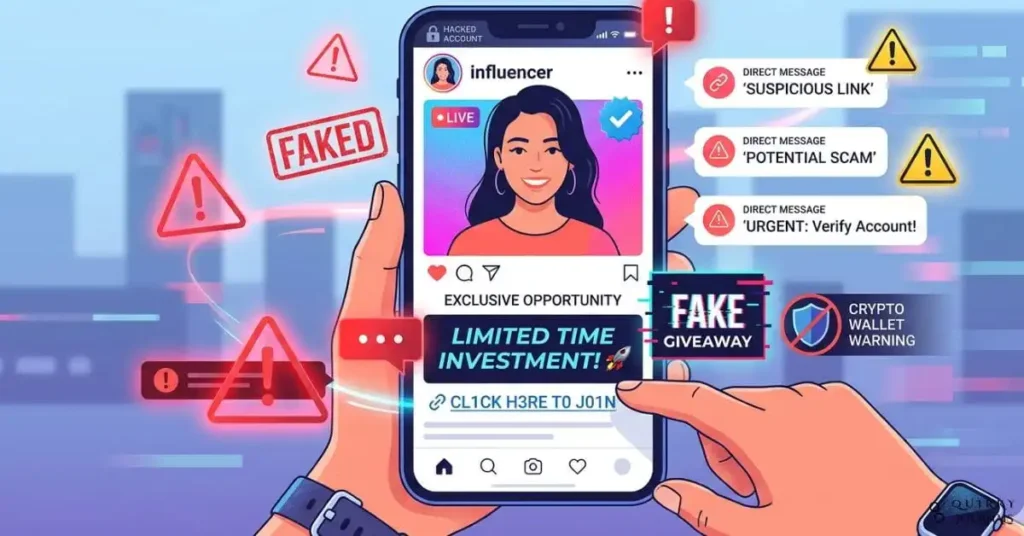
9 Influencer Scams to Avoid: How to Protect Your Money Online
Social media has changed how we discover products, make financial decisions, and choose who to trust. Unfortunately, it has also created a fertile environment for scams. Influencer scams are now among the most common and costly forms of online fraud, targeting everyone from casual followers to aspiring content creators.
The influencer marketing industry is booming. As platforms like Instagram, TikTok, and YouTube continue to grow, so does the number of bad actors exploiting the trust audiences place in online personalities. Some scams are obvious. Others are frighteningly convincing. Knowing the difference can protect both your bank account and your reputation.
This guide walks through nine of the most prevalent influencer scams circulating online today. For each one, you will learn how the scam works, what red flags to look for, and exactly what you can do to protect yourself. Whether you follow influencers for entertainment, shop based on their recommendations, or aspire to work with brands yourself, this information is essential reading.
What Are Influencer Scams and Why Are They So Effective?
An influencer scam is any deceptive scheme that exploits the credibility, reach, or appearance of a social media personality to extract money, personal information, or free goods from victims. According to GRIN, ‘as the influencer landscape continues to flourish, so too do the opportunities for bad actors to prey on the trust and aspirations of social media users and budding content creators.’
These scams work for a simple reason: trust. People follow influencers because they like them, relate to them, or believe they are experts in a given area. That emotional connection lowers the psychological defences that would normally flag suspicious offers. When your favourite fitness creator recommends a supplement, you are far more likely to buy it than if you saw the same product in a banner advertisement.
Furthermore, social media platforms are designed to feel personal. Direct messages, comment replies, and story interactions create a sense of intimacy that scammers exploit brilliantly. Consequently, victims often feel a genuine connection to the person scamming them, making it harder to recognise the fraud and even harder to admit it afterwards. Understanding this psychology is the first step to protecting yourself.
Scam 1: Fake Investment and Crypto Opportunities
This is one of the most financially devastating influencer scams. An influencer, or someone impersonating one, promotes an investment opportunity that promises extraordinary returns. Cryptocurrency, forex trading, and ‘passive income’ schemes are the most common vehicles. The messaging is always urgent and exclusive. You are being let in on something special.
According to Security.org, ‘fake endorsements and giveaways are also relatively common. Your favourite celebrity may even seem to endorse a crypto opportunity on social media.’ These endorsements are either entirely fabricated or the influencer’s account has been hacked. Either way, the investment does not exist or is a Ponzi scheme designed to collapse as soon as early investors cash out.
The red flag here is simple but often ignored. Any investment promising guaranteed high returns with little or no risk is a scam. Security.org advises you to ‘avoid opportunities that guarantee high returns with little or no risk. If an investment sounds too good to be true, it is.’ Always verify investment opportunities directly through regulated financial institutions, and never send crypto to an address provided through social media.
Scam 2: Fake Giveaways and Prize Notifications
Fake giveaway scams are everywhere on social media, and they are remarkably effective. A post appears claiming you have won a prize. It may look like it comes from a brand you follow or a well-known influencer. To claim your prize, you simply need to provide your personal details, pay a small shipping fee, or click a link.
None of it is real. The personal details you provide are harvested for identity theft. The shipping fee goes straight into the scammer’s pocket. The link installs malware on your device or takes you to a phishing site designed to steal your login credentials. According to GRIN, verifying contact information against official platforms is an essential first step whenever you receive an unexpected prize notification.
Protecting yourself requires just two checks. First, go directly to the official social media profile of the brand or influencer running the supposed giveaway. Check whether they have announced it there. Second, remember that legitimate giveaways never ask you to pay anything to claim a prize. If there is a fee, it is a scam. No exceptions.
Scam 3: Fake Brand Collaboration Offers Targeting Creators
This scam specifically targets aspiring and established content creators. You receive a direct message from what appears to be a brand offering a paid collaboration. The message is often professionally written and references your content specifically, making it feel legitimate. However, something is always slightly off.
According to NaoHMS Media, one of the most important steps is to ‘vet the brand’s website and social media account. Look up the contact’s LinkedIn. Verify if their social media buys engagement.’ Fake brands often have polished-looking websites that were created recently and have no verifiable physical address, phone number, or professional history. The collaboration offer may ask you to purchase products upfront and promise reimbursement that never arrives.
The red flags to watch for include email addresses that do not match the brand’s official domain, requests for your bank details before any contract is signed, and pressure to respond quickly. Additionally, as GRIN recommends, ‘Google the brand or individual’ and look for consistent branding and a well-maintained online presence. Legitimate brands have a verifiable track record. Fake ones do not.
Common Influencer Scam Types: Quick Reference Guide
| Scam Type | Primary Target | Key Red Flag | Immediate Action |
| Fake Investment / Crypto | Followers seeking income | Guaranteed returns promised | Never invest via social media links |
| Fake Giveaway | General followers | Asked to pay shipping or share details | Check the brand’s official profile only |
| Fake Brand Collab | Content creators | No contract, upfront purchase required | Google the brand + verify the domain |
| Overpriced Coaching | Aspiring entrepreneurs | Vague deliverables, pressure tactics | Demand a full written curriculum |
| Fake Easy Money Jobs | Job seekers | Unrealistic hourly rates promised | Research the company independently |
| Bot Followers / Fraud | Advertisers and brands | High followers, tiny engagement | Check engagement rate per post |
| Phishing via DM | All social media users | Link to an unfamiliar login page | Never click unsolicited DM links |
| Paid-for Reviews | Shoppers seeking advice | No disclosure of sponsorship | Check FTC disclosure compliance |
| Fake Brand New Hustle | Side-hustle seekers | Obscure, unverifiable income method | Search for independent reviews first |
Scam 4: Overpriced Coaching Programs That Teach Nothing
High-ticket coaching programs are a booming business, and not all of them are scams. However, a significant number of influencer-promoted coaching courses charge thousands of pounds or dollars for content that is either generic, freely available elsewhere, or simply non-existent. These programs are particularly insidious because they wrap a financial scam in the language of personal development.
As Clever Girl Finance explains, ‘they use pressure tactics like: if you don’t invest in yourself, you don’t want success. But once you pay, there’s little real strategy or actionable support.’ The pressure tactics are designed to bypass rational decision-making. Phrases like ‘limited spots,’ ‘doors closing soon,’ and ‘this is a once-in-a-lifetime opportunity’ create artificial urgency. Genuine educators do not need to pressure you.
Protecting yourself starts with asking specific questions before handing over any money. Request a detailed, written curriculum. Ask for the names of past students who achieved the promised results. Search for independent reviews on platforms such as Reddit or Trustpilot. If the influencer cannot explain exactly what you will receive for your money, walk away immediately.
Scam 5: Fake Easy Money Job Offers
These scams appear in your social media feed as videos or posts claiming you can earn hundreds of pounds or dollars per day doing something remarkably simple. The work is described as something anyone can do, requiring no experience and minimal time. The influencer often presents themselves as someone who escaped a nine-to-five job using exactly this method.
As Clever Girl Finance notes, ‘companies that pay large sums of money have a very strict application process. Likewise, finding clients who will pay over $100 an hour requires high-level marketing and sales skills that they don’t teach you.’ The reality is always hidden behind a paywall. You pay for access to the ‘method,’ and then discover the income claims were wildly exaggerated or entirely fabricated.
The key red flag is any income promise that seems disconnected from the effort required. Real freelance income, real remote jobs, and real side hustles all require genuine skill, time, and effort to build. Whenever you see specific dollar amounts promised per day or week for vague or minimal tasks, treat it as a scam until proven otherwise. Search independently for reviews of the specific program or method before considering a purchase.
Scam 6: Influencer Fraud and Fake Follower Counts
This scam operates slightly differently. Rather than targeting individual consumers, it targets brands and businesses looking to hire influencers for marketing campaigns. Fraudulent influencers purchase fake followers and engagement to inflate their apparent popularity, then charge brands for access to an audience that does not really exist.
According to impact.com, ‘influencer fraud is the process of social media users purchasing fake engagement and followers to give the perception of success and popularity. Some users do this to attract new followers and grow organically, while others do this to lure brands into partnerships.’ These fake profiles are often as blank as possible, sometimes using random numbers as usernames. However, what matters to the fraudster is the headline follower number.
Spotting this scam requires looking beyond the follower count. As impact.com advises, ‘pay attention if an influencer’s follower count drastically increased all of a sudden, especially if the influencer has a short history of content publication. Weigh their follower size versus their number of comments or likes.’ An account with 500,000 followers but only 100 comments per post has something seriously wrong with its engagement metrics. Tools such as HypeAuditor can help verify audience authenticity before committing marketing budget.
Scam 7: Phishing Links Delivered Through Direct Messages
Phishing scams have migrated from email into social media inboxes with great success. You receive a direct message, often appearing to come from a brand, influencer, or even a friend whose account has been compromised. The message contains a link and a compelling reason to click. Common pretexts include giveaway notifications, collaboration opportunities, or urgent account security warnings.
Clicking the link takes you to a fake login page that looks identical to the platform’s real page. When you enter your credentials, they are sent directly to the scammer. Your account is then taken over, used to continue the scam cycle, and potentially used to access any financial accounts linked to the same email address or password.
Protection against phishing is straightforward but requires consistent habits. Never click links in unsolicited direct messages, even if they appear to come from someone you know. Always navigate directly to a platform by typing its address in your browser. Furthermore, enabling two-factor authentication on all your social media and email accounts provides a critical additional layer of protection. Even if a scammer obtains your password, they cannot access your account without the second factor.
Red Flags Checklist: Is This Influencer’s Offer Legitimate?
| Question to Ask | Safe Answer | Danger Sign |
| Does the offer promise guaranteed returns? | No guaranteed returns mentioned | Yes, specific amounts guaranteed |
| Is there a signed contract before payment? | Contract provided upfront | Payment is required before the paperwork |
| Does the brand have a verified website with a history? | Website established, contact info matches | New site, no phone number, no address |
| Is the follower-to-engagement ratio healthy? | Roughly 1-5% engagement rate or above | Millions of followers, almost no comments |
| Has anyone independently reviewed this program? | Multiple third-party reviews found | No reviews or only testimonials on their own page |
| Does the collaboration ask you to buy first? | Free product sent or contract guarantees payment | You must purchase the product up front |
| Are income claims specific and verifiable? | Income is described as possible, not guaranteed | Specific dollar amounts per day promised |
| Is the DM link from an official account? | Matches verified official handle exactly | Slightly different username or unverified |
Scam 8: Fake Paid Review Programs Linked to Big Companies
This scam is particularly clever because it leverages the credibility of well-known brands. An influencer or advertisement claims that major companies, often naming Spotify, Netflix, Amazon, or similar household names, are paying people to review products, stream content, or perform simple tasks from home. The income promised is generous, and the work sounds minimal.
As Clever Girl Finance explains, ‘these programs usually don’t exist, or they require a lot more effort than they imply.’ The scam often requires you to pay a registration fee to access the ‘programme’ or to provide personal and banking details to set up your payment account. Neither the programme nor the promised income ever materialises.
Defending against this scam is simple. If any influencer claims that a specific named company is offering you a paid task, go directly to that company’s official website. Do not use any link provided in the post or video. Search the company’s careers page and help centre for any mention of the programme. Clever Girl Finance’s advice is direct: ‘always go directly to that company’s website to see if the programme is legitimate and read all the details.’ If it is not listed there, it does not exist.
Scam 9: The Brand New Side Hustle Nobody Has Heard Of
Every few months, a new ‘revolutionary’ side hustle emerges on social media. The influencer promoting it claims to have discovered an obscure method that almost nobody knows about. They show screenshots of earnings, film themselves on yachts or in luxury hotels, and promise that you can replicate their results by purchasing their guide, course, or membership programme.
According to Clever Girl Finance, the red flag for this type of scam is simple: ‘if they promise a large amount of money in a short amount of time, don’t believe the hype.’ Legitimate income methods, whether freelancing, reselling, content creation, or consulting, all require real skills and sustained effort. Any system promising significant income with almost no experience or work is misleading at best and fraudulent at worst.
Before engaging with any newly promoted side hustle, search for the method name plus the words ‘scam’ or ‘review’ on Google. Check independent communities such as Reddit ‘sr/personalfinance orr/scams for honest accounts from people who tried it. Additionally, check whether the influencer has a track record of promoting similar schemes, since serial promoters of dubious opportunities are a strong warning sign in themselves.
How to Do a Credibility Check on Any Influencer
Across all nine scams covered in this post, a thorough credibility check is your most powerful defence. Fortunately, the process does not take long and can be broken down into a series of clear, repeatable steps. Doing this consistently will protect you from the vast majority of influencer scams.
Start by searching the influencer or brand name combined with the word ‘scam’ on Google. As GRIN recommends, ‘sometimes you can just Google the name of the person or entity reaching out, plus scam, and relevant results will populate.’ Next, examine their social media profiles for consistent branding, a history of posts, and genuine engagement in the comments section.
Then check follower metrics carefully. According to impact.com, you should ‘look for influencers with unique comment sections and steady engagement. Are they working with reputable brands? Do they follow guidelines for sponsored posts and paid partnerships?’ Verifying that an account correctly labels paid partnerships with FTCC disclosure tags is also a positive signal. Accounts that never disclose sponsorships are either unprofessional or actively trying to hide commercial relationships.
Protecting Yourself When Sending Money or Sharing Personal Data
Even after identifying a potential scam, some people still make the mistake of sending a small payment to ‘test’ whether it is legitimate. This approach does not work. Scammers are skilled at returning small amounts to build confidence before requesting larger sums. Once a larger payment is made, the communication stops, and the money is gone.
If you do need to make a payment to a new recipient, Security.org recommends sending a small test payment first and confirming the correct person received it before proceeding. Furthermore, they advise activating all identity verification options available in any payment app and moving received funds to your bank account quickly so that FDIC insurance covers the balance.
Protecting personal data requires equal caution. Never provide your full name, address, banking details, or national insurance or social security number in response to an unsolicited social media approach. Legitimate brands and employers obtain this information through formal, secure channels after contracts are signed. Any request for sensitive personal information through Instagram DMs, TikTok comments, or similar channels should be treated as a significant red flag.
Influencer Scam Statistics: The Scale of the Problem
| Statistic | Figure | Source |
| US consumers who lost money to social media scams in 2021 | Over $770 million | FTC Data Spotlight 2022 |
| Most reported social media platforms for scam losses (2021) | FTC Data Spotlight 2022 | |
| Percentage of influencer marketing budgets lost to fraud | Estimated 15% or more | Industry research estimates |
| Typical engagement rate threshold for legitimate accounts | 1-5% of follower count | influencer marketing benchmarks |
| Most common influencer scam type by frequency | Fake investment/crypto schemes | Multiple cybersecurity reports |
| Primary age group targeted by influencer investment scams | 18-34 year olds | FTC Consumer Sentinel data |
What to Do If You Have Already Been Scammed
Discovering you have fallen victim to an influencer scam is distressing. However, taking swift action can limit the damage and may even lead to the recovery of funds. The most important thing is not to feel ashamed. These scams are professionally designed to deceive intelligent people, and they succeed because they exploit genuine human trust.
First, stop all communication with the scammer immediately. Do not send any further money, even if they promise it will unlock a refund. Next, contact your bank or payment provider as soon as possible. Many payment processors have fraud protection policies that may allow you to reverse or dispute the transaction if you act quickly.
Then report the scam to the relevant authorities. In the United Kingdom, report to Action Fraud. In the United States, file a report with the Federal Trade Commission. Additionally, report the account directly to the social media platform where the scam occurred. Platforms take fraud reports seriously, and removing scam accounts protects other potential victims. If you shared personal information, consider placing a fraud alert with the major credit reference agencies.
Emerging Influencer Scam Trends to Watch in 2025 and Beyond
The influencer scam landscape is not static. New technologies and platform features create new opportunities for fraudsters to exploit public trust. Understanding emerging trends helps you stay ahead of tactics that may not yet be widely recognised.
Deepfake technology is becoming an increasingly serious threat. Scammers can now create convincing video footage of real celebrities or influencers appearing to endorse fraudulent investment schemes. These AI-generated deepfakes are becoming harder to distinguish from genuine footage. Always verify celebrity endorsements through the individual’s official channels before taking any action.
AI-generated influencer accounts are also proliferating. Entirely synthetic personas, complete with generated profile photos, posting histories, and fabricated engagement, are being used to run investment scams at scale. These accounts have no real human behind them. Tools such as reverse image searches on sites like TinEye can help identify profile images that have been AI-generated or stolen from other sources. Additionally, scrutinising comment sections for repetitive, generic, or suspiciously enthusiastic responses helps identify bot-inflated engagement.
Teaching Children and Teenagers About Influencer Scams
Young people are among the most active social media users and, consequently, among the most frequently targeted by influencer scams. Teenagers in particular are vulnerable because they are still developing their ability to critically evaluate online content and are often eager to find ways to earn money independently.
Conversations about online scams do not need to be alarmist. Instead, they can be framed as practical life skills. Teaching young people the same credibility checks described in this post, combined with the habit of pausing before clicking any link or making any payment, provides lasting protection that extends well beyond social media.
Resources from organisations such as the UK’s National Cyber Security Centre and the US Cybersecurity and Infrastructure Security Agency provide age-appropriate educational materials on online safety. Sharing these with young people in your life is one of the most practical investments you can make in their long-term financial and digital security.
How Legitimate Influencers Operate: Knowing the Difference
One of the best ways to spot influencer scams is to understand how genuine creators operate. Authentic influencers are transparent about their commercial relationships. They label sponsored content clearly using hashtags such as #ad or #sponsored, in compliance with FTC guidelines and equivalent regulations in other jurisdictions.
Legitimate collaborations always involve a formal contract signed before any work begins. Payment terms are clear and written. Free products sent for review are delivered without a requirement for a positive review or any upfront payment. Furthermore, reputable brands provide a proper contact name, business email address matching their official domain, and verifiable business registration details on request.
Additionally, authentic influencers maintain consistent engagement with their audience over time. They respond to genuine comments, address criticism thoughtfully, and do not delete negative feedback. According to impact.com, you should ‘look for influencers with unique comment sections and steady engagement’ and check whether they are ‘working with reputable brands.’ These qualities are the hallmarks of genuine online communities rather than manufactured audiences.
Conclusion: Trust Is Powerful. Guard It Carefully.
Influencer scams succeed because they exploit something fundamentally human: the desire to trust people we admire and connect with. Understanding that dynamic is not a reason to become cynical about social media. Rather, it is a reason to develop specific, practical habits that protect you without requiring you to distrust everyone online.
The nine scams covered in this guide, from fake crypto investments to overpriced coaching programmes, from fraudulent giveaways to inflated follower counts, all share a common set of warning signs. Guaranteed returns, upfront payments, vague deliverables, pressure tactics, and unverifiable claims are the universal language of online fraud. Recognising these patterns in real time is the most powerful protection you have.
Always pause before clicking, paying, or sharing personal information. Always verify through official channels. Always search independently before trusting an income claim or investment opportunity. These habits take seconds to apply and can save you thousands of pounds or dollars, along with significant stress and embarrassment. Share this guide with friends and family who spend time on social media. The more people who can recognise these scams, the harder it becomes for fraudsters to operate.
Spend some time for your future.
To deepen your understanding of today’s evolving financial landscape, we recommend exploring the following articles:
Why Bitcoin Still Can’t Replace Your Bank Account
ETF vs. Mutual Fund: Minimising Fees for Maximum Growth
War Economy Chapter 17: Inflation, Hyperinflation, and Wartime Price Controls
Beyond Nvidia: Why Humanoid Robot Stocks Are Taking Off
Explore these articles to get a grasp on the new changes in the financial world.
Disclaimer
This article is for informational and educational purposes only. It does not constitute legal, financial, or professional advice. If you believe you have been the victim of fraud, contact the appropriate authorities in your country. The author and publisher accept no liability for any losses arising from decisions made based on the content of this article.
References
[1] Clever Girl Finance. (2024). 10 Influencer Scams to Avoid If You Want to Protect Your Money. CleverGirlFinance.com.
[2] GRIN. (2024). 9 Red Flags for Avoiding Influencer Scams. Grin.co.
[3] impact.com. (2024). Spot the Bot: Five Tips to Avoid Influencer Scams. Impact.com.
[4] Security.org. (2026). How to Prevent Being Scammed Online. Security.org.
[5] NaoHMS Media. (2024). 10 Proven Ways to Spot Influencer Scams. NaoHMSMedia.com.
[6] Federal Trade Commission. (2022). Social Media a Gold Mine for Scammers in 2021. FTC.gov.
[7] Federal Trade Commission. (2023). FTC Endorsement Guides: What People Are Asking. FTC.gov.
[8] HypeAuditor. (2024). Influencer Audience Authenticity Checker. HypeAuditor.com.
[9] CISA. (2024). More Than a Password: Multi-Factor Authentication. CISA.gov.
[10] Action Fraud. (2024). Report Fraud and Cyber Crime. ActionFraud.police.uk.
[11] UK National Cyber Security Centre. (2024). Online Safety Resources. NCSC.gov.uk.
[12] Reddit. (2024). r/scams Community. Reddit.com.
[13] TinEye. (2024). Reverse Image Search. TinEye.com.
[14] BBC News. (2024). Deepfakes and AI-Generated Fraud. BBC.co.uk.
[15] SEC.gov. (2024). Ponzi Schemes. SEC.gov.