
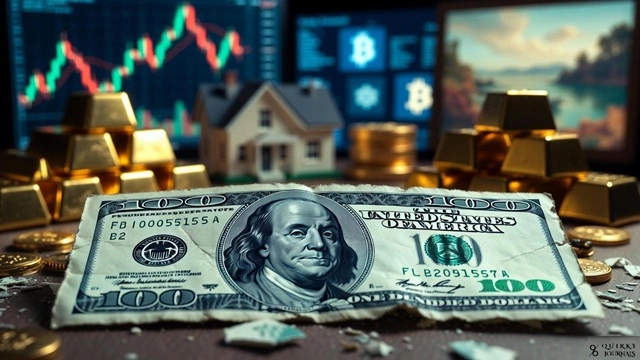
Is the U.S. Dollar Dying? 5 Assets to Protect Your Wealth
When we talk about our money, one currency often dominates the conversation: the U.S. dollar. For decades, it’s been the undisputed heavyweight champion of global finance, a cornerstone of international trade and investment. But lately, there’s been a growing buzz, a nervous whisper in financial circles: is the dollar’s reign coming to an end? And more importantly, what could that mean for your personal financial guide and your hard-earned savings?
Let’s dive into what’s really going on with the greenback and explore some strategic assets that could help protect your wealth, should its status truly shift.
Examining the U.S. Dollar’s Current Status
Understanding Dollar Dominance
For generations, the U.S. dollar has worn the crown as the world’s primary reserve currency. Think of it this way: when countries trade with each other, or when central banks look for a safe place to hold their assets, they’ve historically turned to the dollar. It’s been the currency for pricing oil (the “petrodollar” system) and a significant portion of global commodities, making it prevalent in virtually every corner of the world economy.
Its strength can often be measured by indicators like the U.S. Dollar Index (DXY), which tracks its value against a basket of major currencies. We also look at the significant foreign holdings of U.S. Treasuries, which show just how much confidence other nations have traditionally placed in U.S. government debt. For a long time, these indicators have painted a picture of resilience and reliability.
Signs of Pressure and Depreciation
However, things have started to look a little different recently. We’ve seen some pretty significant declines, with the U.S. dollar dropping about 11% in the first half of 2025 – that’s the biggest decline in over 50 years, marking the end of a long, 15-year bull cycle [1, 2]. Experts are even suggesting we could see further weakening ahead.
So, what’s causing this pressure? A few key factors are at play:
- **Interest Rate Convergence:** For a while, U.S. interest rates offered a significant premium compared to other major economies, drawing capital into dollar-denominated assets. Now, as global interest rates begin to converge, that allure is lessening [1].
- **Tariffs and Policy Uncertainty:** Geopolitical tensions and policy uncertainties, like those around trade tariffs, can make foreign investors more cautious about their exposure to U.S. assets [1, 2].
- **Foreign Investors Hedging:** Many foreign investors are beginning to hedge their exposure to U.S. assets, essentially taking steps to protect themselves against further dollar depreciation. This increased hedging itself can contribute to the dollar’s weakening [1].
Forces Challenging Dollar Hegemony
The Rise of De-dollarization Narratives
The idea of “de-dollarization” – a shift away from using the U.S. dollar as the primary currency in global trade and investment – has become a hot topic [4]. We’re seeing discussions among emerging economic blocs, like BRICS nations (Brazil, Russia, India, China, South Africa), exploring alternative trade currencies and payment systems. While the share of other currencies, like the Chinese Yuan, in global trade is still comparatively small, it is growing, indicating a long-term trend towards more currency diversification [4].
Underlying Economic Vulnerabilities
Beyond these shifts, some underlying economic vulnerabilities in the U.S. itself add to the dollar’s pressures. Persistent U.S. deficits and a long-term debt outlook are major concerns [3]. There’s also the potential for excessive monetary issuance, which can devalue a currency. And, as discussed, the stability of the petrodollar system – where oil is primarily traded in U.S. dollars – faces ongoing risks as global energy markets evolve [3].
The Impact on the American Consumer
It’s natural to wonder how all of this might affect you, the everyday American consumer.
Direct Financial Consequences
A weakening dollar can have some direct financial consequences for us. You might notice:
- **Increased Cost of Imports:** That imported car, your favorite foreign cheese, or even components used in domestically assembled goods could become more expensive.
- **International Travel:** Your dream vacation abroad? It might cost more as your dollar buys less in other currencies.
- **Heightened Inflationary Pressures:** A weaker dollar means imports cost more, which can contribute to broader inflationary pressures on domestic goods and services. This can erode the purchasing power of your savings account and retirement funds [3].
Broader Economic Implications
On a larger scale, a prolonged dollar decline could introduce uncertainty in the banking system and create challenges for businesses heavily reliant on imports, impacting everything from supply chains to consumer prices. It could certainly change your personal financial planning strategy.
Strategic Assets for Wealth Protection
So, with all this in mind, how can you plan and protect your wealth? Many experts suggest diversification across various asset classes. Here are five categories of assets often considered strong hedges against currency devaluation and inflation:
1. Physical Precious Metals
When people worry about paper money, they often turn to something tangible. Gold and Silver have a proven historical track record as hedges against currency devaluation and inflation [3].
- Options: You can invest in physical bullion bars or government-minted coins like American Eagles. For retirement planning, consider a Gold IRA, a self-directed retirement investment vehicle that allows you to hold physical gold and silver.
- Consideration: Many financial experts suggest allocating a portion of your investment portfolio, perhaps 10-15%, to precious metals as a way to save and protect against market volatility.
2. Strategic Real Estate Holdings
Real estate has long been a powerful asset for wealth preservation, capable of adjusting to inflationary environments [3].
- Income-Producing Properties: Focus on rental units, especially those with short-term leases, or commercial real estate with inflation-indexed rents. These properties can generate income that rises with the cost of living.
- Agricultural Land: This offers utility and value in essential resources, providing a tangible asset tied to food production.
- International Real Estate: Diversifying your real estate holdings across stable economies can offer additional protection.
- Alternative: If direct ownership isn’t your way, investing in inflation-resistant Real Estate Investment Trusts (REITs) can offer exposure.
3. Essential Commodities
Necessities maintain their value regardless of currency fluctuations, making commodities a robust investment.
- Energy Assets: Gain exposure to vital resources through oil and gas partnerships, stocks in uranium companies, or investments in renewable energy infrastructure.
- Agricultural Commodities: Food staples will always be needed. Consider farming investment trusts, agricultural ETFs, or shares in food production companies.
- Water Resources: With increasing scarcity, assets related to water supply and purification can become incredibly valuable.
4. Diversified Currency Exposure
Don’t put all your currency eggs in one basket! Diversifying beyond the dollar provides an important layer of protection.
- Stable Foreign Currencies: Holding assets in strong, stable currencies like the Swiss Franc, Singapore Dollar, or Norwegian Krone can be a smart move.
- Stablecoins: These are digital currencies pegged to stable assets or fiat currencies, offering a way for digital diversification and cross-border transactions.
- Decentralized Cryptocurrencies: Many view Bitcoin, with its limited supply, as a potential hedge against fiat currency debasement, much like digital gold. However, understand that investing in crypto involves higher risk.
5. Inflation-Protected Securities (IPS)
These financial instruments are specifically designed to counter inflation.
- Treasury Inflation-Protected Securities (TIPS): These U.S. Treasury bonds have a principal value that adjusts with the Consumer Price Index (CPI), protecting your purchasing power.
- I-Bonds: These U.S. savings bonds also offer inflation-adjusted interest rates, providing a secure, government-backed way to save.
- Inflation-Indexed Annuities: These provide income streams that rise with inflation, offering a degree of financial freedom in retirement.
Comprehensive Hedging Strategies
The Imperative of Diversification
The common thread running through all these suggestions is diversification. Mitigating risk by spreading your investments across various asset classes and geographical regions is key. It’s about balancing traditional investments with inflation-resistant and alternative assets to build a resilient portfolio. For beginners in investing, this is a top tip. Consider consulting online resources to find top advisors or using investment apps to help you plan your way.
Long-Term Financial Planning
Building financial resilience is a journey, not a sprint. Adopting a phased approach to investment and regularly adjusting your portfolio based on economic conditions is crucial for long-term financial freedom. This means staying informed about Market trends and potentially revisiting your investment plan regularly.
Navigating the Future of the Dollar
A Balanced Perspective
While the discussions around the U.S. dollar’s future can sound alarming, it’s important to maintain a balanced perspective. The dollar still possesses enduring strengths, including the size and liquidity of U.S. financial markets, and its role in a vast percentage of global financial transactions [4]. However, ignoring emerging challenges would be imprudent. The emphasis should be on preparation and prudent diversification over reactive, fear-driven decisions.
Professional Guidance
Navigating these complex financial waters can be challenging. The value of consulting with certified financial planners or top advisors for personalized strategies cannot be overstated. They can help you assess your risk tolerance, understand your current financial standing, and help you find the best way to structure your investments to protect against potential market shifts, whether it’s understanding interest rates on credit cards or setting up the best emergency account.
Takeaways:
The U.S. dollar’s position as the world’s leading currency is under pressure, driven by economic shifts and global financial dynamics. While a complete “collapse” is unlikely in the short term, its weakening could impact your purchasing power and investment returns. Diversifying into assets like precious metals, real estate, commodities, alternative currencies, and inflation-protected securities can be a strategic way to safeguard your wealth. Remember, smart financial planning and informed choices are your best tools for navigating an evolving economic landscape.
Recommended Reading
For further reading, we suggest these blogs:
How to Protect Your Money From Inflation: Practical Strategies
AI Wealth Interface: Your New Co-Pilot in Financial Management
Explore these articles to get a grasp on the new changes in the financial world.
References
- [1] Morgan Stanley. (2025, August 6). *Devaluation of the U.S. Dollar 2025*. Retrieved from https://www.morganstanley.com/insights/articles/us-dollar-declines
- [2] Mercer Advisors. (2025). *The Decline of the Dollar in 2025*. Retrieved from https://www.merceradvisors.com/insights/market-commentary/the-decline-of-the-dollar-in-2025/
- [3] American Standard Gold. (n.d.). *What to Own When the Dollar Collapses: 10 Essential Assets*. Retrieved from https://www.americanstandardgold.com/blog/what-to-own-when-dollar-collapses.cfm
- [4] Charles Schwab. (2025, February 12). *Will the United States Dollar Be Dethroned?* Retrieved from https://www.schwab.com/learn/story/will-us-dollar-be-dethroned
- [5] *Charlie Munger Reveals 5 Assets That Boom When the US Dollar…* (n.d.). [Video]. YouTube. https://www.youtube.com/watch?v=hJCSxufI0rg
Disclaimer
This blog post is intended for informational and educational purposes only and does not constitute financial advice. The content provided here is general in nature and should not be relied upon as a substitute for professional financial guidance. Investing involves risks, and the value of investments can fluctuate. Before making any investment decisions, please consult with a qualified and certified financial planner or advisor who can provide personalized advice based on your individual financial situation, risk tolerance, and objectives. We do not endorse any specific investment, product, or service mentioned herein. Past performance is not indicative of future results.