
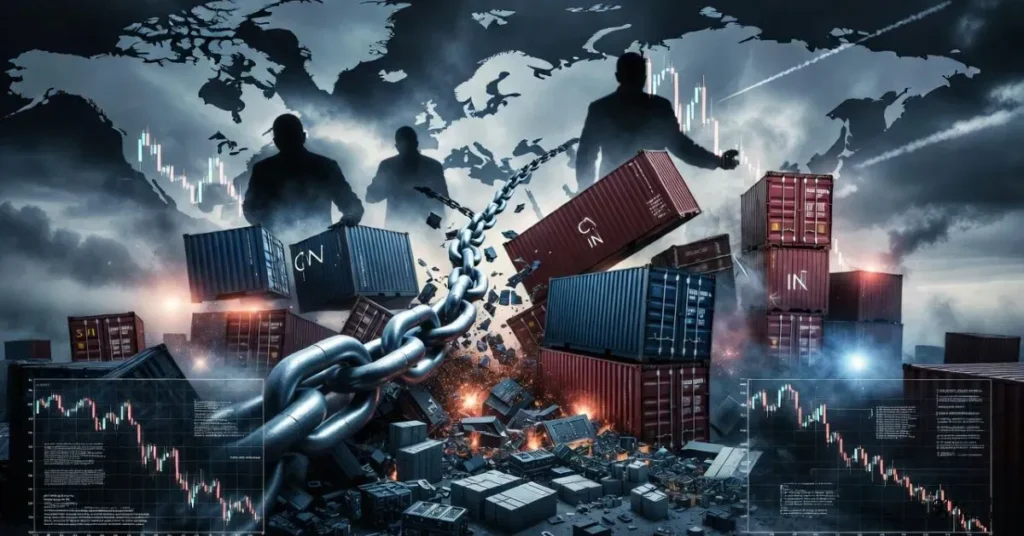
Financial Sabotage: How China and India Turned Supply Chains into a Weapon
The London Metal Exchange vaults are running dry. Meanwhile, Western manufacturers are scrambling to secure materials that were abundant just months ago. Moreover, this isn’t a coincidence—it’s a calculated chess move that’s been years in the making.
While the West obsessed over cryptocurrency speculation and political theatre, the East quietly executed the most sophisticated supply chain attack in human history. Furthermore, they didn’t need missiles, malware, or military force. Instead, they used something far more devastating: control over the physical resources that make modern civilisation function.
Here’s the uncomfortable truth that mainstream media is barely covering: China and India have successfully weaponised the global supply chain, draining critical metal reserves from Western vaults while simultaneously restricting exports of materials the entire world depends on. Additionally, China has established itself as a supply chain superpower, with America facing unprecedented vulnerability.
This comprehensive investigation exposes how the East executed this coordinated attack, why Western nations failed to see it coming, and what it means for your financial future as the global economic order fundamentally restructures.
The Heist Nobody Saw Coming: Draining the London Vaults
Imagine waking up to discover that someone had quietly emptied Fort Knox over the course of several months. Furthermore, imagine they did it in plain sight while everyone was looking the other way. That’s essentially what just happened with London’s metal reserves.
The Silver Squeeze: India’s Masterstroke
India’s merchandise trade data reveals something extraordinary. The country has been systematically importing unprecedented quantities of silver, draining Western reserves at rates that seemed impossible just two years ago.
The mechanics of the operation:
Indian buyers, backed by both government policy and private capital, flooded global markets with purchase orders. Moreover, they weren’t just buying on spot markets—they were taking physical delivery, removing metal from Western vaults permanently.
India’s silver surge has coincided with widening trade deficits, but this deficit isn’t weakness—it’s strategic repositioning. Furthermore, they’re converting paper currencies into hard assets that cannot be printed, sanctioned, or frozen.
The London vaults that once held massive silver inventories are now depleted. Additionally, premiums for physical delivery have exploded as buyers discover that “metal on paper” and “metal in hand” are two very different things.
Why this matters:
Silver isn’t just a monetary metal—it’s critical for:
- Solar panel manufacturing (20 grams per panel)
- Electronic components and circuit boards
- Medical equipment and antimicrobial applications
- Defence systems and military technology
- Electric vehicle production
Therefore, controlling silver supplies means controlling multiple industries simultaneously. India hasn’t just accumulated wealth; they’ve cornered materials essential for technological civilisation.
The Rare Earth Stranglehold: China’s Long Game
While India was draining silver, China executed an even more devastating strategy with rare earth elements. Moreover, China’s focus on rare earth minerals is reshaping the entire world.
The trap was set decades ago:
China didn’t suddenly gain rare earth dominance in 2025. Rather, they patiently built it over thirty years through:
- Massive investment in mining and processing infrastructure
- Environmental regulations that drove Western producers out of business
- Strategic acquisitions of overseas deposits
- Development of refining expertise that nobody else possesses
Furthermore, they did this while Western nations congratulated themselves on “offshoring dirty industries” to China. The West thought they were clever; China knew they were building a cage.
The spring snaps shut:
Recent export restrictions on critical rare earth elements aren’t a random trade policy. Instead, they represent the activation of a weapon that’s been prepared for years. Additionally, antimony exports from China face similar restrictions, creating cascading shortages across industries.
Rare earths are essential for:
- Electric vehicle motors and batteries
- Wind turbine magnets
- Smartphone screens and components
- Military guidance systems
- Medical imaging equipment
Without access to Chinese rare earths, Western “green energy” transitions halt overnight. Moreover, defence manufacturing faces critical bottlenecks. Therefore, China now holds veto power over Western technological and military development.
The Timing Wasn’t Accidental
Both moves accelerated dramatically in 2024-2025. Furthermore, this timing correlates precisely with:
- Escalating U.S.-China tensions
- Western sanctions proliferation
- Dollar weaponisation through SWIFT restrictions
- India’s growing strategic autonomy
- BRICS expansion and de-dollarisation momentum
This wasn’t opportunistic—it was coordinated. Additionally, while Western intelligence agencies focused on cyber threats and military posturing, they missed an economic Pearl Harbour happening in commodity markets.
The Western Illusion: Paper Promises vs. Physical Reality
For decades, Western financial systems operated on a comfortable delusion: that paper claims to physical assets were equivalent to actually holding those assets. Moreover, this delusion is now being brutally exposed.
The Fractional Reserve Commodity Scam
Just as banks don’t actually hold all depositors’ money, commodity markets don’t hold all the metal that’s supposedly “available.” Furthermore, the leverage in these markets creates vulnerabilities that are now being exploited.
How it works:
Exchanges sell contracts representing claims to physical metal. Additionally, for every actual ounce of silver or rare earth in vaults, multiple paper claims exist. This works fine as long as most holders never demand physical delivery.
However, when major players like India and China start demanding actual metal, the system breaks. Moreover, exchanges face the nightmare scenario: more delivery demands than available inventory.
The cascade begins:
Premiums for physical delivery spike. Furthermore, some exchanges change rules mid-game, preventing physical settlement of contracts. Therefore, holders discovered their “metal investments” were really just bets on price movements—not actual ownership.
This revelation destroys trust in the entire system. Additionally, once buyers lose faith in paper claims, they demand physical delivery en masse, accelerating the crisis.
The Strategic Metals Time Bomb
The Economic Security Council’s rare earths report lays out the stark vulnerability: America depends almost entirely on China for critical rare earth processing, with no viable alternatives in the near term.
The dependency is worse than most realise:
Even when rare earth deposits exist outside China, the processing and refining expertise resides almost exclusively there. Moreover, building processing facilities takes years and billions of dollars—time and money the West doesn’t have as shortages bite.
Furthermore, China has been systematically acquiring rare earth deposits globally. Therefore, even “non-Chinese” sources often flow through Chinese-controlled processing. This vertical integration creates chokepoints at every supply chain stage.
Military implications:
U.S. defence contractors face a horrifying reality: critical weapons systems depend on materials that adversaries control. Additionally, building stockpiles now would require buying from the very countries you might eventually face in conflict.
This isn’t theoretical. Moreover, current global market outlooks highlight supply chain vulnerabilities as major risks to economic stability and national security.
The False Security of Financialization
Western economies have become increasingly financialised over recent decades. Furthermore, policymakers believed that controlling global financial systems mattered more than controlling physical production.
This was catastrophically wrong. Moreover, you can’t eat financial derivatives, power cities with stock certificates, or build electric vehicles from treasury bonds.
China and India understood what the West forgot: real power flows from controlling physical resources, not from shuffling paper on air-conditioned trading floors. Additionally, as this realisation dawns on Western elites, panic is setting in.
The Coordinated Execution: How They Pulled It Off
This wasn’t a lucky accident or market anomaly. Rather, it represents years of patient planning executed with precision timing. Moreover, the coordination between China and India suggests shared strategic objectives despite their complex relationship.
Phase 1: Building the Infrastructure (2000-2020)
China’s rare earth dominance:
Massive state investment in mining and processing created capabilities that made Western competition economically impossible. Furthermore, the willingness to tolerate environmental damage that Western regulations prohibit gave additional advantages.
Additionally, acquiring foreign rare earth companies and deposits positioned China to control supply even from non-Chinese territories. This patient capital approach played out over decades.
India’s accumulation position:
India quietly built physical silver reserves while maintaining a relatively low public profile. Moreover, jewellery demand provided perfect cover for accumulation that Western analysts dismissed as “cultural preference” rather than strategic positioning.
Phase 2: Creating Dependencies (2015-2025)
Weaponising green energy:
Western commitment to electric vehicles and renewable energy created critical dependencies on Chinese rare earths. Furthermore, climate pledges effectively locked the West into needing materials China controlled.
This was brilliant strategic judo: using Western policy commitments as chains. Additionally, any attempt to slow green transitions now looks like climate backsliding, creating political constraints on strategic flexibility.
Financial system integration:
Both countries became deeply integrated into Western financial systems. Moreover, this integration wasn’t a weakness—it provided perfect intelligence on Western holdings, trading patterns, and vulnerabilities.
They could see exactly where metal sat, who owned what, and when contracts matured. Therefore, they had complete visibility into the supply chain while Western participants operated blind to the larger picture.
Phase 3: The Squeeze (2024-Present)
Coordinated physical demand:
Simultaneous surges in physical demand from both countries overwhelmed market capacity. Furthermore, their combined buying power dwarfed available supplies.
Western holders suddenly faced the choice: sell at current prices or hold and hope. Moreover, many chose to sell, not realising they were feeding an irreversible transfer of physical wealth.
Export restrictions activation:
Just as Western reserves depleted, export restrictions on critical materials were activated. Additionally, these restrictions provided legal cover for what amounts to economic warfare.
China and India could claim “domestic demand” or “environmental protection”, while everyone understood the real message: you no longer control access to critical materials.
Phase 4: Lock-In (Now Unfolding)
Irreversible transfer:
Physical metal that left Western vaults won’t return. Moreover, once in Eastern hands, it either enters industrial use or permanent reserves. Therefore, the balance of physical wealth has shifted permanently.
Price discovery failure:
Paper market prices no longer reflect physical reality. Furthermore, this disconnect creates chaos as buyers discover metal isn’t available at quoted prices.
The price gap between paper and physical goods explodes. Additionally, this spread represents the “control premium”—the cost of actually owning versus just holding a claim.
Why the West Failed to Defend Itself
The most puzzling question isn’t how China and India executed this strategy. Rather, it’s why Western intelligence, military, and economic establishments failed to see it coming and counter it.
Intelligence Failure: Fixated on the Wrong Threats
Western intelligence agencies focused intensely on:
- Cyber warfare and hacking
- Military buildups and territorial disputes
- Political influence operations
- Terrorism and non-state threats
Meanwhile, they largely ignored commodity markets and supply chain vulnerabilities. Moreover, when analysts did raise concerns, policymakers dismissed them as “economic issues” rather than national security threats.
This compartmentalisation prevented seeing the strategic picture. Additionally, intelligence communities lacked expertise in complex commodity markets and global supply chains.
Economic Arrogance: The Financialization Trap
Western economists convinced themselves that financial sophistication mattered more than physical production. Furthermore, they believed that controlling the global financial architecture provided ultimate leverage.
This was delusional. Moreover, it reflected decades of financialization, creating an entire class of elites who understood derivatives but not mining, who could model credit default swaps but not rare earth processing.
Therefore, when China and India made physical moves, Western analysts initially dismissed them as unsophisticated or backwards. The “smart money” was in complex financial instruments, not boring commodity accumulation.
Political Dysfunction: Short-Term Thinking
Democratic political cycles create perverse incentives. Furthermore, politicians focus on problems that matter for the next election, not challenges that unfold over decades.
Building domestic rare earth processing generates no votes today. Additionally, warning about commodity vulnerabilities sounds alarmist and economically illiterate to voters focused on immediate concerns.
Therefore, even when some policymakers understood the threat, they couldn’t generate the political will to address it. Moreover, industry lobbyists successfully blocked policies that might have reduced dependencies but hurt short-term profits.
Regulatory Capture: Environmental Rules as Weapons
Ironically, Western environmental regulations contributed to vulnerability. Moreover, strict rules made domestic rare earth processing economically unviable compared to Chinese operations with looser standards.
This created a perfect trap: you can either maintain environmental standards or secure supply chains, but not both simultaneously. Furthermore, environmental groups unwittingly became allies of Chinese strategic planning by blocking domestic mining projects.
Additionally, “not in my backyard” activism meant Western nations were happy to consume rare earths but unwilling to accept the environmental costs of producing them domestically.
The Cascade Effects: What Happens Next
The immediate supply chain crisis is just the beginning. Moreover, cascading effects will ripple through the global economy in ways that are only starting to become visible.
Manufacturing Slowdowns and Shutdowns
Companies dependent on restricted materials face impossible choices:
- Pay whatever prices Eastern suppliers demand
- Reduce production due to material shortages
- Shut down entirely until alternatives emerge
Furthermore, just-in-time supply chains that worked efficiently for decades now become catastrophic vulnerabilities. Additionally, companies discover they’re one shipment away from production halts.
These shutdowns don’t affect all industries equally. Moreover, high-tech manufacturing, green energy, and defence contractors face the worst immediate impacts.
Inflation Acceleration
Shortages and monopoly pricing create severe inflation in specific sectors. Furthermore, these sector-specific price spikes flow through supply chains, multiplying at each stage.
Consumer prices for electronics, vehicles, and energy will surge. Additionally, this inflation can’t be controlled through traditional monetary policy because it stems from physical scarcity, not excess money supply.
Central banks face a nightmare: inflation that rate hikes can’t fix. Moreover, raising rates in this environment might trigger recessions without solving the underlying shortage problem.
Strategic Dependency Lock-In
Western nations now face permanent strategic vulnerability unless they undertake massive, expensive rebuilding of domestic capacity. Furthermore, this rebuilding takes years, minimum, probably decades for full supply chain reconstruction.
During this period, China and India have veto power over Western industrial and military development. Additionally, they can extract enormous economic and political concessions as the price of maintaining access to critical materials.
This dependency fundamentally alters the global power balance. Moreover, the West transitions from dominance to supplication in the span of a few years.
Financial System Credibility Collapse
When commodity markets fail to deliver physical goods at stated prices, trust evaporates. Furthermore, this trust crisis extends beyond commodities into broader financial system legitimacy.
If paper silver claims proved worthless, what about other financial instruments? Moreover, if Western governments couldn’t secure basic industrial materials, what credibility do they have?
This credibility loss accelerates de-dollarisation and reduces Western financial influence globally. Additionally, emerging markets learn the lesson: hold physical assets, not paper promises.
Investment Implications: Protecting Yourself From the Fallout
Understanding the problem means nothing if you can’t protect your wealth and possibly profit from these shifts. Moreover, different strategies make sense for different investors.
For Individual Investors: Immediate Actions
Reduce exposure to vulnerable sectors:
Technology companies dependent on rare earths face supply chain disasters. Additionally, manufacturers without diversified sourcing will suffer.
Review your portfolio for companies that can’t function without Chinese rare earths or other restricted materials. Furthermore, consider reducing positions in the most vulnerable names.
Increase commodity exposure:
Physical metals and companies controlling deposits outside Chinese influence offer protection. Moreover, resource companies with processing capabilities become tremendously valuable.
Consider positions in:
- Silver mining companies with owned refineries
- Rare earth explorers in friendly jurisdictions
- Companies developing alternative materials
- Businesses with secured long-term supply contracts
Geographic diversification:
Don’t hold all wealth in Western financial systems that might face further stress. Additionally, spreading risk across jurisdictions provides insurance against worst-case scenarios.
Consider international exposure through foreign accounts, property in politically neutral countries, or companies with truly global operations less dependent on any single supply chain.
For Business Owners: Supply Chain Warfare
Audit dependencies immediately:
Map your entire supply chain, identifying Chinese or Indian dependencies. Moreover, don’t stop at tier-one suppliers—track materials back to sources.
This audit will likely reveal disturbing vulnerabilities. Furthermore, it provides the information needed for strategic decisions about alternatives.
Secure long-term contracts now:
While contracts remain possible, lock in multi-year supply agreements. Additionally, pay premiums for delivery guarantees rather than chasing short-term price savings.
These contracts might look expensive initially, but become invaluable if restrictions tighten further. Moreover, having a guaranteed supply creates competitive advantages over rivals who must scramble in spot markets.
Invest in stockpiling:
Build strategic inventories of critical materials beyond normal operating requirements. Furthermore, treat this as insurance rather than inefficient capital use.
Six months to two years of critical material inventory might seem excessive. However, it provides breathing room if supply chains completely rupture.
Explore substitutions and alternatives:
Research teams should frantically work on reducing dependency on restricted materials. Additionally, any reduction in critical material usage improves strategic position.
This won’t happen overnight, but the companies that successfully innovate around these constraints will dominate competitors who remain dependent.
The Bottom Line: A New World Order Emerges
We’re witnessing a fundamental power shift that historians will study for centuries. Moreover, this shift isn’t happening through traditional military conquest but through control of the physical materials that make modern civilisation function.
What’s definitely happening:
- Western metal reserves are being systematically drained
- China controls rare earth processing with no Western alternatives
- India has accumulated massive silver positions
- Export restrictions are weaponising supply chain dependencies
- Paper commodity claims are diverging from physical availability
What’s highly probable:
- Supply shortages will intensify before improving
- Western manufacturing will face extended disruptions
- Inflation in affected sectors will persist and worsen
- Rare earth vulnerabilities will force policy responses
- De-dollarisation will accelerate as trust in paper systems erodes
What remains uncertain:
- Whether Western nations can rebuild domestic capacity quickly enough
- How severe the economic damage becomes before adjustment
- What political and military responses emerge from these pressures
- Whether new technologies or substitutes can reduce dependencies
- If this represents a permanent power shift or a temporary advantage
The harsh reality:
While the West debated cryptocurrency utility and political theatre, the East executed the greatest supply chain attack in human history. Furthermore, they did it in plain sight while Western elites dismissed commodity markets as unsophisticated.
Now the bill comes due. Moreover, paying for it requires either accepting subordinate status in the new order or undertaking painful, expensive rebuilding of domestic capabilities that were foolishly abandoned.
The financial system is holding paper while the East holds the metal that actually runs the world. Additionally, this paper-versus-physical divide will define investment success or failure over the coming decade.
Your wealth, your business, and your country’s prosperity all depend on adapting to this new reality. The question isn’t whether this shift is happening—it’s whether you’ll recognise it in time to position yourself advantageously.
The East just pulled the plug on the global machine. Moreover, Western nations are only beginning to understand how completely they’ve been outmanoeuvred.
Spend some time for your future.
To deepen your understanding of today’s evolving financial landscape, we recommend exploring the following articles:
The CFO’s Secret Weapon: How AI Is Slashing Corporate Costs
Gold $5,000 & Silver $110: Why De‑Dollarisation Is No Longer Just a Theory
Facebook Ads vs Google Ads: Which One Works Best for Your Business in 2026?
AI Audit Fail: Why Unexplainable AI Can’t Touch Finance
What would you do if you won a 1 million lottery? Why Most Lottery Winners Go Broke—And How to Avoid the Trap
Explore these articles to get a grasp on the new changes in the financial world.
Disclaimer: This article provides an analysis of geopolitical supply chain dynamics and should not be construed as investment advice or recommendations to buy or sell specific securities. The characterisation of actions as “sabotage” or “attack” represents an analytical perspective on strategic economic positioning, not legal determinations. Geopolitical situations are complex with multiple legitimate perspectives. Supply chain vulnerabilities vary by industry and company. Commodity markets are volatile and risky. Always conduct thorough due diligence and consult with qualified financial, geopolitical, and legal advisors before making investment or business decisions based on supply chain considerations. The scenarios discussed represent potential outcomes, not guaranteed predictions.
References
- Economic Security Council. (2026). “Rare earths report: China as a supply chain superpower and the vulnerability of America.” Retrieved from https://www.economicsecuritycouncil.org/rare-earths-report.html
- Facets Journal. (2025). “Antimony in Canada: Challenges and opportunities in resources, markets, and sustainability.” Retrieved from https://www.facetsjournal.com/doi/10.1139/facets-2025-0079
- Johns Hopkins University. (2025). “The winds of change: How China’s focus on rare earth minerals reshapes the world.” Muse JHU. Retrieved from https://muse.jhu.edu/article/966874
- State Street Global Advisors. (2026). “Mind on the market: Global market outlook 2026.” Retrieved from https://www.ssga.com/library-content/assets/pdf/global/wmu/2026/mom-01192026.pdf
- Symbiosis School of Economics. (2025a). “Macro perspectives: November 2025 – India’s trade deficit and silver surge.” Retrieved from https://www.sse.ac.in/PDF/macroperspective/SSE-Macro-Perspectives-November-2025.pdf
- Symbiosis School of Economics. (2025b). “Macro perspectives: December 2025 – Indian economy and merchandise trade analysis.” Retrieved from https://www.sse.ac.in/PDF/macroperspective/SSE-Macro-Perspectives-December-2025.pdf