
Quirky Journal

Startup Market Research How to Calculate TAM, SAM, and SOM.

Startup Market Research: How to Calculate TAM, SAM, and SOM

TAM = total revenue if 100% market share (40M US households × $100/yr kitchen storage = $4B). SAM filters geography/channels (25% pop + 40% online = $280M). SOM applies competition (60% incumbents, target 7% = $19.6M yr3). Use Census/ZoomInfo for counts, Statista for benchmarks. SaaS: #companies × ACV. E-comm: repeat purchase frequency.

Startup Market Research: How to Calculate TAM, SAM, and SOM Read More »

The Economics of Cryptocurrency: Why There Is No 'Intrinsic Value' — and Why Bitcoin's Floor Might Actually Be Zero

The Economics of Crypto: Why There Is No Intrinsic Value—and Why the Floor Might Be Zero

Bitcoin has survived more than 15 years of “this is worthless” obituaries, multiple 80% drawdowns, regulatory attacks, and environmental criticism—yet it keeps coming back, often to new highs. The real question isn’t whether the price is volatile; it’s whether Bitcoin has any intrinsic value at all, and what that implies for a true floor price. This article defines “intrinsic value” in classical finance terms (cash flows and utility), contrasts that with network‑based and social‑consensus notions of value, and then walks through mining cost floors, network effects, and zero‑floor arguments from central banks, researchers, and market participants so you can make your own judgment about what, if anything, Bitcoin is fundamentally worth.

The Economics of Crypto: Why There Is No Intrinsic Value—and Why the Floor Might Be Zero Read More »

Balance Transfer Credit Cards How to Crush High-Interest Debt

Balance Transfer Credit Cards: How to Crush High-Interest Debt

High-interest credit card debt quietly drains your income every month, making it feel like your balance never moves no matter how hard you pay. A well-structured balance transfer to a 0% APR card changes the math: instead of feeding interest at 18–28%, every payment goes straight to principal for 12–21 months. This guide walks through how balance transfer cards work, what APR really costs you, the mechanics of moving balances, and the exact steps to build a payoff plan that can save over $1,000 in interest on just $5,000 of debt—if you avoid common traps like transfer fees, new spending, and promo periods expiring.

Balance Transfer Credit Cards: How to Crush High-Interest Debt Read More »

War Economy Chapter 9 Sanctions, Trade Wars, and Economic Weapons Explained

War Economy Chapter 9: Sanctions, Trade Wars, and Economic Weapons Explained

Economic warfare has become one of the most powerful tools in international relations, allowing states to pursue strategic goals through financial systems, trade flows, and supply chains instead of direct military conflict. This chapter explains how sanctions, trade wars, and access to global payment networks like SWIFT are used to cut off revenue, block critical technology, and isolate target economies, as well as the limits, blowback, and long-term consequences of weaponising interdependence.

War Economy Chapter 9: Sanctions, Trade Wars, and Economic Weapons Explained Read More »

How to Identify Profitable Startup Ideas Solving Problems People Pay For.

How to Identify Profitable Startup Ideas Solving Problems People Pay For

Skip coffee shop brainstorming—bad ideas solve imaginary problems or trendy tech without pain. Instead: log personal friction 21 days, target broken industries (healthcare/logistics), copy recent wins geographically (Flexport → Latin America), ride AI/gene sequencing waves. Validate: clear paying customers? $10M+ bottom-up revenue? Your expertise? Talk 10-20 users before coding.

How to Identify Profitable Startup Ideas Solving Problems People Pay For Read More »

Angel Investing for Beginners From First Check to Portfolio

Angel Investing for Beginners: From First Check to Portfolio

Angel investing isn’t just “buying startup lottery tickets”—it’s a high‑risk, illiquid asset class where you write small checks (often $10K–$50K), expect most companies to fail, and rely on a few big winners to drive returns. This guide explains who qualifies as an accredited investor, why most experts cap angels at 5–10% of their net worth, how to join angel groups and syndicates to get deal flow, which founder and market signals actually matter, and how to pace 10–20 investments over 3–5 years instead of blowing your budget on the first two exciting pitches.

Angel Investing for Beginners: From First Check to Portfolio Read More »

War Economy Chapter 8 Geopolitics for Investors Reading Tensions Without Speculating

War Economy Chapter 8: Geopolitics for Investors: Reading Tensions Without Speculating

Investors lose on geopolitics by misunderstanding war economies where ideology trumps economics. Germany’s €100B defense fund, Poland’s 4%+ GDP military spend show sunk costs make programs unkillable. Real costs hit via inflation (money printing), debt on future taxpayers, capital crowded out from growth. Framework: Track currency/bond signals, position for supply chain shifts (India/Vietnam), skip overpriced defense stocks.

War Economy Chapter 8: Geopolitics for Investors: Reading Tensions Without Speculating Read More »

How to Build a Diversified Retirement Portfolio (Beginner Guide)

How to Build a Diversified Retirement Portfolio (Beginner Guide)

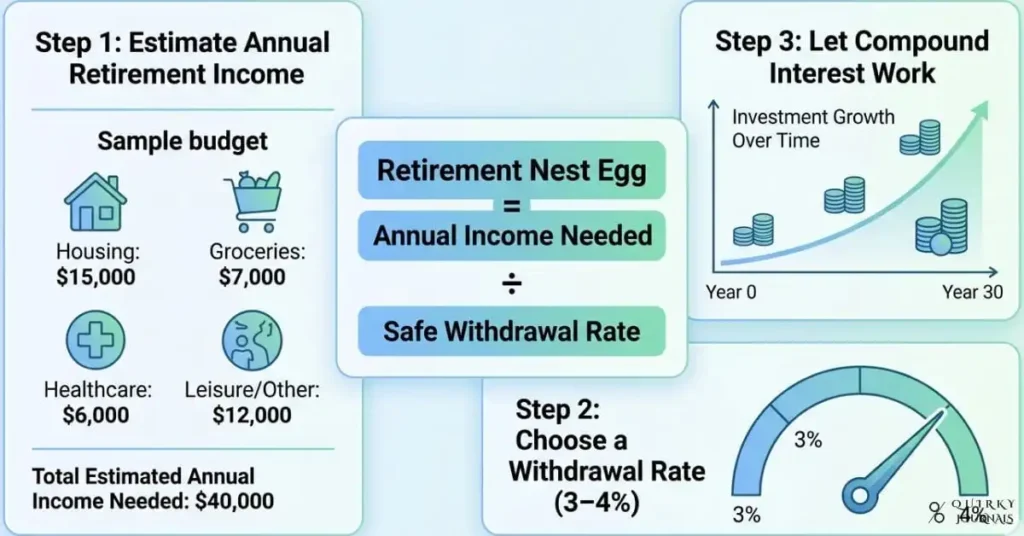
Most beginners think they need stock-picking skills to retire comfortably, but the real edge comes from boring fundamentals: diversification, low fees, and time in the market. This guide walks you through setting an age-appropriate asset mix, using simple index funds instead of guessing at individual stocks, and building a cash buffer so a bad year doesn’t wreck your retirement date. You’ll learn how stocks, bonds, and cash each play a different role, why rebalancing matters more than market timing, and how to turn your nest egg into sustainable income using rules of thumb like the 4% rule—all without needing to become a full-time investor.

How to Build a Diversified Retirement Portfolio (Beginner Guide) Read More »

Side Hustles vs. Your Career The Harsh Math of Modern Gig Income

Side Hustles vs. Your Career: The Harsh Math of Modern Gig Income

Social media treats side hustles like a guaranteed path to freedom, but 2026 data tells a harsher story: once you subtract taxes, mileage, platform fees, unpaid admin work, and the impact on your sleep, health, and main job, many people are effectively earning less than minimum wage for their “extra” grind. This article walks through how to calculate your true hourly rate, why low-leverage gigs like rideshare and food delivery so often lose to skill-building and career advancement, and which side hustles—like scalable digital products, courses, or skill-building freelance work—can genuinely move the needle instead of just keeping you busy.

Side Hustles vs. Your Career: The Harsh Math of Modern Gig Income Read More »