The Cost of Political Ego: When Decisions Override Economics in War
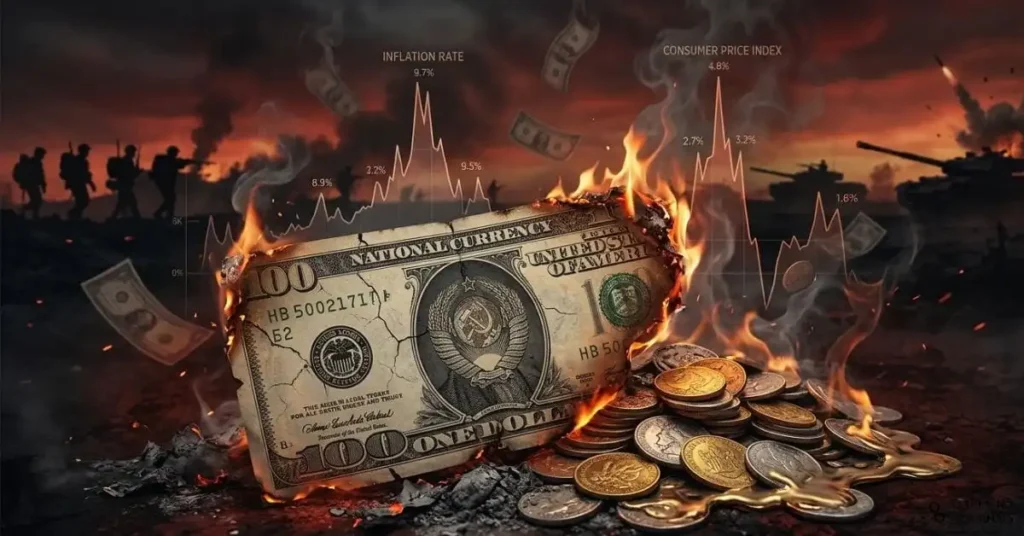
Throughout history, wars have been initiated, prolonged, and escalated not by rational economic calculation, but by the unbending pride of leaders who couldn’t admit error. The phenomenon transcends culture, ideology, and era. From World War I’s trench warfare stalemate to the decades-long War on Terror, political egos have consistently overridden economic reality — transforming what should be calculated risk assessments into catastrophic wealth destruction on scales that beggar imagination.
The economic consequences of ego-driven warfare extend far beyond battlefield costs. They encompass lost human capital, environmental devastation that spans generations, technological development diverted from productive civilian uses, and institutional inertia that prevents peace dividends from ever materialising. Moreover, in our interconnected global economy, a single leader’s pride can trigger inflation cascades affecting populations thousands of miles from any combat zone.
This analysis dissects the true economic costs of political ego in warfare. We’ll examine the sunk cost fallacy that keeps conflicts grinding forward long after victory becomes impossible, the overconfidence bias that makes leaders grotesquely underestimate war duration and costs, and the brain drain that creates economic collapse persisting decades after peace treaties are signed. Understanding these dynamics matters because they continue operating today — and the next major conflict driven by political ego may already be in its planning stages.
The Sunk Cost Fallacy: ‘Too Much Sacrificed to Quit Now’
Perhaps no cognitive bias has proven more deadly in military history than the sunk cost fallacy. The logic appears deceptively compelling: ‘We’ve already sacrificed so much — 7,000 soldiers dead, $2 trillion spent. How can we quit now and let those deaths mean nothing?’ This argument surfaces reliably whenever withdrawal from failing conflicts is proposed. It sounds honourable. It sounds patriotic. It’s also completely irrational from any economic perspective.
The economic principle is straightforward: sunk costs are expenditures that cannot be recovered once made. Therefore, rational decision-making should ignore them entirely and focus only on future costs versus future benefits. If continuing a war will cost another $500 billion with minimal probability of achieving stated objectives, the $2 trillion already spent is irrelevant to whether continuation makes sense. Past costs cannot be changed. Only future costs can be avoided.
Yet political leaders repeatedly reject this logic. As military analyst Carl Forsling observes, ‘The military, more than any other institution, lives by sunk costs. Once a man is lost, seizing a piece of ground, it becomes hallowed. How can we give this up after all we’ve sacrificed?’ This emotional attachment transforms military decisions into monuments to past sacrifice rather than rational assessments of future options.