Tutorials

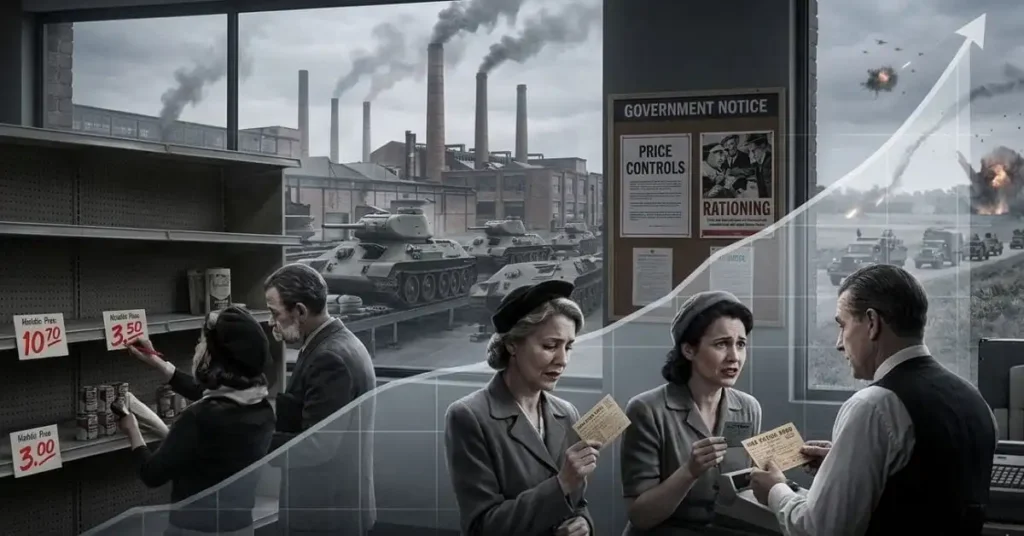
War Economy Chapter 10: The Cost of Political Ego: When Decisions Override Economics

War Economy Chapter 10: The Cost of Political Ego: When Decisions Override Economics

The Cost of Political Ego: When Decisions Override Economics in War
Throughout history, wars have been initiated, prolonged, and escalated not by rational economic calculation, but by the unbending pride of leaders who couldn’t admit error. The phenomenon transcends culture, ideology, and era. From World War I’s trench warfare stalemate to the decades-long War on Terror, political egos have consistently overridden economic reality — transforming what should be calculated risk assessments into catastrophic wealth destruction on scales that beggar imagination.
The economic consequences of ego-driven warfare extend far beyond battlefield costs. They encompass lost human capital, environmental devastation that spans generations, technological development diverted from productive civilian uses, and institutional inertia that prevents peace dividends from ever materialising. Moreover, in our interconnected global economy, a single leader’s pride can trigger inflation cascades affecting populations thousands of miles from any combat zone.
This analysis dissects the true economic costs of political ego in warfare. We’ll examine the sunk cost fallacy that keeps conflicts grinding forward long after victory becomes impossible, the overconfidence bias that makes leaders grotesquely underestimate war duration and costs, and the brain drain that creates economic collapse persisting decades after peace treaties are signed. Understanding these dynamics matters because they continue operating today — and the next major conflict driven by political ego may already be in its planning stages.
The Sunk Cost Fallacy: ‘Too Much Sacrificed to Quit Now’
Perhaps no cognitive bias has proven more deadly in military history than the sunk cost fallacy. The logic appears deceptively compelling: ‘We’ve already sacrificed so much — 7,000 soldiers dead, $2 trillion spent. How can we quit now and let those deaths mean nothing?’ This argument surfaces reliably whenever withdrawal from failing conflicts is proposed. It sounds honourable. It sounds patriotic. It’s also completely irrational from any economic perspective.
The economic principle is straightforward: sunk costs are expenditures that cannot be recovered once made. Therefore, rational decision-making should ignore them entirely and focus only on future costs versus future benefits. If continuing a war will cost another $500 billion with minimal probability of achieving stated objectives, the $2 trillion already spent is irrelevant to whether continuation makes sense. Past costs cannot be changed. Only future costs can be avoided.
Yet political leaders repeatedly reject this logic. As military analyst Carl Forsling observes, ‘The military, more than any other institution, lives by sunk costs. Once a man is lost, seizing a piece of ground, it becomes hallowed. How can we give this up after all we’ve sacrificed?’ This emotional attachment transforms military decisions into monuments to past sacrifice rather than rational assessments of future options.

War Economy Chapter 10: The Cost of Political Ego: When Decisions Override Economics Read More »

The Ultimate Guide to Stock Market Websites for Real-Time Analysis

The Ultimate Guide to Stock Market Websites for Real-Time Analysis

Forget delayed quotes—serious traders need real-time data, pro charts, and fast screeners. TradingView dominates with 100+ indicators and community ideas (free tier solid, Pro $14.95/mo). Finviz Elite crushes screening with heatmaps and insider data ($39/mo). Benzinga Pro’s audio squawk beats headlines by seconds ($99+/mo). Free: Yahoo Finance for fundamentals, Stock Analysis for overall research. Build your stack without wasting money on junk tools.

The Ultimate Guide to Stock Market Websites for Real-Time Analysis Read More »

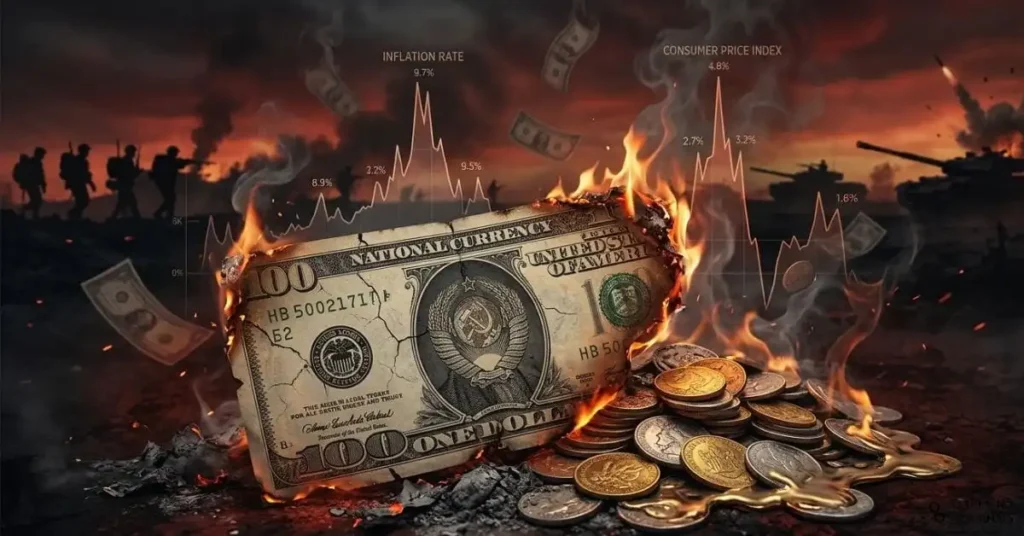
War Economy Chapter 9 Sanctions, Trade Wars, and Economic Weapons Explained

War Economy Chapter 9: Sanctions, Trade Wars, and Economic Weapons Explained

Economic warfare has become one of the most powerful tools in international relations, allowing states to pursue strategic goals through financial systems, trade flows, and supply chains instead of direct military conflict. This chapter explains how sanctions, trade wars, and access to global payment networks like SWIFT are used to cut off revenue, block critical technology, and isolate target economies, as well as the limits, blowback, and long-term consequences of weaponising interdependence.

War Economy Chapter 9: Sanctions, Trade Wars, and Economic Weapons Explained Read More »

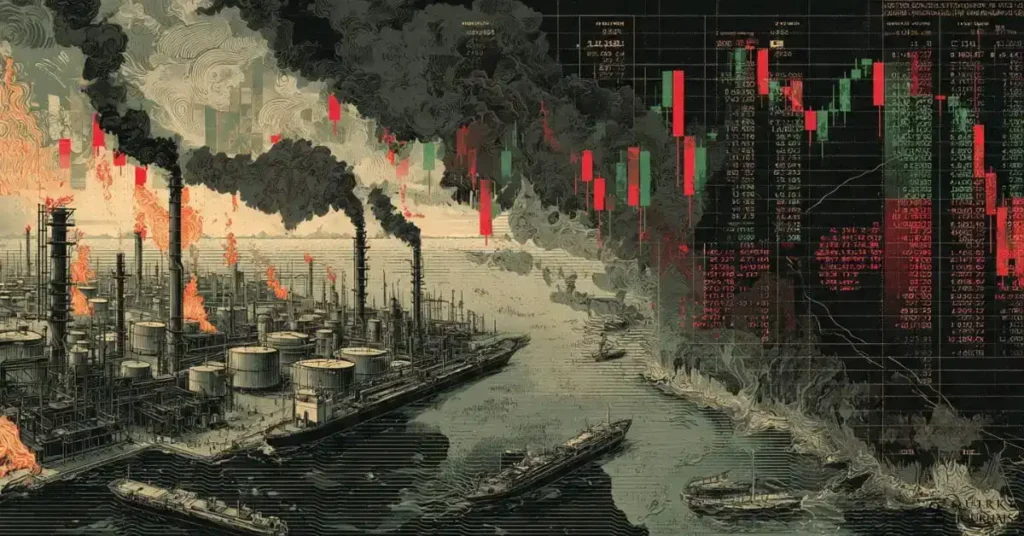
War Economy Chapter 8 Geopolitics for Investors Reading Tensions Without Speculating

War Economy Chapter 8: Geopolitics for Investors: Reading Tensions Without Speculating

Investors lose on geopolitics by misunderstanding war economies where ideology trumps economics. Germany’s €100B defense fund, Poland’s 4%+ GDP military spend show sunk costs make programs unkillable. Real costs hit via inflation (money printing), debt on future taxpayers, capital crowded out from growth. Framework: Track currency/bond signals, position for supply chain shifts (India/Vietnam), skip overpriced defense stocks.

War Economy Chapter 8: Geopolitics for Investors: Reading Tensions Without Speculating Read More »

Startup vs. Small Business Do You Have the Founder Mindset

Startup vs. Small Business: Do You Really Have the Founder Mindset?

Millions dream of “starting a business,” but few realise they’re choosing between two very different games: the high-risk, hyper-growth startup race and the stable, long-term small business path. Startups chase market disruption, venture capital, and billion-dollar exits under extreme uncertainty, while small businesses focus on cash flow, community, and control over your time. This article breaks down the psychological traits, financial realities, and lifestyle trade-offs behind each route and gives you a practical self-assessment—so you can decide if you truly have the founder mindset, or if you’ll be happier and more successful building a durable, profitable small business on your own terms.

Startup vs. Small Business: Do You Really Have the Founder Mindset? Read More »

The $100k Net Worth Blueprint How to Hit Six Figures on a $60k Salary

The $100k Net Worth Blueprint: How to Hit Six Figures on a $60k Salary

A $60k salary feels like “real money” until taxes, rent, and loans hit—leaving roughly $3,900/month to work with. Yet plenty of people still reach $100k net worth on similar incomes by tracking every dollar, using a 50/30/20 framework, building a $3–5k emergency fund, grabbing every dollar of employer match, and automating $500–$800/month into simple index funds for 8–12 years—long enough for compounding to finally make the money start working harder than you do.

The $100k Net Worth Blueprint: How to Hit Six Figures on a $60k Salary Read More »

War Economy Chapter 6 Incompetent Leadership and Economic Fallout

War Economy Chapter 6: Incompetent Leadership and Economic Fallout

Incompetent leadership during wartime often leads to economic decline and resource misallocation, exacerbating economic fallout and increasing poverty levels. Examples include Sudan’s war causing severe economic damage and Trump’s policies creating a crisis. Leadership failure can severely undermine economic stability.

War Economy Chapter 6: Incompetent Leadership and Economic Fallout Read More »