
Finance

Quirkyjournals.com — Personal finance insights, money management basics & simplified financial education. Not financial advice.

A 16:9 image of a person at a tidy kitchen table with a phone to their ear, a calm, focused expression, and neatly stacked credit card statements and a simple budget sheet in front of them. A laptop shows a minimal chart trending downward (symbolising shrinking debt). Warm natural light from a nearby window, soft blues and neutrals for a hopeful, in-control mood. No text or logos.

Negotiate Credit Card Debt: Lower Rates and Balances

Negotiating credit card debt works because lenders would rather recover something than risk getting nothing through default or bankruptcy. Before you ever call, the key moves are to list every balance, APR, and minimum payment, build a bare‑bones budget, and decide exactly what you can afford—either as a lower monthly payment or a lump‑sum settlement. When you speak to the issuer’s hardship or retention team, you are not begging; you are proposing a deal: reduced rate, structured repayment plan, or partial payoff in exchange for closing the account. With preparation, calm persistence, and written confirmation of any agreement, many borrowers turn overwhelming revolving debt into a manageable path to zero.

Negotiate Credit Card Debt: Lower Rates and Balances Read More »

Discover how supply shocks, government spending, sanctions, and fear-driven trading combine to make prices jump, crash, and whipsaw throughout a conflict.

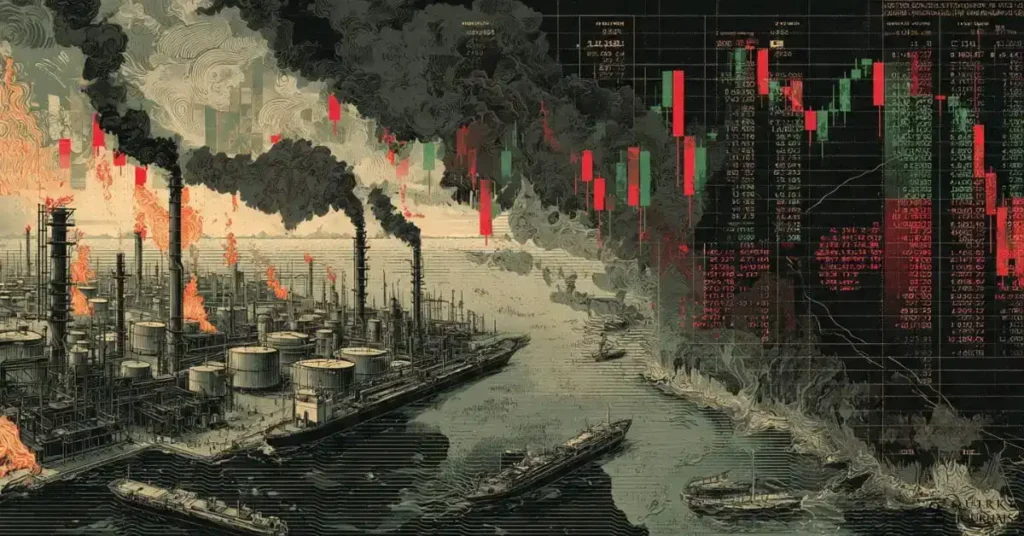
War Economy Chapter 14: Volatility Explained – Why Prices Swing Wildly in Wartime

War turns “normal” price behaviour upside down. Oil, food, shipping, and currencies can spike or crash within days as supply lines break, sanctions bite, and governments scramble to fund military spending. At the same time, some equity markets and defence-linked sectors stabilise or even rally because investors suddenly view government contracts as guaranteed cashflow. This chapter unpacks those moving parts—supply shocks, demand shifts, money printing, sanctions, safe‑haven flows, and the famous “war puzzle”—to explain why prices don’t just move a lot in wartime, they move differently than they do in peacetime.

War Economy Chapter 14: Volatility Explained – Why Prices Swing Wildly in Wartime Read More »

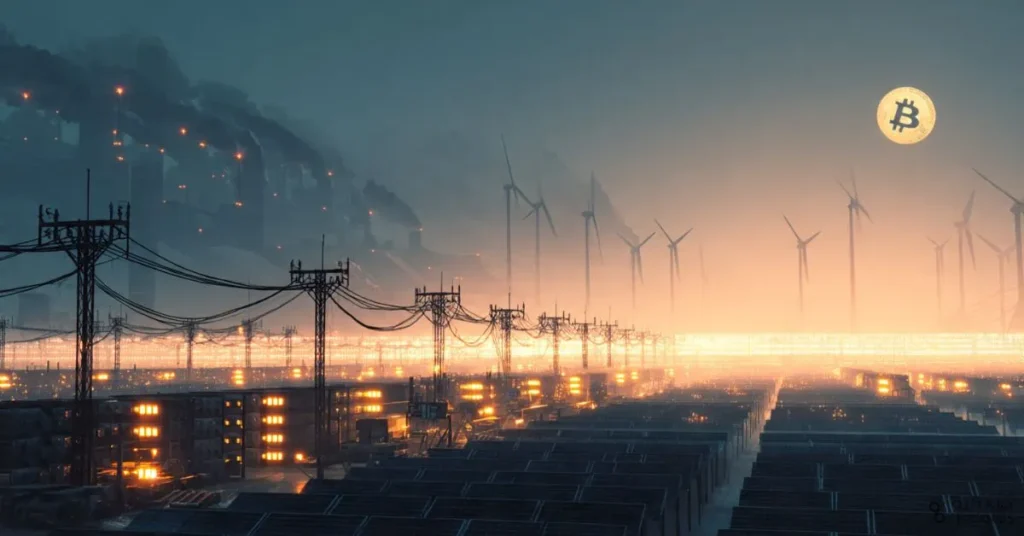
A 16:9 cinematic illustration of a sprawling Bitcoin mining farm at night: long rows of glowing ASIC rigs inside an industrial warehouse, with thick power cables leading out to a nearby fossil-fuel power plant whose smokestacks emit visible plumes on one side, and a contrasting field of wind turbines and solar panels on the other. Above the scene, a faint semi-transparent Bitcoin symbol hangs in the hazy sky like a moon, subtly tinted in gold. The colour palette should contrast warm, polluted oranges and greys near the plant with cooler blues and greens around the renewables, visually encoding the tension between Bitcoin’s heavy energy use and the push toward cleaner power. No text, numbers, or logos anywhere in the image.

Bitcoin Climate Impact 2026: Carbon Emissions, Water Use & Mining Footprint Explained

Is Bitcoin Killing the Climate? The Staggering Carbon and Water Cost of Mining in 2026 Bitcoin is often called digital gold. However, unlike physical gold, its environmental toll is something most investors prefer not to discuss. Behind every transaction, every mined block, and every price surge lies an enormous and growing consumption of energy, water,

Bitcoin Climate Impact 2026: Carbon Emissions, Water Use & Mining Footprint Explained Read More »

A 16:9 semi-realistic illustration of a modest, comfortable suburban home interior in the evening: a person in simple, casual clothes sits at a plain wooden table reviewing a calm investment dashboard on a laptop that shows diversified charts and growing bars (no numbers or text), while an older but well-kept economy car is faintly visible through the window outside. The scene feels intentionally ordinary—no luxury branding—yet the charts and neatly organised papers hint at substantial, hidden wealth being carefully managed. Warm, subdued lighting with neutral and earthy tones should convey privacy, intention, and quiet prosperity.

Stealth Wealth: 13 Quiet Strategies to Build Wealth Like the Top 1%

Stealth wealth flips the usual script on money. Instead of using cash to signal success—cars, clothes, restaurants—it channels every surplus dollar into assets that quietly compound in the background: broad index funds, income-producing real estate, profitable private businesses, and cash buffers that make every setback survivable. The people who practise it live well below their means, automate investing so they never “forget” to build wealth, keep their financial life boring on the surface, and design their lifestyle so almost no one can tell how much they’re actually worth. This guide unpacks 13 of those habits and systems so you can borrow the playbook of the genuinely wealthy without changing who you are or trying to impress anyone.

Stealth Wealth: 13 Quiet Strategies to Build Wealth Like the Top 1% Read More »

A 16:9 semi‑realistic illustration of a relaxed client and a budget counsellor sitting across from each other at a small round table in a bright office. The counsellor is turning a tablet toward the client, showing a simple, colour‑blocked monthly budget flow (income arrows leading to bills, debt, and savings icons) with no words or numbers. On the table are a few neatly stacked papers and a pen, and in the background a large window with daylight and a couple of green plants creates a calm, hopeful atmosphere. Colours are soft blues and greens to convey clarity, support, and reduced stress, with no text or logos anywhere in the scene.

What Is Budget Counselling? Costs, Benefits & Step-by-Step Process

Budget counselling is like having a coach for your day‑to‑day money decisions. Instead of guessing where your cash goes each month, you sit down with a certified counsellor who reviews your income, bills, debts, and habits, then helps you build a spending plan you can actually live with. Together, you identify leaks, prioritise essentials, and map out a clear path for paying down debt and rebuilding savings—often with ongoing check‑ins that keep you accountable. For anyone who feels stuck, overwhelmed, or one crisis away from falling behind, budget counselling offers structure, support, and a workable roadmap back to stability.

What Is Budget Counselling? Costs, Benefits & Step-by-Step Process Read More »

Why 63% of Investors Still Avoid Crypto: The Real Reasons Behind the Hesitation

Crypto Hesitation: The Real Reasons Investors Opt Out

Despite headline-grabbing rallies and institutional adoption, nearly two-thirds of Americans still have little or no confidence in crypto as a safe, reliable way to invest, trade, or pay. For many, the hesitation is rational: crypto’s price swings dwarf those of stocks, bonds, and even gold; the regulatory landscape is fragmented and constantly shifting; high‑profile hacks, bankruptcies, and frauds have eroded trust; and the learning curve around wallets, keys, and taxes is steep. This article unpacks those concerns one by one—extreme volatility, unclear rules, counterparty and custody risk, scams, environmental worries, and simple emotional stress—then contrasts them with what proponents claim and offers a cautious framework for anyone who still wants limited, deliberate exposure rather than an all‑or‑nothing bet.

Crypto Hesitation: The Real Reasons Investors Opt Out Read More »

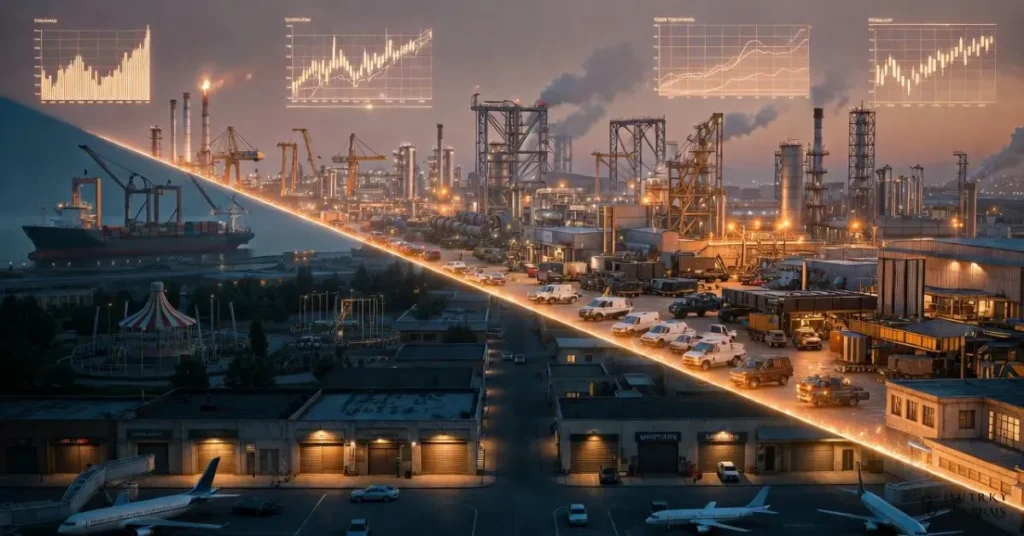
A 16:9 cinematic illustration showing a country’s economy split into two contrasting halves along a diagonal. On the brightly lit upper half: a dense industrial war complex in full production—modern factories assembling military vehicles and aircraft, shipyards loading cargo, oil refineries with flare stacks, and freight trains carrying containers—everything busy, lit with intense warm and metallic tones. On the darker lower half: a fading civilian economy—dimmed shopping streets with shuttered storefronts, an idle amusement park, and a quiet airport terminal with grounded planes, rendered in cooler, desaturated colours. Subtle charts or glowing data lines hover in the sky above the industrial side only, hinting at rising revenues and government contracts without any text. The overall mood should feel analytical and systemic rather than heroic or propagandistic, emphasizing how war spending shifts growth into specific industries while others stall.

War Economy Chapter 13: Which Industries Historically Grow During War

When governments pivot from peace to war, budgets follow. Spending that once flowed into schools, roads, and consumer programs is rapidly reallocated to weapons, logistics, and the raw materials needed to sustain a military campaign. Historically, that shift has reliably boosted defence and aerospace firms, energy and commodities producers, shipping and logistics networks, cybersecurity, and certain industrial manufacturers tied into the war supply chain. At the same time, discretionary sectors like travel, luxury retail, and some service industries often stall or shrink. This chapter maps which industries tend to grow in wartime, why their revenues and margins expand, and how those patterns have played out from World War II to post‑9/11 conflicts and the recent Ukraine era.

War Economy Chapter 13: Which Industries Historically Grow During War Read More »

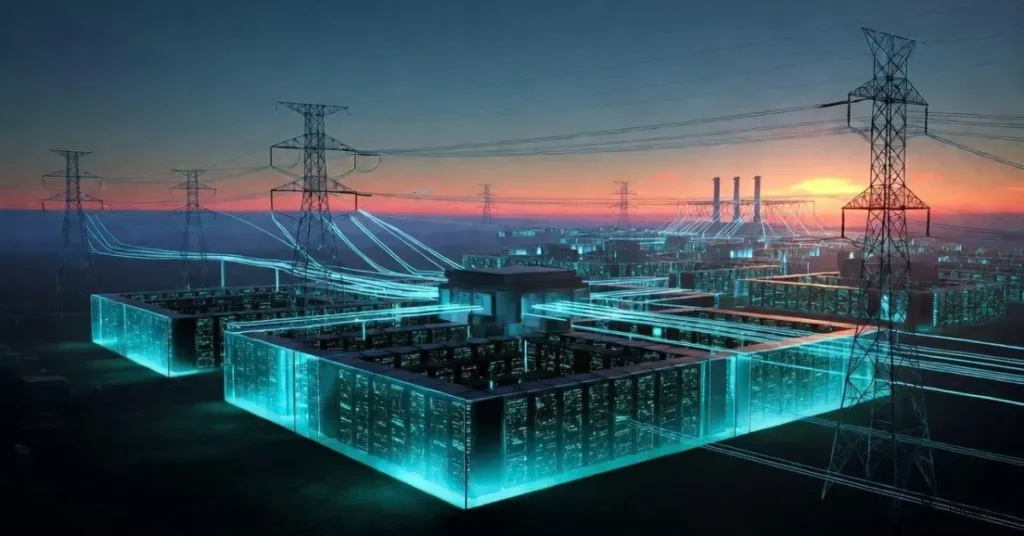
A 16:9 cinematic illustration of a massive, futuristic data center at dusk, glowing with blue server racks visible through glass walls, thick high‑voltage power lines and transmission towers feeding into the facility, and a distant power plant or solar array on the horizon. Cool blue and teal tones contrasted with warm sunset light in the sky, emphasizing the connection between AI hardware and the energy grid. No text or logos.

From Software to Watts: Why the Next AI Boom Is an Energy Story

For a decade, AI’s story was written in software releases and benchmark scores. Now, it is being rewritten in gigawatts, transformer capacity, and land rights for new data centers. Training and running frontier models demands so much electricity, cooling, and water that “physical AI” infrastructure—power-hungry data centers, substations, transmission lines, and advanced cooling systems—has become the true bottleneck. This guide explains why energy is now the limiting factor, how that reshapes the economics of AI, and which parts of the power and infrastructure stack are poised to benefit as capital rotates from pure software to the hardware, grids, and generation needed to keep the models running.

From Software to Watts: Why the Next AI Boom Is an Energy Story Read More »