
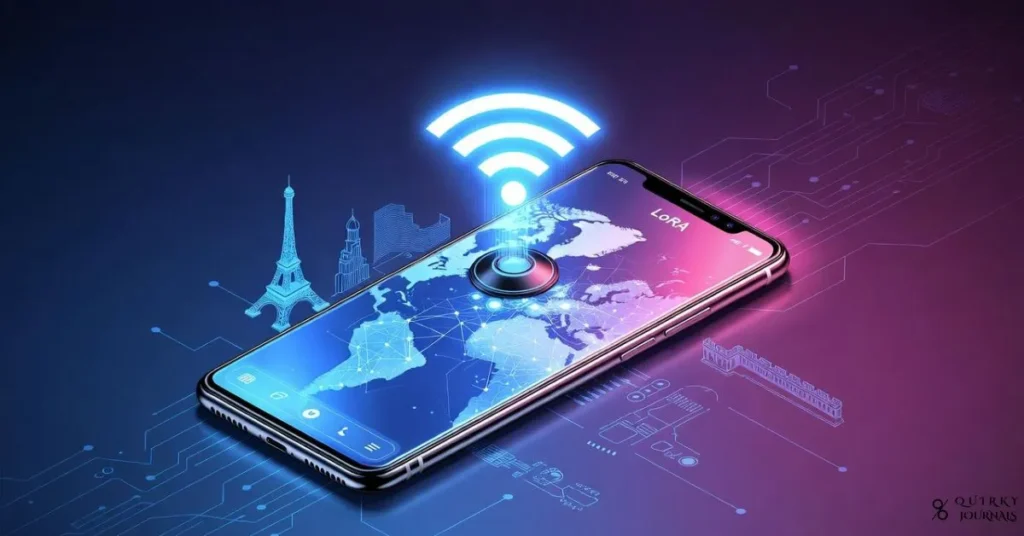
Goodbye, Data Plans: Why Your Next Smartphone Might Come With Built-in LoRa
Imagine sending messages, sharing your location, and staying connected with friends—all without Wi-Fi, cellular service, or a monthly data plan. Sounds impossible? Think again. A quiet revolution is brewing in the smartphone industry, and it centres on a technology called LoRa (Long Range). While most consumers have never heard of it, LoRa is poised to fundamentally transform how we think about mobile connectivity.
For years, we’ve been locked into a seemingly inevitable cycle: buy a phone, choose a carrier, pay monthly bills, and accept that our connectivity disappears the moment we venture beyond cell tower coverage. However, this paradigm is beginning to crack. Consequently, innovative companies are now integrating LoRa radios directly into smartphones, creating devices that can communicate off-grid across distances of several miles without relying on traditional infrastructure.
This isn’t science fiction or vaporware—it’s happening right now. From hiking trails to disaster zones, from rural communities to privacy-conscious individuals, people are discovering that connectivity doesn’t have to mean dependency on cellular networks. Throughout this comprehensive guide, we’ll explore what LoRa technology actually is, why it’s showing up in smartphones, and how it might eliminate your need for expensive data plans.
What Is LoRa and Why Should You Care?
Before diving into the smartphone applications, let’s establish what LoRa technology actually is and why it represents such a significant departure from traditional wireless communication. LoRa stands for “Long Range,” and it lives up to that name spectacularly. Unlike Wi-Fi, which maxes out around 300 feet, or Bluetooth, which barely reaches 30 feet, LoRa can transmit data across several miles—even in challenging urban environments with buildings and obstacles.
The technology operates on unlicensed radio frequencies (typically 433 MHz, 868 MHz in Europe, or 915 MHz in North America), meaning you don’t need special licenses or permissions to use it. Moreover, LoRa achieves this impressive range while consuming remarkably little power. A LoRa device can run for months or even years on a single battery charge, making it ideal for applications where frequent charging isn’t feasible.
The Technical Magic Behind LoRa
What makes LoRa special is its unique modulation technique called Chirp Spread Spectrum (CSS). Without getting too deep into the physics, CSS allows LoRa signals to be decoded even when they’re much weaker than background noise—think of it as being able to hear a whisper in a crowded stadium. This exceptional sensitivity enables those impressive transmission ranges while maintaining reliability.
Furthermore, LoRa isn’t particularly fast by modern standards. While 5G networks can deliver gigabits per second, LoRa typically operates at speeds measured in kilobits per second—roughly comparable to dial-up internet from the 1990s. However, this isn’t a limitation; it’s a deliberate trade-off. By sacrificing speed, LoRa achieves its extraordinary range and efficiency, making it perfect for sending text messages, location coordinates, and sensor data rather than streaming videos or downloading large files.
LoRa vs. LoRaWAN: Understanding the Difference
You’ll often hear about both LoRa and LoRaWAN, and it’s important to understand the distinction. LoRa refers to the physical radio technology—the actual method of transmitting data over radio waves. LoRaWAN, on the other hand, is a networking protocol that defines how LoRa devices communicate in a structured network with gateways and servers.
Traditional LoRaWAN operates in a hub-and-spoke architecture where many sensors communicate through gateways that forward data to centralised servers. Nevertheless, for smartphone applications, we’re more interested in peer-to-peer LoRa communication, where devices talk directly to each other without requiring infrastructure. This distinction matters because it determines whether you need external infrastructure (like cellular towers) or can operate completely independently.
Enter Meshtastic: The Game-Changing Open-Source Project
While LoRa technology has existed for years, its smartphone integration accelerated dramatically thanks to Meshtastic, an innovative open-source project that’s capturing imaginations worldwide. Meshtastic transforms inexpensive LoRa radios into a decentralised mesh network, creating what’s essentially a community-owned communication system that works without any corporate infrastructure.
Here’s how it works: each Meshtastic device acts both as an endpoint and a relay station. When you send a message, your device transmits it via LoRa radio to nearby devices, which automatically forward it to others, hopping across the mesh network until reaching the intended recipient. This creates communication coverage far beyond what any single device could achieve alone. Additionally, as more people join the network, it becomes stronger and more reliable—the exact opposite of cellular networks that get congested as more users connect.
Real-World Meshtastic Capabilities
Meshtastic’s practical applications are genuinely impressive. In urban environments, devices typically achieve ranges of 1-3 miles between nodes. However, in rural areas with fewer obstacles, that range extends to 3-5 miles or even further. With properly positioned relay nodes on hilltops or tall buildings, people have reported successful communications across distances exceeding 30 miles.
The system supports encrypted text messaging using military-grade AES-256 encryption, ensuring your communications remain private even though they’re transmitted over open radio frequencies. Moreover, Meshtastic includes GPS integration, allowing you to share real-time location information with your contacts—invaluable for coordinating with groups during outdoor adventures or emergencies.
Perhaps most remarkably, Meshtastic operates entirely free of charge. There are no monthly subscriptions, no per-message fees, no data caps, and no roaming charges. Once you own the hardware, your communications cost exactly nothing, forever. This economic model represents a radical departure from the rent-seeking approach of traditional telecommunications companies.
Smartphones Getting Serious About LoRa Integration
For years, LoRa remained the domain of dedicated hobbyist devices and specialised IoT hardware. That’s changing rapidly as manufacturers recognise the demand for off-grid communication capabilities. Several approaches to smartphone LoRa integration are emerging, each with distinct advantages and trade-offs.
Purpose-Built LoRa Smartphones
Companies like SpecFive have introduced purpose-built Android phones with integrated LoRa radios. The Spec5 Spectre, for instance, combines a 2.5-inch touchscreen Android phone with a built-in 915 MHz LoRa radio. These devices typically run Android operating systems, offering familiar smartphone functionality alongside their off-grid capabilities.
These purpose-built devices come with Meshtastic firmware pre-installed and configured, making them genuinely plug-and-play. You power them on, and they immediately start communicating with nearby LoRa devices—no complex setup required. Furthermore, they often include dual SIM card slots, allowing you to use traditional cellular service when available while falling back to LoRa when off-grid.
The battery strategy in these devices is particularly clever. Typically, they feature separate batteries for the Android phone and the LoRa radio module. Consequently, even if the main phone battery dies, the LoRa radio can continue operating, ensuring you maintain emergency communication capabilities when you need them most.
USB and Bluetooth Adapters: Upgrading Existing Phones
Not ready to buy a new phone? Several companies offer USB adapters that add LoRa capabilities to existing smartphones. These small devices, like Dragino’s LA66 USB Adapter, plug into your phone’s USB port and instantly enable LoRa communication through companion apps.
This approach offers several benefits. First, it allows you to keep your existing phone with all its features, contacts, and familiar interface. Second, USB adapters are relatively inexpensive, typically costing $30-60 compared to hundreds for a dedicated LoRa phone. Third, you can easily move the adapter between different devices as needed.
Bluetooth-enabled LoRa modules provide even more flexibility. These devices connect wirelessly to your smartphone, eliminating cable hassles while providing full LoRa functionality. Moreover, multiple smartphones can connect to a single Bluetooth LoRa module, making it useful for families or groups who want to share one device.
The Future: Integrated LoRa Chipsets
The ultimate evolution involves smartphone manufacturers integrating LoRa radios directly into mainstream phones alongside existing Wi-Fi, Bluetooth, and cellular radios. While this hasn’t happened yet in flagship devices from major brands, industry insiders suggest it’s only a matter of time.
Several factors point toward this integration. Component costs for LoRa radios have fallen dramatically, now adding perhaps $5-10 to manufacturing costs—negligible in phones costing $500-1000. Additionally, the power consumption is so low that it wouldn’t meaningfully impact battery life. Consequently, the technical barriers are minimal.
Projects like Pine64’s initiative to add LoRa to their open-source smartphones demonstrate that the technology and software ecosystem are ready. What’s missing is simply the decision by major manufacturers to prioritise this feature. However, as consumer awareness grows and demand increases, that decision may come sooner than many expect.
Killer Use Cases: When LoRa Smartphones Shine
Outdoor Adventures and Wilderness Safety
Hikers, campers, mountaineers, and outdoor enthusiasts represent perhaps the most obvious beneficiaries of LoRa smartphone integration. Every year, people get lost or injured in wilderness areas where cellular coverage is nonexistent. Traditional solutions, such as satellite communicators, work but cost hundreds of dollars upfront plus expensive monthly subscriptions.
LoRa smartphones offer a compelling alternative. A group of hikers can maintain communication across several miles of trail without any infrastructure, sharing locations and coordinating meetups. Similarly, if someone gets injured or lost, they can send emergency messages that hop through the mesh network to reach help, potentially saving lives in situations where traditional phones are useless.
Moreover, the GPS integration in devices like the SenseCAP Card Tracker T1000-E creates breadcrumb trails automatically, making it easier to retrace your steps or for search and rescue teams to locate you if needed. This functionality operates continuously without depending on cellular coverage or draining your battery excessively.
Disaster Preparedness and Emergency Communication
When hurricanes, earthquakes, wildfires, or other disasters strike, cellular networks often fail precisely when communication becomes most critical. Towers lose power, get damaged, or become overwhelmed by traffic. Consequently, families get separated without ways to coordinate, and emergency services struggle to communicate effectively.
LoRa-enabled smartphones provide a resilient alternative. Since they don’t depend on towers or centralised infrastructure, they continue functioning even when traditional networks collapse. Emergency responders increasingly recognise this advantage, with some departments equipping personnel with Meshtastic devices specifically for disaster scenarios.
Furthermore, community mesh networks can be established preventively in disaster-prone areas. During normal times, residents use them casually for messaging. When disaster strikes, and conventional networks fail, the mesh network becomes the primary communication infrastructure, potentially coordinating rescue efforts and keeping communities connected.
Privacy-Conscious Communication
Growing numbers of people are concerned about digital privacy and surveillance. Every text message, phone call, and data transmission through cellular networks gets logged, tracked, and potentially monitored by service providers, governments, and other entities. This surveillance infrastructure is inherent to how centralised telecommunications work.
LoRa mesh networks offer a fundamentally different model. Communications hop directly between devices without passing through corporate servers or centralised infrastructure. Additionally, end-to-end AES-256 encryption ensures that even if someone intercepts the radio signals, they can’t decrypt the messages without the encryption key shared among your group.
This doesn’t mean LoRa provides perfect anonymity—radio transmissions can still be located through direction-finding techniques. However, it does eliminate the automatic mass surveillance that characterises conventional mobile networks, offering a privacy-preserving alternative for sensitive communications.
International Travel Without Roaming Fees
Anyone who’s travelled internationally knows the frustration of roaming charges or the hassle of buying local SIM cards. LoRa operates on unlicensed frequencies that work globally (with some regional variations), meaning your LoRa smartphone functions the same whether you’re in New York, Tokyo, or Paris.
Imagine travelling through Europe with friends. Instead of paying exorbitant roaming fees or constantly hunting for Wi-Fi to coordinate meetups, your group stays connected via LoRa mesh messaging. You share locations, send updates, and coordinate plans—all without spending a cent on telecommunications services. This alone could save hundreds or thousands of dollars on extended international trips.
Rural and Underserved Communities
Billions of people worldwide live in areas with poor or nonexistent cellular coverage. Building traditional telecommunications infrastructure in these regions often proves economically unviable for carriers, leaving residents permanently disconnected or dependent on expensive satellite services.
LoRa mesh networks offer a grassroots alternative. Communities can establish their own communication networks using inexpensive hardware without requiring permission from or payment to telecommunications companies. Furthermore, these networks can expand organically as more residents participate, eventually covering entire regions through cooperatively maintained mesh infrastructure.
Several pilot projects in developing countries have demonstrated this potential. Villages that never had reliable phone service now maintain robust LoRa mesh networks, connecting residents, enabling mobile commerce, and providing emergency communication capabilities—all without traditional telecom infrastructure.
The Technical Challenges and Limitations
Bandwidth Constraints: Not a Cellular Replacement
Let’s be clear: LoRa cannot replace your cellular service for everything. The technology simply doesn’t have the bandwidth for video calls, music streaming, or browsing social media feeds. With typical data rates under 50 kilobits per second, LoRa is best suited for text messages, location coordinates, and small data packets—think SMS and GPS, not YouTube and Instagram.
However, this limitation is less restrictive than it initially appears. Studies consistently show that actual voice calls and text messages constitute a tiny fraction of mobile data usage—most bandwidth goes to video streaming and social media. For many use cases, particularly emergency communication and staying connected off-grid, LoRa’s text-based capabilities provide everything actually needed.
Moreover, clever implementations can work around bandwidth limits. Codec2, an ultra-low-bitrate voice codec, can compress voice into streams as narrow as 1.2 kilobits per second—potentially enabling voice communication over LoRa with future firmware updates. While quality won’t match cellular calls, it could provide functional voice communication when nothing else works.
Range Variability and Environmental Factors
LoRa’s impressive range comes with significant variability depending on environmental conditions. In open rural areas with line-of-sight between devices, achieving 5-10 mile ranges is realistic and well-documented. However, in dense urban environments with tall buildings, that range might shrink to under a mile between nodes.
Obstacles matter tremendously. Hills, buildings, and vegetation all absorb or reflect radio signals, reducing effective range. Additionally, operating indoors significantly degrades performance compared to outdoors. Users need realistic expectations—LoRa isn’t magic, and physical laws still apply.
Nevertheless, the mesh networking aspect of Meshtastic helps mitigate range limitations. Even if two devices can’t communicate directly, messages can hop through intermediary nodes, effectively extending range beyond what any single link could achieve. Strategic placement of relay nodes in high locations can dramatically improve coverage over wide areas.
Network Density and the Bootstrap Problem
Mesh networks face a classic chicken-and-egg problem: they become more valuable as more people join, but convincing early adopters requires demonstrating value before the network exists. LoRa mesh networks are no exception. In areas with few or no other LoRa users, your device can only communicate with others in your immediate group—useful but limited.
As adoption increases and permanent relay nodes get installed, the network becomes exponentially more useful. Some communities are proactively addressing this by installing solar-powered relay nodes in strategic locations, creating baseline coverage that encourages organic growth. Consequently, areas with active LoRa communities often see rapid expansion as new users discover existing coverage.
Cities like San Francisco, Seattle, and Austin have particularly vibrant Meshtastic communities with extensive mesh coverage. In these locations, LoRa smartphones can tap into networks with dozens or hundreds of nodes, providing robust coverage across large geographic areas. This creates positive feedback loops where coverage attracts users who add more nodes, further improving coverage.
Regulatory and Legal Considerations
Unlicensed Spectrum Rules
LoRa operates in unlicensed ISM (Industrial, Scientific, and Medical) radio bands, which means no amateur radio license is required—anyone can use it legally. However, these unlicensed bands come with regulations that vary by country. In the United States, LoRa typically operates at 915 MHz with power limits around 30 dBm (1 watt).
Users must understand that “unlicensed” doesn’t mean “unregulated.” Rules govern maximum transmission power, duty cycles (how often you can transmit), and permitted uses. Fortunately, devices like Meshtastic-enabled smartphones come pre-configured to comply with regional regulations, so casual users don’t need to worry about accidentally violating rules.
Furthermore, regulations can change. As LoRa adoption grows, regulatory bodies may revisit rules governing these frequency bands. Staying informed about regulations in your region ensures continued legal operation, though major changes affecting consumer devices seem unlikely given the minimal interference these low-power devices create.
Encryption and Lawful Access Debates
LoRa’s built-in encryption capabilities inevitably attract attention from law enforcement and intelligence agencies concerned about criminals using untraceable communications. This echoes broader debates around encrypted messaging apps like Signal and WhatsApp, raising questions about balancing privacy rights against public safety needs.
Currently, Meshtastic and similar LoRa implementations use standard encryption that users control entirely—there are no backdoors or centralised key management. This user-controlled encryption is both a feature (ensuring privacy) and potentially a concern (enabling illegal activities). Consequently, expect ongoing debates about whether and how governments should regulate encrypted peer-to-peer radio communications.
The Economics: How LoRa Could Disrupt Telecom
Breaking the Carrier Dependency Model
The traditional cellular model requires expensive infrastructure that creates natural monopolies or oligopolies. Carriers invest billions in towers and spectrum licenses, then recoup costs through monthly subscription fees that consumers pay whether they heavily use the network or barely touch it. This model has persisted for decades largely because alternatives haven’t existed.
LoRa fundamentally challenges this economics. The technology enables peer-to-peer communication without requiring expensive infrastructure, breaking the carrier dependency for certain use cases. While LoRa won’t replace cellular networks entirely, it could capture significant portions of the market—particularly price-sensitive users who primarily need basic text and location services rather than high-bandwidth applications.
Consider a hypothetical scenario where half of smartphone users adopt LoRa for their casual messaging and location sharing, reserving cellular data for streaming and browsing. Carriers could potentially lose tens of billions in revenue as users downgrade to cheaper plans or eliminate data plans. This economic threat explains why major carriers haven’t enthusiastically embraced LoRa integration—it cannibalises their existing business models.
The Open-Source Advantage
Unlike proprietary cellular technologies controlled by corporations and standards bodies, Meshtastic firmware is completely open-source and community-driven. Anyone can inspect the code, modify it, contribute improvements, or create derivative projects. This openness creates a robust ecosystem of innovation that moves faster and more democratically than corporate development.
Moreover, open-source development means no single entity can control, monetise, or restrict the technology. If tomorrow a company decides to charge for Meshtastic access, the community could simply fork the project and continue developing it independently. This resistance to corporate capture ensures LoRa mesh networking remains accessible and free, aligned with user interests rather than shareholder profits.
What’s Next: The Future of LoRa Smartphones
Hardware Evolution and Integration
Current LoRa smartphones represent first-generation implementations—functional but clearly not mature products. However, rapid innovation is occurring across multiple dimensions. Chip manufacturers are developing more integrated solutions that combine LoRa, GPS, and other radios on single chips, reducing cost and power consumption while improving performance.
Furthermore, antenna design is improving. Early LoRa devices required external antennas that protruded awkwardly from phones. Newer designs incorporate antennas into the phone chassis, creating sleeker form factors without sacrificing performance. Additionally, advances in software-defined radio technology may eventually enable a single radio to handle multiple protocols, including LoRa, reducing hardware complexity.
Battery technology represents another frontier. As solid-state batteries and other advanced energy storage technologies mature, phones could achieve weeks of standby time in LoRa mode, making them genuinely viable alternatives to traditional phones for off-grid scenarios.
Hybrid Networking: The Best of Both Worlds
Rather than viewing LoRa and cellular as competitors, the future likely involves intelligent hybrid systems that automatically select the best available network for each task. Need to stream a video? Use cellular or Wi-Fi. Sending a text message while hiking? LoRa handles it efficiently.
Operating systems could seamlessly bridge these networks. Messages sent via LoRa when off-grid could automatically sync to cloud services when cellular connectivity returns, maintaining conversation continuity across different network types. Similarly, location sharing could use whichever network is available, ensuring friends always know your position regardless of coverage.
This hybrid approach maximises utility while minimising cost and power consumption. Users benefit from cellular networks’ speed and coverage when available, while gaining independence through LoRa when traditional networks are absent or unnecessary. Consequently, adoption becomes easier—LoRa adds capabilities without requiring users to sacrifice existing services.
Community Infrastructure and Relay Networks
The buildout of community-owned LoRa infrastructure represents perhaps the most exciting development. Volunteers worldwide are installing solar-powered relay nodes on hills, tall buildings, and other strategic locations, creating public mesh networks accessible to all.
Some communities are taking this further by establishing LoRa-to-internet gateways that allow mesh network messages to reach the broader internet when needed. This creates bridges between off-grid mesh communications and traditional online services, expanding utility without requiring constant internet connectivity.
Moreover, businesses are beginning to install LoRa infrastructure to support customers and employees. Outdoor recreation companies, agricultural enterprises, and logistics firms all benefit from reliable off-grid communication capabilities, creating incentives to deploy and maintain mesh network infrastructure that benefits entire communities.
Should You Get a LoRa Smartphone Now?
Evaluating Your Needs
Whether a LoRa smartphone makes sense depends entirely on your specific circumstances and priorities. If you regularly venture into areas without cellular coverage—hiking, camping, off-roading, or working in remote locations—LoRa capability could prove genuinely valuable, potentially even lifesaving in emergencies.
Similarly, if you prioritise communication privacy and want to minimize reliance on corporate telecommunications infrastructure, LoRa offers meaningful advantages. The combination of decentralised networking and end-to-end encryption provides communication security that traditional cellular networks fundamentally cannot match.
Conversely, if you never leave areas with excellent cellular coverage and aren’t particularly privacy-conscious, LoRa smartphones currently offer a limited practical advantage. You’d be paying for capabilities you’d rarely use, potentially accepting compromises in form factor or mainstream features that matter more to your daily usage.
The Adoption Timing Question
Early adopters accepting current limitations gain several advantages. They can influence the direction of development by participating in communities, providing feedback, and supporting projects. Additionally, they position themselves advantageously as networks expand—being the first LoRa user in your area makes you the anchor for future growth.
However, waiting also has merit. Hardware continues improving rapidly, prices are falling, and software matures with each release. Furthermore, network coverage expands continuously as adoption grows, meaning holding off might result in better hardware and more robust networks when you eventually join.
A middle path involves getting inexpensive USB or Bluetooth LoRa adapters to experiment with the technology using your existing phone. This low-risk approach lets you evaluate whether LoRa capabilities provide genuine value in your specific context before committing to dedicated hardware.
Conclusion: A Communication Revolution in Your Pocket
The integration of LoRa technology into smartphones represents more than a simple feature addition—it marks a fundamental shift in how we think about mobile connectivity. For the first time, mainstream consumer devices can communicate completely independently of corporate telecommunications infrastructure, offering freedom, resilience, and privacy that traditional cellular networks cannot match.
Will LoRa smartphones completely replace traditional cellular devices? Almost certainly not—at least not in the foreseeable future. The technologies serve different purposes and complement each other well. However, LoRa integration dramatically expands what smartphones can do, adding off-grid communication capabilities that prove invaluable in numerous scenarios from wilderness adventures to disaster response to privacy-conscious communication.
As the technology matures, prices fall, and networks expand, LoRa-enabled smartphones will likely transition from niche products to mainstream devices. Major manufacturers will integrate LoRa radios alongside existing Wi-Fi, Bluetooth, and cellular capabilities, making off-grid communication a standard smartphone feature rather than a specialised option.
The timeline for this mainstream integration remains uncertain. It could happen rapidly if a major manufacturer decides to differentiate their flagship device with LoRa capability, potentially triggering industry-wide adoption. Alternatively, the transition might unfold gradually over years as adoption grows organically and component costs continue falling.
Either way, the direction seems clear. Our smartphones are becoming more capable, more independent, and more aligned with user interests rather than carrier business models. The question isn’t whether LoRa integration will become commonplace, but rather how quickly it will happen—and whether you’ll be an early adopter who helped pioneer this communication revolution or someone who eventually adopts it once it becomes ubiquitous. The choice, as they say, is yours. Your next smartphone might just offer the freedom to say goodbye to monthly data plans forever.
Legal Disclaimer
The information provided in this article is for general informational and educational purposes only. This content does not constitute professional advice regarding telecommunications technologies, radio regulations, or consumer electronics purchasing decisions.
Radio frequency technologies are subject to regulations that vary by country and region. Users are responsible for ensuring their use of LoRa devices complies with applicable laws and regulations in their jurisdiction. Unauthorised or improper use of radio transmitters may violate local, national, or international law and could result in fines or other penalties.
While LoRa technology can provide communication capabilities in areas without cellular coverage, it should not be relied upon as the sole means of emergency communication in life-threatening situations. Always carry appropriate backup communication and safety equipment when venturing into remote areas. LoRa networks may not be available or reliable in all locations, and performance can vary significantly based on environmental conditions, terrain, and network density.
Product specifications, features, and availability mentioned in this article are subject to change without notice. Always verify current specifications and capabilities directly with manufacturers before making purchasing decisions. Links to external websites and products are provided for informational purposes only and do not constitute endorsements or recommendations.
This article discusses emerging technologies and potential future developments that may or may not materialise as described. Forward-looking statements about technology adoption, industry trends, and product evolution represent informed speculation based on current information and should not be relied upon as predictions or guarantees of future outcomes.
Privacy and security claims regarding LoRa communications reflect general characteristics of the technology but should not be interpreted as guarantees of absolute security or anonymity. All communication technologies carry inherent risks, and users should research and understand these risks before relying on any technology for sensitive communications.
The author and publisher are not affiliated with LoRa Alliance, Semtech Corporation, Meshtastic, or any manufacturers mentioned in this article unless explicitly stated. Information about specific products and services is based on publicly available sources and should be independently verified.
References
[1] “What is LoRa?” LoRa Alliance. [Online]. Available: https://lora-alliance.org/. [Accessed: Jan. 29, 2026].
[2] “Introduction to Meshtastic,” Meshtastic Documentation. [Online]. Available: https://meshtastic.org/docs/introduction/. [Accessed: Jan. 29, 2026].
[3] “Spec5 Spectre-Android Off-Grid Meshtastic Phone with LoRa,” Amazon. [Online]. Available: https://www.amazon.com/spec5-Spectre-Android-Off-Grid-Meshtastic-Tactical/dp/B0DN1J48MB. [Accessed: Jan. 29, 2026].
[4] “What Is Off-Grid Communication and How Is It Changing with LoRa and Meshtastic,” Seeed Studio, Oct. 20, 2025. [Online]. Available: https://www.seeedstudio.com/blog/2025/10/14/off-grid-communication-lora-meshtastic/. [Accessed: Jan. 29, 2026].
[5] J. Höchst et al., “LoRa-based Device-to-Device Smartphone Communication for Crisis Scenarios,” in Proc. 17th Int. Conf. Information Systems for Crisis Response and Management, May 2020. [Online]. Available: https://peasec.de/paper/2020/2020_H%C3%B6chstetal_LoRaDeviceSmartphoneCommunicationCrisisScenarios.pdf. [Accessed: Jan. 29, 2026].
[6] “LoRaWAN Reaches Critical Mass: 125 Million Devices and Accelerating Growth,” Semtech Blog, 2026. [Online]. Available: https://blog.semtech.com/lorawan-reaches-critical-mass-125-million-devices-and-accelerating-growth. [Accessed: Jan. 29, 2026].
[7] “Meshtastic: Off-Grid Communication For Everyone,” Meshtastic. [Online]. Available: https://meshtastic.org/. [Accessed: Jan. 29, 2026].
[8] “Adding LoRaWAN capabilities to smartphones, computers, and Raspberry Pi,” Taste The Code, Dec. 16, 2022. [Online]. Available: https://www.tastethecode.com/adding-lorawan-capabilities-to-smartphones-computers-and-raspberry-pi. [Accessed: Jan. 29, 2026].
Goodbye, Data Plans: Why Your Next Smartphone Might Come With Built-in LoRa
Imagine sending messages, sharing your location, and staying connected with friends—all without Wi-Fi, cellular service, or a monthly data plan. Sounds impossible? Think again. A quiet revolution is brewing in the smartphone industry, and it centres on a technology called LoRa (Long Range). While most consumers have never heard of it, LoRa is poised to fundamentally transform how we think about mobile connectivity.
For years, we’ve been locked into a seemingly inevitable cycle: buy a phone, choose a carrier, pay monthly bills, and accept that our connectivity disappears the moment we venture beyond cell tower coverage. However, this paradigm is beginning to crack. Consequently, innovative companies are now integrating LoRa radios directly into smartphones, creating devices that can communicate off-grid across distances of several miles without relying on traditional infrastructure.
This isn’t science fiction or vaporware—it’s happening right now. From hiking trails to disaster zones, from rural communities to privacy-conscious individuals, people are discovering that connectivity doesn’t have to mean dependency on cellular networks. Throughout this comprehensive guide, we’ll explore what LoRa technology actually is, why it’s showing up in smartphones, and how it might eliminate your need for expensive data plans.
What Is LoRa and Why Should You Care?
Before diving into the smartphone applications, let’s establish what LoRa technology actually is and why it represents such a significant departure from traditional wireless communication. LoRa stands for “Long Range,” and it lives up to that name spectacularly. Unlike Wi-Fi, which maxes out around 300 feet, or Bluetooth, which barely reaches 30 feet, LoRa can transmit data across several miles—even in challenging urban environments with buildings and obstacles.
The technology operates on unlicensed radio frequencies (typically 433 MHz, 868 MHz in Europe, or 915 MHz in North America), meaning you don’t need special licenses or permissions to use it. Moreover, LoRa achieves this impressive range while consuming remarkably little power. A LoRa device can run for months or even years on a single battery charge, making it ideal for applications where frequent charging isn’t feasible.
The Technical Magic Behind LoRa
What makes LoRa special is its unique modulation technique called Chirp Spread Spectrum (CSS). Without getting too deep into the physics, CSS allows LoRa signals to be decoded even when they’re much weaker than background noise—think of it as being able to hear a whisper in a crowded stadium. This exceptional sensitivity enables those impressive transmission ranges while maintaining reliability.
Furthermore, LoRa isn’t particularly fast by modern standards. While 5G networks can deliver gigabits per second, LoRa typically operates at speeds measured in kilobits per second—roughly comparable to dial-up internet from the 1990s. However, this isn’t a limitation; it’s a deliberate trade-off. By sacrificing speed, LoRa achieves its extraordinary range and efficiency, making it perfect for sending text messages, location coordinates, and sensor data rather than streaming videos or downloading large files.
LoRa vs. LoRaWAN: Understanding the Difference
You’ll often hear about both LoRa and LoRaWAN, and it’s important to understand the distinction. LoRa refers to the physical radio technology—the actual method of transmitting data over radio waves. LoRaWAN, on the other hand, is a networking protocol that defines how LoRa devices communicate in a structured network with gateways and servers.
Traditional LoRaWAN operates in a hub-and-spoke architecture where many sensors communicate through gateways that forward data to centralised servers. Nevertheless, for smartphone applications, we’re more interested in peer-to-peer LoRa communication, where devices talk directly to each other without requiring infrastructure. This distinction matters because it determines whether you need external infrastructure (like cellular towers) or can operate completely independently.
Enter Meshtastic: The Game-Changing Open-Source Project
While LoRa technology has existed for years, its smartphone integration accelerated dramatically thanks to Meshtastic, an innovative open-source project that’s capturing imaginations worldwide. Meshtastic transforms inexpensive LoRa radios into a decentralised mesh network, creating what’s essentially a community-owned communication system that works without any corporate infrastructure.
Here’s how it works: each Meshtastic device acts both as an endpoint and a relay station. When you send a message, your device transmits it via LoRa radio to nearby devices, which automatically forward it to others, hopping across the mesh network until reaching the intended recipient. This creates communication coverage far beyond what any single device could achieve alone. Additionally, as more people join the network, it becomes stronger and more reliable—the exact opposite of cellular networks that get congested as more users connect.
Real-World Meshtastic Capabilities
Meshtastic’s practical applications are genuinely impressive. In urban environments, devices typically achieve ranges of 1-3 miles between nodes. However, in rural areas with fewer obstacles, that range extends to 3-5 miles or even further. With properly positioned relay nodes on hilltops or tall buildings, people have reported successful communications across distances exceeding 30 miles.
The system supports encrypted text messaging using military-grade AES-256 encryption, ensuring your communications remain private even though they’re transmitted over open radio frequencies. Moreover, Meshtastic includes GPS integration, allowing you to share real-time location information with your contacts—invaluable for coordinating with groups during outdoor adventures or emergencies.
Perhaps most remarkably, Meshtastic operates entirely free of charge. There are no monthly subscriptions, no per-message fees, no data caps, and no roaming charges. Once you own the hardware, your communications cost exactly nothing, forever. This economic model represents a radical departure from the rent-seeking approach of traditional telecommunications companies.
Smartphones Getting Serious About LoRa Integration
For years, LoRa remained the domain of dedicated hobbyist devices and specialised IoT hardware. That’s changing rapidly as manufacturers recognise the demand for off-grid communication capabilities. Several approaches to smartphone LoRa integration are emerging, each with distinct advantages and trade-offs.
Purpose-Built LoRa Smartphones
Companies like SpecFive have introduced purpose-built Android phones with integrated LoRa radios. The Spec5 Spectre, for instance, combines a 2.5-inch touchscreen Android phone with a built-in 915 MHz LoRa radio. These devices typically run Android operating systems, offering familiar smartphone functionality alongside their off-grid capabilities.
These purpose-built devices come with Meshtastic firmware pre-installed and configured, making them genuinely plug-and-play. You power them on, and they immediately start communicating with nearby LoRa devices—no complex setup required. Furthermore, they often include dual SIM card slots, allowing you to use traditional cellular service when available while falling back to LoRa when off-grid.
The battery strategy in these devices is particularly clever. Typically, they feature separate batteries for the Android phone and the LoRa radio module. Consequently, even if the main phone battery dies, the LoRa radio can continue operating, ensuring you maintain emergency communication capabilities when you need them most.
USB and Bluetooth Adapters: Upgrading Existing Phones
Not ready to buy a new phone? Several companies offer USB adapters that add LoRa capabilities to existing smartphones. These small devices, like Dragino’s LA66 USB Adapter, plug into your phone’s USB port and instantly enable LoRa communication through companion apps.
This approach offers several benefits. First, it allows you to keep your existing phone with all its features, contacts, and familiar interface. Second, USB adapters are relatively inexpensive, typically costing $30-60 compared to hundreds for a dedicated LoRa phone. Third, you can easily move the adapter between different devices as needed.
Bluetooth-enabled LoRa modules provide even more flexibility. These devices connect wirelessly to your smartphone, eliminating cable hassles while providing full LoRa functionality. Moreover, multiple smartphones can connect to a single Bluetooth LoRa module, making it useful for families or groups who want to share one device.
The Future: Integrated LoRa Chipsets
The ultimate evolution involves smartphone manufacturers integrating LoRa radios directly into mainstream phones alongside existing Wi-Fi, Bluetooth, and cellular radios. While this hasn’t happened yet in flagship devices from major brands, industry insiders suggest it’s only a matter of time.
Several factors point toward this integration. Component costs for LoRa radios have fallen dramatically, now adding perhaps $5-10 to manufacturing costs—negligible in phones costing $500-1000. Additionally, the power consumption is so low that it wouldn’t meaningfully impact battery life. Consequently, the technical barriers are minimal.
Projects like Pine64’s initiative to add LoRa to their open-source smartphones demonstrate that the technology and software ecosystem are ready. What’s missing is simply the decision by major manufacturers to prioritise this feature. However, as consumer awareness grows and demand increases, that decision may come sooner than many expect.
Killer Use Cases: When LoRa Smartphones Shine
Outdoor Adventures and Wilderness Safety
Hikers, campers, mountaineers, and outdoor enthusiasts represent perhaps the most obvious beneficiaries of LoRa smartphone integration. Every year, people get lost or injured in wilderness areas where cellular coverage is nonexistent. Traditional solutions, such as satellite communicators, work but cost hundreds of dollars upfront plus expensive monthly subscriptions.
LoRa smartphones offer a compelling alternative. A group of hikers can maintain communication across several miles of trail without any infrastructure, sharing locations and coordinating meetups. Similarly, if someone gets injured or lost, they can send emergency messages that hop through the mesh network to reach help, potentially saving lives in situations where traditional phones are useless.
Moreover, the GPS integration in devices like the SenseCAP Card Tracker T1000-E creates breadcrumb trails automatically, making it easier to retrace your steps or for search and rescue teams to locate you if needed. This functionality operates continuously without depending on cellular coverage or draining your battery excessively.
Disaster Preparedness and Emergency Communication
When hurricanes, earthquakes, wildfires, or other disasters strike, cellular networks often fail precisely when communication becomes most critical. Towers lose power, get damaged, or become overwhelmed by traffic. Consequently, families get separated without ways to coordinate, and emergency services struggle to communicate effectively.
LoRa-enabled smartphones provide a resilient alternative. Since they don’t depend on towers or centralised infrastructure, they continue functioning even when traditional networks collapse. Emergency responders increasingly recognise this advantage, with some departments equipping personnel with Meshtastic devices specifically for disaster scenarios.
Furthermore, community mesh networks can be established preventively in disaster-prone areas. During normal times, residents use them casually for messaging. When disaster strikes, and conventional networks fail, the mesh network becomes the primary communication infrastructure, potentially coordinating rescue efforts and keeping communities connected.
Privacy-Conscious Communication
Growing numbers of people are concerned about digital privacy and surveillance. Every text message, phone call, and data transmission through cellular networks gets logged, tracked, and potentially monitored by service providers, governments, and other entities. This surveillance infrastructure is inherent to how centralised telecommunications work.
LoRa mesh networks offer a fundamentally different model. Communications hop directly between devices without passing through corporate servers or centralised infrastructure. Additionally, end-to-end AES-256 encryption ensures that even if someone intercepts the radio signals, they can’t decrypt the messages without the encryption key shared among your group.
This doesn’t mean LoRa provides perfect anonymity—radio transmissions can still be located through direction-finding techniques. However, it does eliminate the automatic mass surveillance that characterises conventional mobile networks, offering a privacy-preserving alternative for sensitive communications.
International Travel Without Roaming Fees
Anyone who’s travelled internationally knows the frustration of roaming charges or the hassle of buying local SIM cards. LoRa operates on unlicensed frequencies that work globally (with some regional variations), meaning your LoRa smartphone functions the same whether you’re in New York, Tokyo, or Paris.
Imagine travelling through Europe with friends. Instead of paying exorbitant roaming fees or constantly hunting for Wi-Fi to coordinate meetups, your group stays connected via LoRa mesh messaging. You share locations, send updates, and coordinate plans—all without spending a cent on telecommunications services. This alone could save hundreds or thousands of dollars on extended international trips.
Rural and Underserved Communities
Billions of people worldwide live in areas with poor or nonexistent cellular coverage. Building traditional telecommunications infrastructure in these regions often proves economically unviable for carriers, leaving residents permanently disconnected or dependent on expensive satellite services.
LoRa mesh networks offer a grassroots alternative. Communities can establish their own communication networks using inexpensive hardware without requiring permission from or payment to telecommunications companies. Furthermore, these networks can expand organically as more residents participate, eventually covering entire regions through cooperatively maintained mesh infrastructure.
Several pilot projects in developing countries have demonstrated this potential. Villages that never had reliable phone service now maintain robust LoRa mesh networks, connecting residents, enabling mobile commerce, and providing emergency communication capabilities—all without traditional telecom infrastructure.
The Technical Challenges and Limitations
Bandwidth Constraints: Not a Cellular Replacement
Let’s be clear: LoRa cannot replace your cellular service for everything. The technology simply doesn’t have the bandwidth for video calls, music streaming, or browsing social media feeds. With typical data rates under 50 kilobits per second, LoRa is best suited for text messages, location coordinates, and small data packets—think SMS and GPS, not YouTube and Instagram.
However, this limitation is less restrictive than it initially appears. Studies consistently show that actual voice calls and text messages constitute a tiny fraction of mobile data usage—most bandwidth goes to video streaming and social media. For many use cases, particularly emergency communication and staying connected off-grid, LoRa’s text-based capabilities provide everything actually needed.
Moreover, clever implementations can work around bandwidth limits. Codec2, an ultra-low-bitrate voice codec, can compress voice into streams as narrow as 1.2 kilobits per second—potentially enabling voice communication over LoRa with future firmware updates. While quality won’t match cellular calls, it could provide functional voice communication when nothing else works.
Range Variability and Environmental Factors
LoRa’s impressive range comes with significant variability depending on environmental conditions. In open rural areas with line-of-sight between devices, achieving 5-10 mile ranges is realistic and well-documented. However, in dense urban environments with tall buildings, that range might shrink to under a mile between nodes.
Obstacles matter tremendously. Hills, buildings, and vegetation all absorb or reflect radio signals, reducing effective range. Additionally, operating indoors significantly degrades performance compared to outdoors. Users need realistic expectations—LoRa isn’t magic, and physical laws still apply.
Nevertheless, the mesh networking aspect of Meshtastic helps mitigate range limitations. Even if two devices can’t communicate directly, messages can hop through intermediary nodes, effectively extending range beyond what any single link could achieve. Strategic placement of relay nodes in high locations can dramatically improve coverage over wide areas.
Network Density and the Bootstrap Problem
Mesh networks face a classic chicken-and-egg problem: they become more valuable as more people join, but convincing early adopters requires demonstrating value before the network exists. LoRa mesh networks are no exception. In areas with few or no other LoRa users, your device can only communicate with others in your immediate group—useful but limited.
As adoption increases and permanent relay nodes get installed, the network becomes exponentially more useful. Some communities are proactively addressing this by installing solar-powered relay nodes in strategic locations, creating baseline coverage that encourages organic growth. Consequently, areas with active LoRa communities often see rapid expansion as new users discover existing coverage.
Cities like San Francisco, Seattle, and Austin have particularly vibrant Meshtastic communities with extensive mesh coverage. In these locations, LoRa smartphones can tap into networks with dozens or hundreds of nodes, providing robust coverage across large geographic areas. This creates positive feedback loops where coverage attracts users who add more nodes, further improving coverage.
Regulatory and Legal Considerations
Unlicensed Spectrum Rules
LoRa operates in unlicensed ISM (Industrial, Scientific, and Medical) radio bands, which means no amateur radio license is required—anyone can use it legally. However, these unlicensed bands come with regulations that vary by country. In the United States, LoRa typically operates at 915 MHz with power limits around 30 dBm (1 watt).
Users must understand that “unlicensed” doesn’t mean “unregulated.” Rules govern maximum transmission power, duty cycles (how often you can transmit), and permitted uses. Fortunately, devices like Meshtastic-enabled smartphones come pre-configured to comply with regional regulations, so casual users don’t need to worry about accidentally violating rules.
Furthermore, regulations can change. As LoRa adoption grows, regulatory bodies may revisit rules governing these frequency bands. Staying informed about regulations in your region ensures continued legal operation, though major changes affecting consumer devices seem unlikely given the minimal interference these low-power devices create.
Encryption and Lawful Access Debates
LoRa’s built-in encryption capabilities inevitably attract attention from law enforcement and intelligence agencies concerned about criminals using untraceable communications. This echoes broader debates around encrypted messaging apps like Signal and WhatsApp, raising questions about balancing privacy rights against public safety needs.
Currently, Meshtastic and similar LoRa implementations use standard encryption that users control entirely—there are no backdoors or centralised key management. This user-controlled encryption is both a feature (ensuring privacy) and potentially a concern (enabling illegal activities). Consequently, expect ongoing debates about whether and how governments should regulate encrypted peer-to-peer radio communications.
The Economics: How LoRa Could Disrupt Telecom
Breaking the Carrier Dependency Model
The traditional cellular model requires expensive infrastructure that creates natural monopolies or oligopolies. Carriers invest billions in towers and spectrum licenses, then recoup costs through monthly subscription fees that consumers pay whether they heavily use the network or barely touch it. This model has persisted for decades largely because alternatives haven’t existed.
LoRa fundamentally challenges this economics. The technology enables peer-to-peer communication without requiring expensive infrastructure, breaking the carrier dependency for certain use cases. While LoRa won’t replace cellular networks entirely, it could capture significant portions of the market—particularly price-sensitive users who primarily need basic text and location services rather than high-bandwidth applications.
Consider a hypothetical scenario where half of smartphone users adopt LoRa for their casual messaging and location sharing, reserving cellular data for streaming and browsing. Carriers could potentially lose tens of billions in revenue as users downgrade to cheaper plans or eliminate data plans. This economic threat explains why major carriers haven’t enthusiastically embraced LoRa integration—it cannibalises their existing business models.
The Open-Source Advantage
Unlike proprietary cellular technologies controlled by corporations and standards bodies, Meshtastic firmware is completely open-source and community-driven. Anyone can inspect the code, modify it, contribute improvements, or create derivative projects. This openness creates a robust ecosystem of innovation that moves faster and more democratically than corporate development.
Moreover, open-source development means no single entity can control, monetise, or restrict the technology. If tomorrow a company decides to charge for Meshtastic access, the community could simply fork the project and continue developing it independently. This resistance to corporate capture ensures LoRa mesh networking remains accessible and free, aligned with user interests rather than shareholder profits.
What’s Next: The Future of LoRa Smartphones
Hardware Evolution and Integration
Current LoRa smartphones represent first-generation implementations—functional but clearly not mature products. However, rapid innovation is occurring across multiple dimensions. Chip manufacturers are developing more integrated solutions that combine LoRa, GPS, and other radios on single chips, reducing cost and power consumption while improving performance.
Furthermore, antenna design is improving. Early LoRa devices required external antennas that protruded awkwardly from phones. Newer designs incorporate antennas into the phone chassis, creating sleeker form factors without sacrificing performance. Additionally, advances in software-defined radio technology may eventually enable a single radio to handle multiple protocols, including LoRa, reducing hardware complexity.
Battery technology represents another frontier. As solid-state batteries and other advanced energy storage technologies mature, phones could achieve weeks of standby time in LoRa mode, making them genuinely viable alternatives to traditional phones for off-grid scenarios.
Hybrid Networking: The Best of Both Worlds
Rather than viewing LoRa and cellular as competitors, the future likely involves intelligent hybrid systems that automatically select the best available network for each task. Need to stream a video? Use cellular or Wi-Fi. Sending a text message while hiking? LoRa handles it efficiently.
Operating systems could seamlessly bridge these networks. Messages sent via LoRa when off-grid could automatically sync to cloud services when cellular connectivity returns, maintaining conversation continuity across different network types. Similarly, location sharing could use whichever network is available, ensuring friends always know your position regardless of coverage.
This hybrid approach maximises utility while minimising cost and power consumption. Users benefit from cellular networks’ speed and coverage when available, while gaining independence through LoRa when traditional networks are absent or unnecessary. Consequently, adoption becomes easier—LoRa adds capabilities without requiring users to sacrifice existing services.
Community Infrastructure and Relay Networks
The buildout of community-owned LoRa infrastructure represents perhaps the most exciting development. Volunteers worldwide are installing solar-powered relay nodes on hills, tall buildings, and other strategic locations, creating public mesh networks accessible to all.
Some communities are taking this further by establishing LoRa-to-internet gateways that allow mesh network messages to reach the broader internet when needed. This creates bridges between off-grid mesh communications and traditional online services, expanding utility without requiring constant internet connectivity.
Moreover, businesses are beginning to install LoRa infrastructure to support customers and employees. Outdoor recreation companies, agricultural enterprises, and logistics firms all benefit from reliable off-grid communication capabilities, creating incentives to deploy and maintain mesh network infrastructure that benefits entire communities.
Should You Get a LoRa Smartphone Now?
Evaluating Your Needs
Whether a LoRa smartphone makes sense depends entirely on your specific circumstances and priorities. If you regularly venture into areas without cellular coverage—hiking, camping, off-roading, or working in remote locations—LoRa capability could prove genuinely valuable, potentially even lifesaving in emergencies.
Similarly, if you prioritise communication privacy and want to minimize reliance on corporate telecommunications infrastructure, LoRa offers meaningful advantages. The combination of decentralised networking and end-to-end encryption provides communication security that traditional cellular networks fundamentally cannot match.
Conversely, if you never leave areas with excellent cellular coverage and aren’t particularly privacy-conscious, LoRa smartphones currently offer a limited practical advantage. You’d be paying for capabilities you’d rarely use, potentially accepting compromises in form factor or mainstream features that matter more to your daily usage.
The Adoption Timing Question
Early adopters accepting current limitations gain several advantages. They can influence the direction of development by participating in communities, providing feedback, and supporting projects. Additionally, they position themselves advantageously as networks expand—being the first LoRa user in your area makes you the anchor for future growth.
However, waiting also has merit. Hardware continues improving rapidly, prices are falling, and software matures with each release. Furthermore, network coverage expands continuously as adoption grows, meaning holding off might result in better hardware and more robust networks when you eventually join.
A middle path involves getting inexpensive USB or Bluetooth LoRa adapters to experiment with the technology using your existing phone. This low-risk approach lets you evaluate whether LoRa capabilities provide genuine value in your specific context before committing to dedicated hardware.
Conclusion: A Communication Revolution in Your Pocket
The integration of LoRa technology into smartphones represents more than a simple feature addition—it marks a fundamental shift in how we think about mobile connectivity. For the first time, mainstream consumer devices can communicate completely independently of corporate telecommunications infrastructure, offering freedom, resilience, and privacy that traditional cellular networks cannot match.
Will LoRa smartphones completely replace traditional cellular devices? Almost certainly not—at least not in the foreseeable future. The technologies serve different purposes and complement each other well. However, LoRa integration dramatically expands what smartphones can do, adding off-grid communication capabilities that prove invaluable in numerous scenarios from wilderness adventures to disaster response to privacy-conscious communication.
As the technology matures, prices fall, and networks expand, LoRa-enabled smartphones will likely transition from niche products to mainstream devices. Major manufacturers will integrate LoRa radios alongside existing Wi-Fi, Bluetooth, and cellular capabilities, making off-grid communication a standard smartphone feature rather than a specialised option.
The timeline for this mainstream integration remains uncertain. It could happen rapidly if a major manufacturer decides to differentiate their flagship device with LoRa capability, potentially triggering industry-wide adoption. Alternatively, the transition might unfold gradually over years as adoption grows organically and component costs continue falling.
Either way, the direction seems clear. Our smartphones are becoming more capable, more independent, and more aligned with user interests rather than carrier business models. The question isn’t whether LoRa integration will become commonplace, but rather how quickly it will happen—and whether you’ll be an early adopter who helped pioneer this communication revolution or someone who eventually adopts it once it becomes ubiquitous. The choice, as they say, is yours. Your next smartphone might just offer the freedom to say goodbye to monthly data plans forever.
Spend some time for your future.
To deepen your understanding of today’s evolving financial landscape, we recommend exploring the following articles:
The $100k Net Worth Blueprint: How to Hit Six Figures on a $60k Salary
Flat Rate Loan Scam: Why 5% Actually Costs You 9-10%
Set It and Forget It: How Smart Investors Simplify Decisions Without Losing Control
Consumer Confidence Crashes to 2014 Lows: Recession Signal Flashes
Explore these articles to get a grasp on the new changes in the financial world.
Legal Disclaimer
The information provided in this article is for general informational and educational purposes only. This content does not constitute professional advice regarding telecommunications technologies, radio regulations, or consumer electronics purchasing decisions.
Radio frequency technologies are subject to regulations that vary by country and region. Users are responsible for ensuring their use of LoRa devices complies with applicable laws and regulations in their jurisdiction. Unauthorised or improper use of radio transmitters may violate local, national, or international law and could result in fines or other penalties.
While LoRa technology can provide communication capabilities in areas without cellular coverage, it should not be relied upon as the sole means of emergency communication in life-threatening situations. Always carry appropriate backup communication and safety equipment when venturing into remote areas. LoRa networks may not be available or reliable in all locations, and performance can vary significantly based on environmental conditions, terrain, and network density.
Product specifications, features, and availability mentioned in this article are subject to change without notice. Always verify current specifications and capabilities directly with manufacturers before making purchasing decisions. Links to external websites and products are provided for informational purposes only and do not constitute endorsements or recommendations.
This article discusses emerging technologies and potential future developments that may or may not materialise as described. Forward-looking statements about technology adoption, industry trends, and product evolution represent informed speculation based on current information and should not be relied upon as predictions or guarantees of future outcomes.
Privacy and security claims regarding LoRa communications reflect general characteristics of the technology but should not be interpreted as guarantees of absolute security or anonymity. All communication technologies carry inherent risks, and users should research and understand these risks before relying on any technology for sensitive communications.
The author and publisher are not affiliated with LoRa Alliance, Semtech Corporation, Meshtastic, or any manufacturers mentioned in this article unless explicitly stated. Information about specific products and services is based on publicly available sources and should be independently verified.
References
[1] “What is LoRa?” LoRa Alliance. [Online]. Available: https://lora-alliance.org/. [Accessed: Jan. 29, 2026].
[2] “Introduction to Meshtastic,” Meshtastic Documentation. [Online]. Available: https://meshtastic.org/docs/introduction/. [Accessed: Jan. 29, 2026].
[3] “Spec5 Spectre-Android Off-Grid Meshtastic Phone with LoRa,” Amazon. [Online]. Available: https://www.amazon.com/spec5-Spectre-Android-Off-Grid-Meshtastic-Tactical/dp/B0DN1J48MB. [Accessed: Jan. 29, 2026].
[4] “What Is Off-Grid Communication and How Is It Changing with LoRa and Meshtastic,” Seeed Studio, Oct. 20, 2025. [Online]. Available: https://www.seeedstudio.com/blog/2025/10/14/off-grid-communication-lora-meshtastic/. [Accessed: Jan. 29, 2026].
[5] J. Höchst et al., “LoRa-based Device-to-Device Smartphone Communication for Crisis Scenarios,” in Proc. 17th Int. Conf. Information Systems for Crisis Response and Management, May 2020. [Online]. Available: https://peasec.de/paper/2020/2020_H%C3%B6chstetal_LoRaDeviceSmartphoneCommunicationCrisisScenarios.pdf. [Accessed: Jan. 29, 2026].
[6] “LoRaWAN Reaches Critical Mass: 125 Million Devices and Accelerating Growth,” Semtech Blog, 2026. [Online]. Available: https://blog.semtech.com/lorawan-reaches-critical-mass-125-million-devices-and-accelerating-growth. [Accessed: Jan. 29, 2026].
[7] “Meshtastic: Off-Grid Communication For Everyone,” Meshtastic. [Online]. Available: https://meshtastic.org/. [Accessed: Jan. 29, 2026].
[8] “Adding LoRaWAN capabilities to smartphones, computers, and Raspberry Pi,” Taste The Code, Dec. 16, 2022. [Online]. Available: https://www.tastethecode.com/adding-lorawan-capabilities-to-smartphones-computers-and-raspberry-pi. [Accessed: Jan. 29, 2026].