
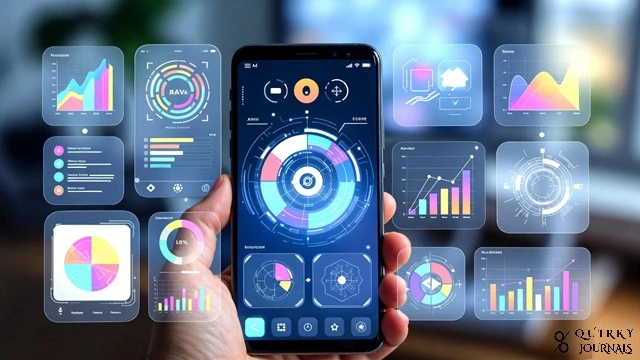
Hey there, fellow finance enthusiasts and digital explorers! Have you ever paused to think about how you manage your money these days? Chances are, you’re not popping into a branch nearly as often as you used to, if at all. That’s because the world of banking has been flipped on its head, and mobile apps are the undeniable architects of this revolution. They’re not just handy tools; they’ve become the primary interface for customer interaction, fundamentally disrupting traditional banking forever. It’s a seismic shift from a branch-centric past to a dynamic, digital-first future, setting new benchmarks for everything from speed and intuitive design to robust personalization and ironclad security.
This isn’t just a niche trend; it’s a massive behavioral overhaul. In fact, over 55% of U.S. customers primarily manage their finances through mobile apps [1]. And looking ahead, by 2025, a staggering 72% of U.S. adults are expected to be using mobile banking apps, a steady climb that shows no signs of slowing down [2]. It’s clear: our phones aren’t just for scrolling social media; they’re our personal financial command centers.
II. The Redefined Customer: Expectations of the Digital Native Generations
A. Demands of Gen Z and Gen Alpha
If you’re wondering who’s driving this rapid change, look no further than the digital native generations – Gen Z and Gen Alpha. For them, a mobile-first everything isn’t a preference; it’s the default. As Sameer Kapur highlights, for 99% of Gen Z, the banking app *is* the bank. Their expectations for digital services aren’t just shaped by other banks, but by the seamless, intuitive experiences they get from leading consumer tech platforms like Amazon, Netflix, and Uber. If an app isn’t fast, simple, and personalized, it simply doesn’t cut it.
B. Core Digital Banking Expectations
So, what exactly do these digital banking expectations look like?
- 1. Hyper-Personalization: Gone are the days of generic recommendations. Today’s customers demand AI-powered spending insights and tailored financial advice. We’re talking proactive alerts, customized financial journeys, and tools that genuinely help you save or invest smarter. A McKinsey Report, cited by TheUXDA, shows that 71% of consumers expect personalized interactions, with a whopping 76% expressing frustration when it’s absent [3].
- 2. Real-Time Functionality: When we live in an instant world, why should banking be any different? People expect instantaneous transactions, immediate notifications, and zero waiting periods. This even extends to things like real-time credit score updates, providing immediate feedback and that satisfying “dopamine hit” of seeing numbers improve [4].
- 3. Intuitive User Experience (UX) and Engagement: An app needs to be more than just functional; it needs to be a joy to use. This means effortless navigation, an aesthetically pleasing design, and error-free functionality. Some are even incorporating gamification elements to make personal financial management engaging – especially for Gen Z, with 65% gaming three or more hours daily [4]. No wonder 73% of individuals are willing to switch banks for a superior digital experience [4].
- 4. Comprehensive & Accessible Financial Tools: Modern banking apps are becoming full financial ecosystems. This includes integrated financial education, flexible payment options like Buy Now, Pay Later (BNPL) (used by 72% of Gen Z [4]), subscription management, and accessible investment opportunities with low entry barriers.
- 5. Transparency and Implicit Security: Customers expect clear communication, free of hidden fees or convoluted terms. And while advanced security features like biometrics and AI fraud detection are crucial, they should operate seamlessly in the background, never disrupting the user experience [4].
III. The Ascendancy of Neobanks: A New Competitive Frontier
A. Characteristics of Challenger Banks
Enter the neobanks, also known as challenger banks. These are the fully digital players operating without a single physical branch. They’ve built their entire model around user-friendly interfaces, often with minimal fees, and prioritize technologically advanced, customer-first solutions. Think of them as the direct-to-consumer model for finance.
B. Neobanks as a Disruptive Force
Neobanks represent a significant disruptive force because of their inherent agility and rapid feature deployment. Their lean operational structures allow them to innovate and adapt much faster than their traditional counterparts. They are inherently customer-centric, evident in their modern designs, deep personalization, and streamlined onboarding. These digital natives strategically leverage Artificial Intelligence (AI), Machine Learning (ML), and cloud computing to offer personalized insights, advanced fraud detection, and 24/7 customer support. Influential examples include Revolut, Chime, N26, and Tonik.
IV. Traditional Banking’s “Black Swan”: The Challenge of Adaptation
A. Digitalization as an Unforeseen Disruption
The digital transformation in banking wasn’t just a gradual evolution; for many traditional institutions, it was a “Black Swan” event – an unpredictable, high-impact occurrence that profoundly changed everything [3]. Historically stable, branch-heavy banks were largely unprepared for the exponential shift in customer behavior. Then, the COVID-19 pandemic hit, acting as another Black Swan, accelerating digital strategies by up to five years for some banks, according to Accenture [3].
B. The Persistent Customer Experience Gap
Despite significant investments, a stark disparity remains between how banks perceive their digital customer experience and how customers actually rate it. The Financial Brands 2025 research, cited by TheUXDA, reveals that while 80% of banking executives believe they offer excellent CX, only 24% of customers agree [3]. This “expectation gap” is why a high propensity for customers to switch banks exists – 54% consider switching after just four negative digital interactions [3]. People expect their online interactions to be as smooth as using PayPal or Square.
C. Inadequate Responses from Incumbent Banks
Many incumbent banks have tried to adapt, but their responses have often been inadequate:
- 1. Reliance on “Off-the-Shelf” Solutions: While these offer speed, they often lead to homogenized and undifferentiated user experiences. If every bank offers essentially the same app with a different logo, it risks diluting the bank’s unique brand identity [3].
- 2. Internal Innovation Initiatives: These are often hindered by deeply ingrained legacy cultures and internal resistance. Instead of fundamental strategic shifts, they often result in incremental changes, which simply aren’t enough to keep pace [3].
- 3. Reactive Copying of Competitors: Focusing on replicating superficial features without addressing core user needs or systemic inefficiencies means banks are perpetually playing catch-up, positioning them as followers, not innovators [3].
- 4. Fintech Partnerships and Acquisitions: While partnerships with Fintechs like Nubank or Wise can introduce new capabilities, they often face challenges of cultural integration and can stifle the acquired fintech’s agility [3].
V. The AI Revolution: Banking’s Next Transformative Wave
A. AI as the Forthcoming “Black Swan”
Just when traditional banks thought they might be getting a handle on digitalization, another “Black Swan” is emerging: the AI revolution [3]. This isn’t just about better interfaces; AI promises a fundamental redefinition of value in banking services. The rise of generative AI tools like ChatGPT has drastically heightened public awareness and expectations for AI capabilities across all industries, including finance.
B. Applications of AI in Modern Banking
AI is set to transform banking in profound ways:
- 1. Enhanced Customer Service: Imagine AI-driven chatbots and virtual assistants that don’t just answer simple questions but resolve complex queries and perform voice-command transactions. It’s projected that AI could automate up to 90% of customer interactions [3]. This means faster, more efficient help, anytime you need it.
- 2. Advanced Personalization and Advisory: Banks sit on a goldmine of customer data. AI can leverage this for hyper-personalized financial insights and proactive recommendations. Think of AI as a “personalized financial concierge” [3], monitoring your savings account, flagging unusual spending, and even nudging you toward better investment opportunities.
- 3. Operational Efficiency and Cost Reduction: Beyond customer-facing improvements, AI can streamline back-office operations, significantly improve fraud detection, and optimize credit scoring. Business Insider estimates AI could save the banking industry up to $1 trillion by 2030 through these efficiencies [3]. This could translate to lower cost and better interest rates for customers.
C. Strategic Imperatives for AI Adoption
The message is clear: banks that fail to embrace AI risk being significantly outpaced by competitors, as 8 out of 10 banking executives agree [3]. The race is on, with 77% of financial institutions actively investing in data analytics and AI-driven insights, according to Temenos [3]. The competitive landscape could be reshaped not just by nimble Fintechs, but by tech giants like Google, Apple, X, and Meta, all of whom have advanced AI capabilities and vast customer ecosystems.
VI. Bridging the Gap: Cultivating Antifragility in Traditional Banking
A. Developing an Antifragile Organizational Structure
To thrive amidst this continuous disruption, banks need to cultivate an antifragile organizational structure. This means embracing change and uncertainty as strategic opportunities, not just threats. It involves implementing flexible technology infrastructures, leveraging APIs and cloud platforms to quickly integrate new services, and empowering agile, cross-functional teams to experiment and iterate rapidly. The goal is to get stronger from shocks, not just withstand them.
B. Prioritizing Customer Experience (CX) Above All
The ultimate guiding principle must be prioritizing customer experience (CX). This means obsessing over solving genuine customer problems and delivering tangible value. Banks need to cultivate a deep, customer-first organizational culture through continuous feedback and journey mapping, truly listening to what people want. By designing delightful and intuitive experiences, banks can genuinely exceed expectations and foster loyalty.
C. Strategic Differentiation Over Mere Digitalization
It’s no longer enough to just “go digital.” Banks must pursue strategic differentiation. Develop unique brand values and distinctive digital features that make your bank stand out. Avoid the trap of generic, “white-label” experiences. Leverage existing trust and expertise in novel and creative ways – perhaps by becoming the guide for first-time house buyers or offering unique retirement plans. The objective is to foster strong customer loyalty, not just offer a digital utility.
D. Ethical and Thoughtful AI Implementation
As AI becomes more prevalent, banks need to lead with ethical and thoughtful AI implementation. This includes proactive experimentation with customer-facing AI innovations, while strictly adhering to ethical AI principles like transparency, bias mitigation, and data privacy. Training human staff as “augmented employees” will be key, blending AI’s efficiency with human empathy to provide the best of both worlds.
E. Robust Risk Management and Resilience Planning
Finally, banks must bolster their risk management and resilience planning. This means stress-testing business models against future disruptive scenarios, continuously investing in advanced cybersecurity, and developing fail-safe systems with rapid recovery capabilities. Building redundancy and buffers will ensure stability even amidst market volatility and unforeseen events.
VII. Conclusion: The Imperative for Reinvention
A. The Unstoppable Force of Mobile Disruption
The mobile apps have fundamentally and irreversibly altered customer expectations and the banking sector. What began as a convenience has transformed into an unstoppable force, constantly pushing the boundaries of what’s possible. The continuous disruption from digital innovation and AI demands ongoing adaptation. The shift from a “transactional” to an “experience-driven” mindset is no longer optional; it’s absolutely crucial for survival and growth. Your bank isn’t just a place to store money; it’s a vital part of your personal financial freedom.
B. Shaping the Future of Banking
The future of banking belongs to the “stable innovators” – those who can blend traditional strengths like trust and scale with modern agility and innovation. Success will hinge on designing holistic digital ecosystems and crafting emotionally resonant customer journeys. Technology should be seen as a facilitator of human connection and superior service, not an end in itself. By embracing unpredictability and continuously reinventing, banks can ensure they don’t just survive the next wave of disruption but thrive in it, becoming strengthened by change rather than overwhelmed.
Recommended Reading
For further reading, we suggest these blogs:
The Ultimate Guide to Crypto Trading Apps: Security, Features, and Fees
The Future of Finance: Apps Integrating AI, Blockchain, and Payments
“Ready to take control of your finances? Discover the top investing apps that are changing the game! From micro-investing to robo-advisors, find out which apps can help you grow your wealth and achieve your financial goals. Click now to learn more!
References
- Fintech Weekly. (n.d.). The Fall of Banks? How Fintechs Are Reshaping Finance. Retrieved from https://www.fintechweekly.com/magazine/articles/fintechs-vs-traditional-banking-who-will-survive
- CoinLaw. (n.d.). Mobile Banking Statistics 2025: How Digital Finance is … Retrieved from https://coinlaw.io/mobile-banking-statistics/
- TheUXDA. (n.d.). The Black Swan of Digital Banking: How Tech Shifts Disrupt Finance. Retrieved from https://www.theuxda.com/blog/black-swan-digital-banking-how-tech-shifts-disrupt-finance
- Kapur, S. (n.d.). How Gen Z and Gen Alpha will change banking forever. LinkedIn. Retrieved from https://www.linkedin.com/posts/kapursameer_genz-and-gen-alpha-will-ditch-your-bank-if-activity-7373409028019970048-drlj
- SivaCerulean Technologies. (n.d.). The Rise of Neobanks & Their Impact on Mobile Banking Apps. SCTinfo.com. Retrieved from https://www.sctinfo.com/blog/rise-of-neobanks-and-their-influence-on-the-mobile-banking-app/
Image Credit
Firmbee https://cdn.pixabay.com/user/2020/11/25/09-38-28-431_250x250.png