
How Much Emergency Cash Should You Keep at Home? Real Recommendations
Hey there! Have you ever wondered how much physical cash you should really keep tucked away at home? In our increasingly digital age, where everything from groceries to rent can be paid with a tap of your phone or a swipe of your credit card, it might seem like a quaint idea. But believe it or not, the question of why physical cash remains relevant still pops up a lot!
It’s a tricky balance, isn’t it? On one hand, digital online banking offers incredible efficiency and convenience. On the other, there’s a tangible security that comes with having actual emergency cash on hand. That tension between digital ease and physical preparedness is exactly what we’re going to explore today. My goal with this guide is to dive into practical, expert-backed recommendations, helping you understand how to maintain an appropriate emergency cash reserve right in your home.
The Strategic Value of Home Cash Reserves
So, why bother with physical cash at all when we have so many advanced financial tools at our fingertips? Well, it turns out that having some cash reserves at home offers a surprisingly strategic advantage, especially when the unexpected hits.
Immediate Response to Unforeseen Events
Imagine this: a sudden power outage or a major storm, like a hurricane or an earthquake. These natural disasters can disrupt entire digital infrastructures. ATMs go dark, credit card systems fail, and suddenly, your perfectly managed emergency fund in a high-yield savings account isn’t much help if you can’t access it. In scenarios like these, physical cash becomes your lifeline for immediate necessities. Think about needing to buy water, batteries, or even fuel for your car if the gas stations can only accept cash.
Beyond natural disasters, we also face the risk of widespread system failures. A major cyberattack or a prolonged utility outage could render electronic funds inaccessible. It’s not a common occurrence, but being prepared means considering these less likely, but high-impact, events. Even localized emergencies, like a lost wallet or needing immediate transportation where only cash is accepted, highlight the importance of having a small stash of physical money.
Everyday Practicalities and Peace of Mind
It’s not just about doomsday scenarios, though. There are plenty of everyday situations where cash-only transactions are still a thing. Ever tried to tip a delivery person without cash? Or needed to pay a small vendor at a local market? For those moments, physical currency is indispensable. Plus, for some, having an extra layer of financial autonomy outside traditional banking systems provides a unique sense of financial freedom and personal security.
It’s crucial to understand that a home cash reserve is a subset, not a replacement, for a broader emergency fund. It’s one piece of a comprehensive financial preparedness plan, designed for immediate, short-term needs when digital options aren’t available.
Expert Recommendations on Optimal Amounts
Alright, let’s get to the nitty-gritty: how much cash should you actually keep at home? I’ve looked into what financial professionals and institutions recommend, and there’s a pretty consistent theme.
Baseline Figures from Financial Professionals
The general consensus from experts like Crystal McKeon, a certified financial planner at TSA Wealth Management, and Matthew Saneholtz, also a certified financial planner, suggests a modest initial stash. We’re talking about keeping $300 to $1,000 for immediate, unexpected cash-only expenses or short-term emergencies. Experian and Investopedia also echo this range, emphasizing it’s for those immediate needs that pop up.
Beyond that initial stash, some experts advise thinking about covering your bare necessities for a short period. Elliot Pepper, a financial planner and co-founder of Northbrook Financial, suggests keeping enough cash to cover 1-2 months of essential living costs. This isn’t your full monthly budget, but rather the absolute minimums: housing payments, food staples, utilities (like water and batteries), and transportation fuel. According to the Bureau of Labor Statistics and Bankrate, the average monthly cost for food and gasoline for U.S. consumers is slightly less than $1,000. This could be a good baseline to consider for your own reserve.
Factors Influencing Your Personalized Cash Reserve
Of course, there’s no one-size-fits-all answer. Your optimal emergency account amount will depend on your unique circumstances. Consider your household size and dependents – a larger family will naturally need more. Your local cost of living also plays a big role; basic needs simply cost more in some areas. If you live in a remote area, you might need more cash on hand for immediate supplies due to limited access to services. Lastly, your regional disaster risk is key. If you’re in a hurricane or earthquake zone, a larger on-hand amount might be a wise investment for peace of mind, along with your individual risk tolerance and comfort level.
There’s also a general guideline from experts like McCarty, noted by Yahoo Finance, suggesting that you limit your home cash to about 10% of your overall emergency fund, or up to $10,000. This helps keep the amount manageable while still providing a substantial buffer.
Secure Storage Solutions for At-Home Cash
If you’re going to keep cash at home, you absolutely need a secure plan for it. This isn’t about hiding it under your mattress anymore!
Investing in a Reliable Home Safe
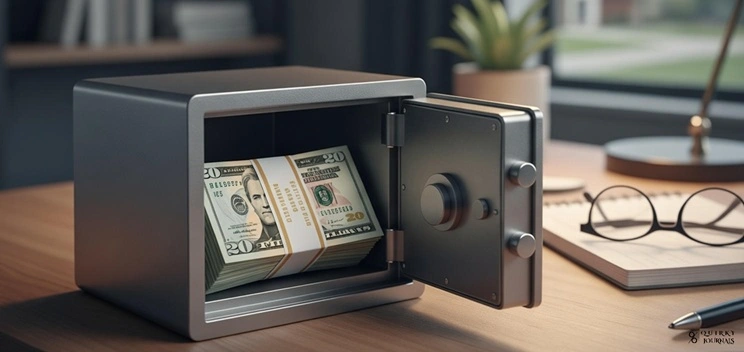
My top tip for storing cash (and other valuables) at home is to invest in a reliable home safe. Look for one that’s both fireproof and waterproof; these are essential features to protect your funds against common household disasters. Don’t just place it somewhere easily accessible; consider anchoring the safe to a solid structure like the floor or a wall. This significantly deters theft. Also, think strategically about its location. Avoid obvious spots that a thief might target immediately, and consider potential damage zones – for example, placing it on a raised surface in a basement can mitigate flood risk.
Importance of Discretion
Equally important is discretion. As Crystal McKeon points out in CNBC, limit knowledge of your cash stash to only the most trusted individuals in your household. And please, avoid excessive display! Keeping large sums of cash out of sight prevents temptation for anyone who might stumble upon it, reducing the risk of theft.
Risks and Drawbacks of Excessive Home Cash
While having some cash at home is smart, going overboard comes with significant downsides. It’s important to understand these risks to build a truly robust personal financial plan.
Financial Disadvantages
First off, physical cash doesn’t earn a dime. Unlike a high-yield savings account, your cash under the mattress won’t accrue interest. Compounding this, its purchasing power diminishes over time due to inflation. What $1,000 buys today might buy less in a few years. Plus, and this is a big one, physical cash isn’t protected by FDIC or NCUA insurance. As Melissa Caro, a certified financial planner, explains on CNBC, funds in an insured bank are protected up to $250,000 per depositor, per institution. Your home stash has no such safeguard, as Experian also notes.
Security Vulnerabilities
Then there are the security risks. Cash is a prime target for thieves during a burglary, and even the best safe can be compromised. It’s also susceptible to accidental loss or destruction from fire, flood, or other damages, as highlighted by Bankrate and Experian. Another less obvious drawback, mentioned by Nicole Sullivan, certified financial planner on CNBC, is the temptation for impulse spending. The physical presence of money can make it easier to dip into for unnecessary expenditures.
A Holistic Approach: Beyond the Home Stash
Ultimately, a small home cash reserve is just one tool in your comprehensive financial health toolbox. It’s vital to have a broader plan in place.
Establishing a Robust Emergency Fund
My advice? Prioritize establishing a robust emergency fund. Experts often recommend aiming for 3 to 6 months of essential living expenses, though some, like Investopedia and CNBC, suggest 9-12 months during economic uncertainty. Suze Orman famously recommends 8 months. The ideal location for this larger fund is a high-yield savings account or other accessible, low-risk, FDIC-insured accounts. This is your best emergency account because it combines accessibility with security and growth.
Leveraging Modern Financial Tools
Don’t forget to leverage modern financial tools. FDIC-insured bank accounts offer protection up to $250,000 per depositor, per institution. And with the increasing ease and security of digital payment apps and alternatives, electronic transactions remain the way most of us manage our money daily. These tips can save you time and offer convenience.
Non-Monetary Emergency Preparedness
Finally, remember that emergency preparedness isn’t just about money. It also involves stockpiling essential supplies: non-perishable food, water, first-aid kits, and other survival necessities, as Elliot Pepper reminds us via Bankrate. Having emergency contact plans, including physical lists of important phone numbers and meeting points, is crucial. And don’t forget important document backups – both digital and physical copies of critical records like insurance policies, birth certificates, and titles to your house.
A Balanced Perspective on Emergency Cash
To wrap things up, my hope is you now see the value of keeping a small, but strategic, amount of emergency cash at home. It’s a prudent way to handle specific, short-term emergencies when digital access isn’t possible.
However, it’s just one piece of the puzzle. Prioritizing comprehensive financial health – which includes a robust emergency fund in an interest-earning savings account and a smart personal financial plan – is truly what will give you the most security and financial freedom in the long run. Remember, personalization is key. Take these recommendations, assess your unique circumstances, and determine your optimal emergency cash strategy. You’ve got this!
Disclaimer
This blog post is intended for informational purposes only and does not constitute financial advice. The recommendations and insights provided are based on general financial principles and expert opinions from the referenced sources. Your personal financial situation is unique, and you should consult with a qualified financial advisor to tailor a plan that best suits your individual needs and circumstances. We do not endorse any specific financial products or services mentioned herein.
References
- Bankrate. (n.d.). How Much Cash Should You Keep At Home?
- CNBC. (2025, April 15). How much emergency cash to have on hand.
- Experian. (n.d.). How Much Cash Should You Keep at Home?
- Parker, T. (2025, December 2). Optimal Cash Reserves: How Much to Keep in the Bank. Investopedia.
- Yahoo Finance. (n.d.). Here’s How Much Cash You Need at Home, According to Experts.
Image Credit
minhthai0105