
Stock Market Bubble? How to Tell if We’re Due for a 2026 Crash
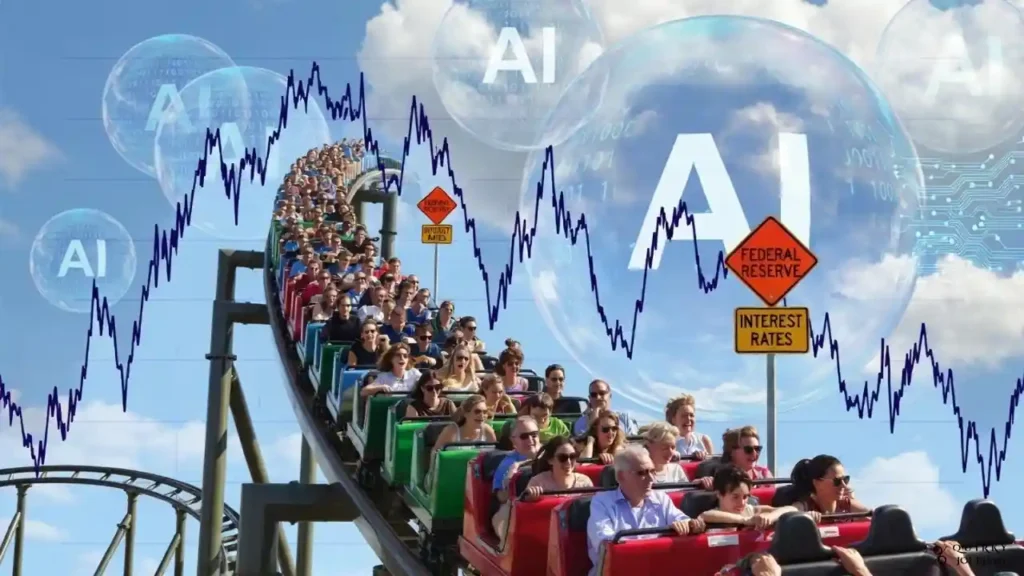
It feels like the stock market is always on a rollercoaster, doesn’t it? One minute, everyone’s euphoric about new market highs, and the next, there’s a whisper (or a shout!) of an impending crash. If you’ve been paying attention to the news, you’ve probably heard a lot of chatter about whether we’re in a “bubble” right now and if a significant downturn is looming in 2026.
I’m seeing this mix of excitement and anxiety everywhere. On one hand, the S&P 500 has been on an incredible run, delivering double-digit returns for three consecutive years, including a robust 16% in 2025 alone, according to Nasdaq. That kind of performance definitely gets people talking. But on the other hand, it also sparks a crucial question: are these current market conditions setting us up for a big correction or even a crash next year? It’s a big question for anyone involved in investing, from seasoned pros to beginners looking for good stocks. I want to dive into what the numbers and experts are saying, and what we, as investors, can do to navigate these uncertain waters.
Deciphering Market Valuation: Beyond Superficial Gains
First things first: let’s tackle a common misconception I hear a lot.
All-Time Market Highs: A Normal Market Feature
The headlines scream “All-Time Highs!” and it often triggers immediate fear, making people think a crash is inevitable. But here’s the truth: new market highs are actually a natural and healthy part of a growing stock market. Think about it, if the market never hit new highs, it wouldn’t be growing, right?
The real danger often comes from trying to time the market – you know, waiting for the “perfect” moment to buy or sell shares. We’ve all been there, hoping to predict the downturns. But historically, investors who try to time the market often miss out on significant growth. Ben Carlson, one of my favorite financial bloggers, shared a hilarious (and sobering) analogy about the “Worst Market Timer” – a fictional character who only invested at market peaks, yet still ended up quite wealthy over the long run because they stayed invested. It just goes to show you how difficult (and often fruitless) it is to try and outsmart the market’s natural ebbs and flows.
Key Valuation Metrics: What the Numbers Tell Us
So, if market highs aren’t automatically a red flag, what should we be looking at? This is where understanding valuation metrics becomes crucial.
- P/E Ratios:
One of the most fundamental tools we have for assessing a company’s or an index’s value is the Price-to-Earnings (P/E) ratio, and its cousin, the Forward P/E ratio, which uses anticipated future earnings. Essentially, it tells you how much investors are willing to pay for each dollar of a company’s earnings.Right now, the S&P 500’s forward P/E is sitting a bit high, hovering around 22.2 (Nasdaq) to 22.7 (Yahoo Finance) times forward earnings. Compare that to the 10-year average of 18.7, and you can see why some folks are raising an eyebrow. Historically, when the S&P 500’s forward P/E has exceeded 22, it has eventually coincided with sharp declines. We saw this during the dot-com bubble, the COVID-19 downturn, and even with the 2024 tariff shock that caused a bit of market apprehension [1], [3].
- Broader Valuation Metrics:
It’s not just P/E ratios ringing alarm bells. Even officials at the Federal Reserve, like Chairman Jerome Powell and Governor Lisa Cook, have openly discussed “fairly highly valued” and “stretched asset valuations,” and the possibility of “outsized asset price declines” [1]. These aren’t casual remarks; they’re warnings from the highest levels of our financial system.Even veteran investment firms like GMO are weighing in. Ben Inker, a partner at GMO, suggests that while parts of the market are “probably a bubble,” there’s also “plenty else to invest in” if you know where to look. This nuanced view is important for our investment strategy.
The “Bubble” Debate: AI, Concentration, and Interconnected Risks
So, where exactly might this “bubble” be brewing, if anywhere? Most of the current market focus is on one particular sector.
The AI Enthusiasm: A Potential Bubble?
Many experts are pointing directly at the artificial intelligence (AI) sector, particularly the so-called “Magnificent 7” stocks. Market veteran Kevin Muir, founder of The Macro Tourist, states “100%” that we’re in an AI bubble, especially concerning these dominant tech players [2].
He brings up some eye-popping numbers, like Nvidia trading at an astounding 33 times sales (not earnings!). To put that in perspective, during the infamous dot-com era, Sun Microsystems, a darling of the time, traded at what was considered an “obscene” 13 times sales [2]. That’s a huge difference! The dilemma here is that for these extreme valuations to hold, AI growth has to not just be good, but absolutely extraordinary—exceeding already sky-high market expectations. These companies are truly “priced for perfection,” leaving very little room for error.
Market Concentration and Systemic Risks
Another critical factor contributing to the “bubble” talk is the sheer concentration of wealth and influence in those “Magnificent 7” companies. These top companies make up about 40% of the entire S&P 500, making the market incredibly top-heavy [2]. If these giants stumble, the ripple effect could be substantial.
Beyond individual stock valuations, there’s growing concern about leverage and complex financial instruments. The increasing use of derivatives, like “auto callables,” and the high gross leverage in sophisticated “pod shops” (multi-strategy hedge funds) can amplify market swings, leading to “unstable” positions [2]. This kind of interconnectedness and leverage is reminiscent of past financial crises where unexpected domino effects occurred. Some analysts even suggest a potential Q1 sell-off in 2026, as institutional investors might rebalance their portfolios after year-end “window dressing” – essentially, shedding some exposure to these overconcentrated tech stocks [2].
Recognizing Correction Signs and Market Volatility
Before we panic, it’s essential to understand that market fluctuations are a normal part of the game.
Normal Market Fluctuations
Let’s get one thing straight: the stock market will almost certainly decline at some point in 2026. This isn’t a bold prediction; it’s a historical pattern. The S&P 500 averages a 14.1% intra-year decline annually, meaning it drops that much from its peak within a given year. Yet, despite these intra-year dips, the index typically ends the year with positive returns (J.P. Morgan Asset Management data).
Volatility and uncertainty are inherent to investing in stocks. While it can feel unsettling when the market swings, these pullbacks are a feature, not a bug. They’re a core reason why stocks have the potential to deliver long-term returns that outpace inflation, offering greater financial freedom down the road.
External Factors and Market Behavior
Certain external factors can also influence market behavior. For instance, midterm election years have historically shown weaker performance for the S&P 500, averaging only a 1% return. This trend is even more pronounced under a new president, where the average return drops to -7% [1]. Policy uncertainty surrounding these elections, such as potential shifts in economic policy or tariffs, can create apprehension among investors. It’s just another layer of complexity that can lead to market jitters.
Safeguarding Your Investments: Practical Strategies
So, with all this information, how can we prepare and protect our investments? It all comes down to a well-thought-out financial plan.
Bolstering Your 401(k) for Safety
If you have a 401(k) or other retirement accounts, the best strategy is usually a long-term perspective. These accounts are designed to weather short-term volatility and benefit most from consistent, patient investing. Continue your regular contributions, regardless of market sentiment. Think of it as dollar-cost averaging in action. Also, ensure your 401(k) is properly diversified across various asset classes, not just heavily concentrated sectors like the Magnificent 7. A certified planner can help you assess this diversification.
The Power of Dollar-Cost Averaging
This brings me to dollar-cost averaging, a truly powerful tool for any investor, especially beginners. By systematically investing a fixed amount regularly – whether it’s weekly or monthly – you reduce the impact of market fluctuations. When prices are high, your fixed amount buys fewer shares; when prices are low, it buys more. This disciplined approach naturally helps you buy more when the market dips without requiring you to predict those dips. As Ernest Hemingway famously put it about going bankrupt (and, inversely, building wealth): “Gradually, then suddenly.” Wealth accumulation is often a slow, consistent process with sudden tipping points. Consistency is key.
Strategic Diversification Beyond the “Mag 7”
Given the concentration risk, now might be an excellent time to strategically diversify beyond the tech giants.
- Exploring Value Stocks and Small Caps: As capital potentially rotates out of overvalued growth stocks, value stocks and small-cap companies could offer better risk-reward profiles [2]. These are often overlooked but can provide solid opportunities for patient investors.
- Considering International Markets: Don’t forget the rest of the world! Global fiscal policies are stimulating economies internationally, making non-US markets increasingly attractive. For example, while the US market has a P/E ratio around 23x, the MSCI World Ex-US index sits around 15-16x. We’ve seen some impressive returns in places like Spain (up 48%) and Canada (up 29%) this year alone [2]. Diversifying internationally can help spread risk and potentially uncover better value.
- Sector-Specific Opportunities: Look for undervalued industries with strong fundamental tailwinds. Kevin Muir, for instance, makes a bullish case for aluminum, citing shifts in supply dynamics and its essential role in a changing global economy [2]. These specific opportunities might be harder to find, but offer excellent potential.
Staying Disciplined in an Uncertain Environment
The financial market can feel like a “boiling frog” scenario – things change so gradually you might not notice the danger until it’s too late. It’s crucial to remain aware of market shifts and avoid complacency. Instead of getting caught up in sensational market headlines, focus on your personal financial guide and long-term plan. This guide should include things like a robust emergency fund in a high-yield savings account.
The enduring value of informed, patient investing cannot be overstated. Whether you’re just starting to save for a house, building your retirement fund, or planning for financial freedom, a solid plan, dollar-cost averaging, and smart diversification are your best allies. If you need help, finding top financial advisors or a certified financial planner online can provide personalized guidance. Remember, you can always visit our website for more tips on managing your money.
For further reading, we suggest these blogs:
Index Fund Investing: What It Is and How to Get Started
Stock Market Risk Explained: Understanding Volatility
Explore these articles to get a grasp on the new changes in the financial world.
References
[1] T. Jennewine, “Will the Stock Market Crash in 2026? The Federal Reserve Has a Warning for Investors,” Nasdaq, Jan. 5, 2026.
[2] A. Taggart, “Will 2026 Be The Year The Stock Bubble Bursts? | Kevin Muir,” YouTube, Dec. 21, 2025.
[3] T. Jennewine, “The Stock Market May Do Something Shocking in 2026, According to Wall Street Analysts,” Yahoo Finance, Oct. 29, 2025.
[4] “Will the Stock Market Go Down in 2026? Are We in Bubble Territory? How to Prepare for Investing Success in 2026,” Aero Crew News, Jan. 1, 2026.
Disclosure: This blog post is for informational and educational purposes only and does not constitute financial advice. It is not an offer to buy or sell any security. Investing in stocks and other securities involves risk of loss. Always consult with a qualified financial professional or certified financial planner before making any investment decisions. The views expressed are subject to change based on market and other conditions, and past performance is not indicative of future results.