The Diamond Deception: Why Natural Stones Are No Longer a Safe Investment
For generations, diamonds represented the ultimate symbol of enduring value—rare geological marvels formed over billions of years that would appreciate steadily while serving as wearable wealth. Jewellers promised that diamonds were “forever,” not just in romantic sentiment but in financial terms. Investment advisors occasionally suggested adding quality gemstones to diversified portfolios. Wealthy families passed significant stones through generations, appreciating heirlooms worth more with each transfer.
That narrative collapsed spectacularly in 2026. Natural diamonds, once considered bulletproof stores of value, now face an existential crisis driven by technological disruption, changing consumer preferences, and market realities that industry marketers worked decades to conceal. The emergence of laboratory-grown diamonds—chemically identical to natural stones but produced in weeks rather than aeons—has shattered the scarcity myth underpinning diamond valuations. Meanwhile, mounting evidence reveals that even “investment-grade” natural diamonds rarely appreciate and typically lose 50% to 75% of purchase value immediately upon sale.
Throughout this comprehensive investigation, we will expose the deception at diamond investing’s core, examine how laboratory-grown alternatives have transformed markets, and provide clear guidance for anyone considering diamonds as wealth preservation vehicles. Whether you currently own significant diamond jewellery, are contemplating purchases, or simply want to understand this fascinating market transformation, the insights ahead could save you from costly mistakes while revealing uncomfortable truths the diamond industry desperately wants to hide.
The Diamond Marketing Myth Unravelled
Before examining current market dynamics, we must understand how diamonds became synonymous with value in the first place. This association is not ancient wisdom passed through millennia—it is sophisticated marketing executed by De Beers brilliantly byDe Beers starting in the 1930s. Faced with abundant diamond supplies that threatened to crater prices, De Beers crafted the “A Diamond is Forever” campaign, fundamentally reshaping cultural perceptions about engagement rings and diamond ownership.
This marketing genius accomplished several objectives simultaneously. It created artificial demand by establishing diamonds as engagement ring necessities. It discouraged resale by associating diamond jewellery with eternal love—selling your ring implied your marriage failed. It positioned diamonds as investments that appreciate over time, despite market realities showing the opposite. Most importantly, it created the perception of scarcity when diamond supplies were actually quite abundant.
The Scarcity Illusion
De Beers maintained diamond prices through monopolistic control of supply, not genuine scarcity. The company stockpiled enormous quantities of diamonds, releasing them slowly to maintain price floors. This artificial scarcity worked because consumers believed diamonds were rare. According to the Gemological Institute of America’s research, diamond deposits exist globally in quantities sufficient to supply markets for centuries at current consumption rates.
Furthermore, the introduction of laboratory-grown diamonds exposed this deception definitively. If diamonds were truly rare geological phenomena, creating identical stones in laboratories within weeks should be impossible or astronomically expensive. Instead, modern production methods create flawless diamonds costing 80% to 90% less than mined equivalents. This price differential reveals that natural diamond prices reflected controlled distribution, not intrinsic scarcity.
Laboratory-Grown Diamonds: The Market Disruptor
Laboratory-grown diamonds represent perhaps the most dramatic technological disruption in luxury goods history. Using either High Pressure High Temperature (HPHT) or Chemical Vapour Deposition (CVD) methods, manufacturers now produce diamonds chemically, physically, and optically identical to natural stones. These are not simulants like cubic zirconia—they are real diamonds, just created in controlled environments rather than geological processes.
The technology has advanced so rapidly that even expert gemologists cannot distinguish lab-grown from natural diamonds without specialised equipment. Both register identically on diamond testers. Both exhibit the same hardness, brilliance, and fire. The Federal Trade Commission officially recognised lab-grown diamonds as “real diamonds” in 2018, removing the “synthetic” descriptor that implied inferiority.
Production Methods Explained
High Pressure High Temperature (HPHT): This method replicates conditions deep within Earth’s mantle. A small diamond seed gets placed in carbon material, then subjected to temperatures exceeding 2,000 degrees Celsius and pressures of 1.5 million pounds per square inch. Under these extreme conditions, carbon atoms bond to the seed, crystallising into larger diamonds over several days to weeks.
Chemical Vapour Deposition (CVD): This process places diamond seeds in vacuum chambers filled with carbon-rich gases, typically methane and hydrogen. Heating these gases causes carbon atoms to separate and deposit onto seeds layer by layer, building diamonds from the bottom up. CVD typically produces higher-quality stones with fewer metallic inclusions than HPHT.
Both methods yield gem-quality diamonds suitable for fine jewellery. Production costs have plummeted as technology improves and facilities scale up. According to BriteCo insurance data, lab-grown diamond prices have declined approximately 70% since 2019, while quality has improved.
The Price Collapse Timeline
Watching diamond prices evolve over recent years reveals the natural diamond investment thesis disintegrating in real time. The numbers tell a story of collapsing premiums and cratering resale values that should terrify anyone holding diamonds as wealth preservation vehicles.
Diamond Price Evolution 2019-2026
| Year | 1-Carat Natural (Avg) | 1-Carat Lab-Grown (Avg) | Price Gap | Lab Market Share |
| 2019 | $4,800 | $2,400 | 50% discount | 2% of market |
| 2020 | $4,500 | $1,800 | 60% discount | 5% of market |
| 2021 | $5,200 (COVID spike) | $1,500 | 71% discount | 8% of market |
| 2022 | $4,900 | $1,200 | 76% discount | 12% of market |
| 2023 | $4,400 | $1,000 | 77% discount | 17% of market |
| 2024 | $4,100 | $900 | 78% discount | 20% of the market (52% of the centre stones) |
| 2026 | $3,840 | $800 | 79% discount | 25% of the market (estimated) |
This data, compiled from Rapaport Diamond Report and BriteCo insurance valuations, reveals several disturbing trends for natural diamond holders. First, natural diamond prices have declined approximately 20% since their COVID-era peak despite broader inflation. Second, lab-grown prices have collapsed nearly 70% as production scales. Third, and most importantly, the gap between natural and lab-grown continues widening, making the premium for “natural” increasingly difficult to justify.
Moreover, market share data shows accelerating consumer preference shifts. While lab-grown diamonds comprised only 2% of sales in 2019, they captured 20% by 2024. For engagement ring centre stones specifically—the highest-value purchases—lab-grown stones accounted for 52% of 2024 sales, up from just 12% in 2019. This dramatic shift suggests the premium consumers will pay for “natural” is eroding rapidly.
Resale Value Reality: The Ugly Truth
Perhaps the most damning evidence against diamond investment claims comes from resale value data. Industry insiders have long known that diamonds purchased at retail lose most of their value immediately, yet marketers continue promoting them as appreciating assets. Recent transparency has finally exposed this deception.
Diamond Resale Value Comparison
| Diamond Type | Purchase Price | Immediate Resale Value | Value Retained | 10-Year Outlook |
| Natural (Colourless, 1ct) | $4,000 | $1,000 to $2,000 | 25% to 50% | Declining due to lab competition |
| Lab-Grown (1ct) | $800 | $80 to $240 | 10% to 30% | Further decline expected |
| Natural Fancy Colour (rare) | $50,000+ | $25,000 to $40,000 | 50% to 80% | Stable to appreciating |
| Investment-Grade (3ct+, D-F, FL-IF) | $100,000+ | $50,000 to $75,000 | 50% to 75% | Uncertain with lab competition |
These valuations, based on actual secondary market transactions tracked by Worthy and other resale platforms, demolish the investment narrative. Even high-quality natural diamonds lose half their value or more immediately. Lab-grown diamonds fare even worse, retaining only 10% to 30% of the purchase price due to unlimited supply and ongoing price declines.
Furthermore, the “10-Year Outlook” column reveals accelerating problems. Natural diamond resale values are declining as consumers recognise that lab-grown alternatives offer identical beauty and performance at a fraction of the cost. Why pay $4,000 for a used natural diamond when you can buy a brand-new, flawless lab-grown stone for $800?
Who Can Actually Distinguish Natural from Lab-Grown?
One defence of natural diamond premiums claims that they offer distinguishable authenticity that lab-grown stones lack. This argument crumbles under scrutiny. To the naked eye—even to trained jewellers without specialised equipment—natural and lab-grown diamonds are completely indistinguishable.
According to GIA guidelines, distinguishing requires advanced spectroscopy equipment, examining subtle differences in nitrogen content, growth patterns, and fluorescence. Natural diamonds typically contain trace nitrogen from their geological formation. Lab-grown diamonds, created in controlled nitrogen-free environments, lack this element. However, detecting these differences requires equipment costing tens of thousands of dollars—far beyond what average consumers or even most jewellers possess.
Detection Methods
| Method | What It Detects | Equipment Cost | Accuracy | Availability |
| Visual Inspection | Nothing—identical appearance | $0 (naked eye) | 0% reliable | Universal |
| Standard Diamond Tester | Thermal conductivity (both pass) | $50 to $200 | Cannot distinguish | Common |
| UV Fluorescence | Fluorescence patterns (inconsistent) | $100 to $500 | 60% to 70% reliable | Common |
| Advanced Spectroscopy | Nitrogen content, growth patterns | $15,000 to $30,000 | 95%+ reliable | Major labs only |
| Girdle Inscription | Laser-etched lab-grown marking | $200 (microscope) | 100% if present | Not always applied |
This table reveals an uncomfortable truth: without expensive specialised equipment, distinguishing natural from lab-grown diamonds is effectively impossible. The industry response has been requiring laser-inscribed identifiers on lab-grown stones’ girdles—the thin edge between diamond top and bottom. However, these microscopic inscriptions can be polished away, and not all lab producers apply them consistently.
Consequently, the premium consumers pay for natural diamonds buys something indistinguishable from alternatives costing 80% less. The only way to verify authenticity is through certification from organisations like GIA, and even these certificates can be forged or swapped between similar stones.
The Environmental and Ethical Angles
Diamond marketing has pivoted heavily toward environmental and ethical arguments as price justifications erode. The industry claims natural diamonds support mining communities while lab-grown production consumes enormous energy. These arguments deserve examination.
Environmental Impact Comparison
Natural diamond mining undeniably damages environments. Open-pit mines create massive landscape scars visible from space. According to Earthworks research, extracting a single carat of natural diamonds moves approximately 250 tons of earth, creating substantial habitat destruction and water pollution. Additionally, mining operations consume diesel fuel for equipment and electricity for processing, generating significant carbon emissions.
Laboratory-grown diamond production also carries environmental costs, primarily electricity consumption. HPHT and CVD processes require sustained high temperatures and pressures, consuming substantial energy. However, Brilliant Earth analysis suggests lab-grown diamonds produce 85% less carbon emissions per carat than mined diamonds when using renewable energy sources. Many producers now power facilities with solar or wind energy, dramatically reducing their carbon footprint.
Moreover, the ethical comparison favours lab-grown stones. Despite industry reforms and the Kimberley Process attempting to prevent “blood diamonds,” investigations continue to uncover human rights abuses, child labour, and armed conflict funding in natural diamond supply chains. Laboratory production eliminates these concerns—no one dies or suffers in sterile production facilities in developed nations.
Consumer Behaviour and Market Shifts
Perhaps most tellingly, consumer behaviour reveals how the market actually values natural versus lab-grown diamonds. Despite marketing emphasising natural rarity and heritage, purchasing decisions increasingly favour lab-grown alternatives.
Consumer Preference Evolution
Millennial and Generation Z consumers—now the primary jewellery buyers—demonstrate markedly different preferences from older generations. According to McKinsey research, these demographics prioritise value, sustainability, and authenticity over traditional luxury signalling. When presented with chemically identical diamonds at drastically different prices, most choose lab-grown stones and allocate savings toward better settings, larger sizes, or other priorities.
Furthermore, the COVID-19 pandemic accelerated this shift. Economic uncertainty made consumers more price-sensitive while reducing social pressure around luxury purchases. With fewer in-person events where jewellery would be displayed and discussed, the “status” component of natural diamonds diminished. Many discovered they could purchase stunning lab-grown stones for engagement rings without social judgment, pocketing thousands in savings.
Data from The Knot wedding planning platform shows average engagement ring spending declining from $5,900 in 2019 to $5,100 in 2024 despite inflation, while average diamond size increased. This apparent contradiction resolves when accounting for lab-grown adoption—consumers are buying bigger stones for less money by choosing laboratory alternatives.
The Rare Exception: Fancy Colour Diamonds
Not all diamond investment narratives are deceptive. One category has genuinely appreciated over the decades: natural fancy colour diamonds in rare hues. These represent legitimate scarcity that laboratory production has not yet fully replicated.
Fancy Colour Diamond Investment
| Color | Rarity Level | Historical Appreciation | Lab Competition | Investment Grade Minimum |
| Blue | Extremely rare | 8% to 12% annually | Minimal (difficult to replicate) | $50,000+ per carat |
| Pink | Very rare | 5% to 10% annually | Growing (lab production improving) | $30,000+ per carat |
| Red | Rarest of all | 10% to 15% annually | Minimal (almost impossible to create) | $100,000+ per carat |
| Green | Rare | 6% to 9% annually | Moderate (some lab success) | $40,000+ per carat |
| Orange | Very rare | 7% to 11% annually | Low (challenging to produce) | $35,000+ per carat |
| Yellow/Champagne | Uncommon | 2% to 4% annually | High (easy to create in labs) | Not recommended for investment |
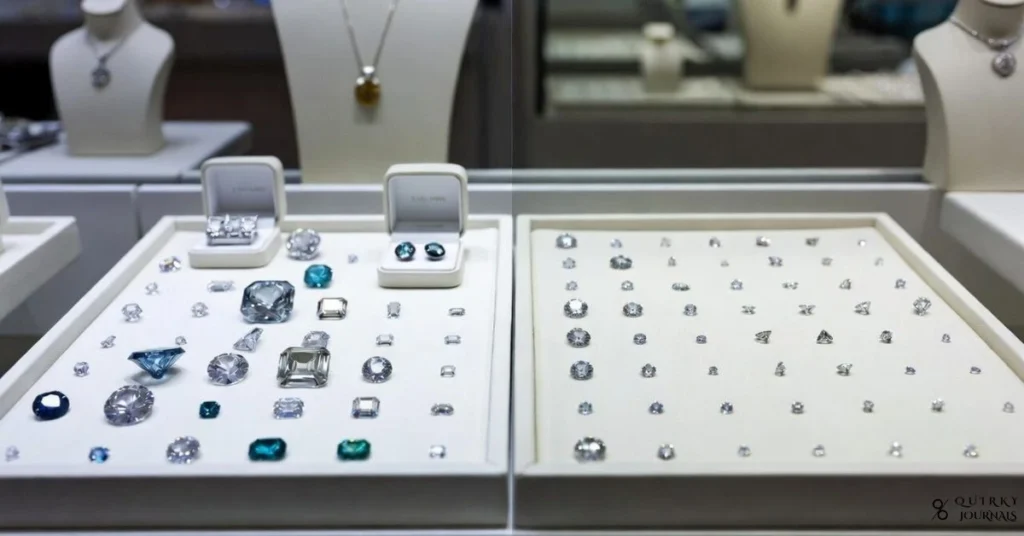
Natural fancy colour diamonds in rare hues like blue, pink, red, green, and orange have demonstrated genuine appreciation because creating these colours in laboratories remains challenging. The Hope Diamond’s famous blue colour results from trace boron contamination during formation—a condition difficult to replicate precisely in controlled environments. Similarly, natural pink and red diamonds get their colour from crystal lattice distortions virtually impossible to manufacture consistently.
However, even this exception faces erosion. Laboratory producers are improving fancy colour production annually. What cost $100,000 to create five years ago might cost $20,000 today and $5,000 in five more years. Only the rarest colours—red, blue, and vivid pink—currently seem relatively secure from laboratory disruption, and even that security may prove temporary.
What the Industry Does Not Want You to Know
Diamond industry insiders have known for decades that their product does not appreciate as marketed. Internal documents, whistleblower revelations, and lawsuits have exposed systematic deception about investment value.
Hidden Industry Realities
Wholesale to Retail Markups: Natural diamonds typically carry 100% to 300% markups from wholesale to retail. A diamond wholesaling for $2,000 might retail for $6,000. This explains why resale values are so low—you are paying for retail overhead, marketing, and profit margins that evaporate the moment you attempt to sell.
Certification Inconsistencies: While GIA and AGS provide relatively consistent grading, many other gemological laboratories apply looser standards, inflating colour and clarity grades to justify higher prices. A diamond graded “VS1” by one lab might be “SI1” by stricter standards, creating significant value discrepancies.
Treatment Disclosure Gaps: Many natural diamonds undergo treatments to enhance colour or clarity—laser drilling to remove inclusions, fracture filling to hide cracks, irradiation or heat treatment to improve colour. While some treatments require disclosure, enforcement is inconsistent, and many consumers unknowingly purchase treated stones at untreated prices.
The Upgrade Scam: Many jewellers offer “lifetime upgrade policies” where you can trade your diamond for a larger one by paying the difference. This sounds generous until you realise it locks you into their inflated pricing forever. You cannot sell your diamond for market value—you must “upgrade” through their system at their markups.
The Generational Wealth Transfer Problem
Many people justify diamond purchases by imagining them as heirlooms passed through generations. This romantic notion faces practical problems in 2026 that previous generations never anticipated.
When Baby Boomers pass natural diamond jewellery to Millennial or Generation Z heirs, recipients increasingly choose to sell rather than wear it. These younger generations do not share their parents’ emotional attachment to natural diamonds and often need cash more than jewellery. However, when they attempt to sell inherited pieces, they discover the brutal truth about resale values.
A diamond ring purchased for $10,000 in 1990 might appraise for $8,000 today due to inflation-adjusted appreciation. However, selling it on the secondary market might yield only $2,000 to $4,000 because buyers can purchase equivalent new stones—often lab-grown—for less. The emotional value Grandma attached to her engagement ring does not translate to the market value that Granddaughter can realise.
Moreover, younger heirs face the awkward choice between wearing “natural” diamonds they know are indistinguishable from lab-grown alternatives costing 80% less, or selling them at massive losses. Many choose to sell and use proceeds for experiences or investments offering better returns—travel, education, retirement accounts, or real estate down payments.
Alternative Investment Options
For those genuinely interested in gemstone investing rather than jewellery ownership, several alternatives offer better prospects than natural diamonds.
Gemstone Investment Comparison
| Gemstone | Investment Potential | Liquidity | Lab Competition | Minimum Investment |
| Kashmir Sapphires (Untreated) | Excellent (10%+ annually) | Moderate | Low (origin matters) | $25,000+ |
| Burmese Rubies (Untreated) | Very Good (8%+ annually) | Moderate | Low (origin premium) | $20,000+ |
| Colombian Emeralds (High Quality) | Good (5% to 7% annually) | Moderate to Low | Low (origin premium) | $15,000+ |
| Natural Fancy Colour Diamonds | Good to Excellent (varies) | Moderate | Medium and growing | $30,000+ |
| Colourless Natural Diamonds | Poor (declining) | Low | High (lab-grown threat) | Not recommended |
| Paraiba Tourmalines | Very Good (7% to 10% annually) | Low | Very Low (unique colour) | $10,000+ |
This comparison reveals that untreated colored gemstones from specific prestigious origins often outperform diamonds as investments. Kashmir sapphires, Burmese rubies, and Colombian emeralds command premiums based on provenance that laboratories cannot replicate. A lab can create a chemically perfect sapphire, but it cannot create a sapphire from Kashmir’s now-depleted Padder region.
According to International Gem Society data, these origin-specific gemstones have appreciated consistently over decades while maintaining reasonable liquidity through specialised auctions and dealers. However, they require significant expertise to evaluate, making professional guidance essential.
Practical Advice for Current Diamond Owners
If you currently own significant natural diamond jewellery, several strategies can help navigate this challenging market environment.
Option One: Keep and Enjoy
If you love your diamond jewellery and wear it regularly, the investment value is irrelevant. Jewellery’s primary purpose is adornment and personal enjoyment, not wealth preservation. If your diamond brings you joy every time you wear it, keep it regardless of market value. The emotional return outweighs any financial consideration.
Option Two: Sell While Values Remain
For those holding diamonds purely as investments, consider selling sooner rather than later. Natural diamond premiums are eroding as lab-grown adoption accelerates. What retains 30% to 40% of the purchase price today might retain only 20% to 25% in five years. Platforms like Worthy, I Do Now I Don’t, and specialised diamond buyers offer ways to convert jewellery to cash, though expect disappointing returns relative to purchase prices.
Option Three: Upgrade or Repurpose
Some jewellers offer advantageous upgrade programs if you want to maintain jewellery ownership while improving value perception. Trading smaller natural diamonds for larger lab-grown stones of superior quality can enhance aesthetic appeal while reducing total capital invested. Alternatively, consider repurposing diamonds into new settings more aligned with current style preferences.
Option Four: Gift to Heirs Now
If you intend to pass diamond jewellery to heirs eventually, consider gifting now rather than through estates. This allows you to see pieces enjoyed, share their stories while you are alive, and potentially provide tax advantages depending on estate sizes. Heirs might appreciate the sentimental value more when you are present to share memories associated with the jewellery.
The Future of Diamond Markets
Looking ahead to 2030 and beyond, several trends seem likely to reshape diamond markets further.
Continued Lab-Grown Adoption
Laboratory production costs will continue declining as technology improves and facilities scale. Within five years, lab-grown diamonds might cost 90% to 95% less than current natural diamond prices, compressing premiums even further. This price pressure will likely force natural diamond producers to emphasise increasingly esoteric value propositions—heritage, romance, authenticity—that resonate with shrinking customer segments.
Blockchain Provenance
Some natural diamond producers are implementing blockchain tracking from mine to consumer, creating verifiable provenance that cannot be forged. This technology might help maintain premiums by providing certainty about origin and ethical sourcing. However, it remains uncertain whether consumers will pay substantial premiums for verifiable naturalness when chemical identity is identical.
Regulation and Disclosure
Regulatory pressure is building for clearer disclosure about lab-grown versus natural diamonds. The FTC has already cracked down on misleading advertising, and further regulations seem likely. This transparency benefits consumers but pressures natural diamond producers whose business models depend on maintaining perceived value gaps.
Market Segmentation
Diamond markets will likely segment into distinct tiers: luxury natural diamonds marketed to traditionalists and ultra-wealthy consumers, mid-market lab-grown stones for value-conscious buyers, and fashion jewellery using even cheaper alternatives. Natural diamonds may become niche luxury products rather than mainstream necessities, similar to mechanical watches in the quartz era.
Conclusion: The Emperor Has No Clothes
The diamond industry’s century-long marketing triumph convinced generations that natural diamonds represented sound investments—rare geological marvels that would appreciate steadily while serving as wearable wealth. This narrative has collapsed under the weight of technological disruption, changing consumer preferences, and mounting evidence that investment claims were always more mythology than reality.
Natural diamonds face an existential crisis in 2026. Laboratory-grown alternatives offer identical beauty, quality, and durability at fractions of the cost. Even expert gemologists cannot distinguish natural from lab-grown without expensive specialised equipment. Resale values for natural stones have always been dismal—losing 50% to 75% of purchase price immediately—and lab-grown competition accelerates this decline. Consumer behaviour, particularly among younger demographics, increasingly favours value over tradition.
The rare exceptions to this dismal investment outlook—natural fancy colour diamonds in the rarest hues, untreated colored gemstones from prestigious origins—require expertise and capital beyond most investors’ reach. For the vast majority considering diamonds as wealth preservation vehicles, the conclusion is clear: they are terrible investments that destroy rather than build wealth.
This does not mean diamonds lack value entirely. If you love diamond jewellery, wear it regularly, and derive genuine pleasure from ownership, purchase and enjoy it. Jewellery’s purpose is adornment and personal expression, not financial returns. However, approach such purchases honestly—as consumption rather than investment, as expenditures that bring joy rather than assets that appreciate.
For those currently holding natural diamonds as investments, the window for extracting reasonable value may be closing. Every year that passes sees lab-grown adoption accelerate, natural diamond premiums compress, and resale values decline. Acting sooner rather than later likely preserves more value than hoping for market reversals that seem increasingly unlikely.
The diamond industry built its fortune on a beautiful lie—that compressed carbon formed over billions of years possessed magical properties justifying extraordinary premiums over chemically identical alternatives created in weeks. That lie was exposed definitively in 2026. The emperor has no clothes, and everyone can see it. Smart investors will act on this reality before it costs them even more.
The diamond deception is over. The question is whether you will acknowledge this truth and adjust accordingly, or cling to romantic notions about forever while your wealth evaporates. The choice is yours, but the evidence is overwhelming: natural diamonds are no longer a safe investment—if they ever truly were.
Spend some time for your future.
To deepen your understanding of today’s evolving financial landscape, we recommend exploring the following articles:
Startup vs. Small Business: Do You Really Have the Founder Mindset?
Is Real Estate a Good Investment? Pros, Cons, and ROI
Defence Stocks in 2026: Geopolitical Tailwind or Late-Stage Arms Race?
Why Big Firms Are Dumping Crypto: The U.S. Debt Crisis No One Priced In
Explore these articles to get a grasp on the new changes in the financial world.
Legal Disclaimer
This article provides general educational information and market analysis for informational purposes only and does not constitute financial, investment, gemological, or legal advice. Diamond and gemstone markets are subject to significant volatility, and individual circumstances vary widely. Valuations cited reflect approximate market conditions at publication time and may change rapidly. Readers should conduct independent research and consult qualified gemologists, appraisers, and financial advisors before making purchase or sale decisions based on individual circumstances, goals, and risk tolerance.
References
[1] “Lab Grown vs. Natural Diamonds: What’s the Difference?” Brilliant Earth. [Online]. Available: https://www.brilliantearth.com/lab-grown-diamonds/buying-guide/. [Accessed: Jan. 30, 2026].
[2] “The Lab-Grown Vs. Natural Diamond Report,” BriteCo, Nov. 10, 2025. [Online]. Available: https://brite.co/the-lab-grown-vs-natural-diamond-report/. [Accessed: Jan. 30, 2026].
[3] “Why Are Lab-Grown Diamonds Cheaper? The Truth About Pricing in 2026,” Liori Diamonds. [Online]. Available: https://lioridiamonds.com/blogs/news/why-are-lab-grown-diamonds-cheaper-the-truth-about-pricing-in-2026. [Accessed: Jan. 30, 2026].
[4] “7 Reasons Not to Buy a Lab-Grown Diamond,” Frank Darling, Dec. 2, 2025. [Online]. Available: https://frankdarling.com/blog/7-reasons-not-to-buy-a-lab-grown-diamond/. [Accessed: Jan. 30, 2026].
[5] “Natural vs. Lab Created Diamond Rings,” Nathan Alan Jewellers. [Online]. Available: https://www.nathanalanjewelers.com/lab-diamonds-vs-natural-diamonds. [Accessed: Jan. 30, 2026].
[6] “How do I identify laboratory-grown diamonds?” Gemological Institute of America. [Online]. Available: https://www.gia.edu/gia-faq-analysis-grading-identify-laboratory-grown-diamonds. [Accessed: Jan. 30, 2026].
[7] “Lab Diamond Value Shifting?” John Atencio, Apr. 23, 2025. [Online]. Available: https://johnatencio.com/blogs/blog/lab-diamonds-resale-value-shifting. [Accessed: Jan. 30, 2026].
[8] “Are Lab-Grown Diamonds a Smart Investment in 2025?” Golden Bird Jewels, Jun. 19, 2025. [Online]. Available: https://www.goldenbirdjewels.com/blogs/topic/lab-grown-diamond-investment-2025. [Accessed: Jan. 30, 2026].