

The Best Budgeting Apps for Millennials and Gen Z: Your Digital Path to Financial Freedom
Hey there, fellow Millennials and Gen Zers! Let’s be real, navigating your finances these days can feel like trying to solve a Rubik’s Cube blindfolded. We’re facing a unique set of challenges, from the persistent weight of student loan debt and the ever-rising cost of living to general economic uncertainty. It often feels like the financial landscape is constantly shifting under our feet. But here’s the good news: we also have incredible opportunities right at our fingertips, primarily thanks to technology that simplifies money management.
That’s where budgeting apps come in. Think of them as your personal financial guide, digital tools designed to help you track your income, monitor your expenses, and crush your financial goals. They offer tailored solutions for finding financial stability and growth in our fast-paced, tech-driven world. Today, I’m going to walk you through some of the leading budgeting apps out there, diving into their features, pros, and cons specifically for our generations. We’ll pay close attention to how they leverage cool stuff like AI, gamification, and overall ease of use to make your financial journey a whole lot smoother.
The Evolving Nature of Personal Finance: AI and Gamification
The world of personal finance isn’t just about spreadsheets and balancing checkbooks anymore. It’s evolving, and AI and gamification are at the forefront, making money management more intelligent and engaging than ever before.
AI-Powered Insights for Smarter Decisions
Artificial intelligence in budgeting apps isn’t just a fancy buzzword; it’s a game-changer. These apps use AI to automatically categorize your transactions, so you don’t have to manually label every coffee purchase or streaming subscription. This means you get personalized spending analysis and recommendations. For instance, an app might identify that you’re consistently overspending in certain areas, like dining out, and suggest ways to cut back. Some even offer proactive alerts, like those from PocketGuard or Digit, to prevent impulsive purchases before they happen. It’s like having a certified financial planner in your pocket, guiding your decisions with data-driven insights.
Gamification: Making Saving and Learning Engaging
Who said saving money had to be boring? Gamification is transforming financial habits into an engaging experience. Imagine earning points or virtual currency just for hitting your savings goals, much like apps such as Sweatcoin (which rewards physical activity) or Long Game (which offers cash prizes for saving). This approach motivates consistent engagement. In fact, a Deloitte report highlights that apps rewarding good financial practices retain 30% more users. Beyond saving, platforms like Zogo and Skillshare offer interactive modules to boost your financial education, turning learning about interest rates or investment strategies into a fun challenge.
AI for Credit Building and Debt Management
For many of us, building credit or tackling debt can feel like an uphill battle. AI is stepping in to offer new ways to approach these critical financial areas. Some platforms use alternative credit scoring models, like Petal or TomoCredit, which analyze more than just traditional credit history. Experian indicates that users of these AI-driven platforms see a 20% faster improvement in their credit profiles. When it comes to debt, apps like FutureFuel.io and Payitoff can create tailored debt repayment plans and even suggest refinancing options. A Student Loan Hero study found that users of AI-driven debt management tools reduced repayment timelines by an average of 30%. Imagine the financial freedom that could bring!
Top Budgeting Apps for Millennials and Gen Z
Now, let’s dive into some of the top apps that are helping our generations take control of their money.
-
A. Rocket Money: The Smart Saver’s Assistant

-
Best For: Automating savings, cancelling unwanted subscriptions, and negotiating bills.
Key Features: Links all your bank accounts, tracks subscriptions, negotiates bills on your behalf, automates savings transfers, and offers credit score monitoring.
Pricing: Free version available; Premium features range from $6-$12/month (sliding scale).
Pros: Can significantly reduce expenses by finding and cancelling forgotten subscriptions and negotiating service bills. It also boasts a very user-friendly interface.
Cons: Access to the most powerful features requires a paid Premium subscription, and Rocket Money takes a percentage of the savings from bill negotiations. -
B. Quicken Simplifi: Ideal for Budgeting Beginners
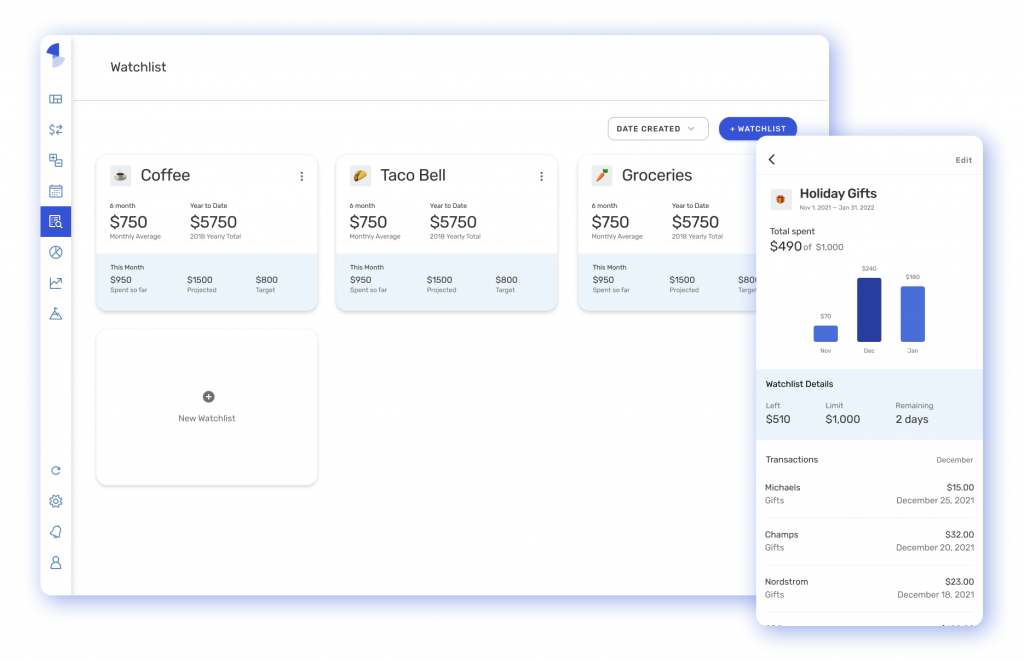
- Best For: Beginners looking for comprehensive yet simple money management and goal tracking.
Key Features: Automatic transaction categorisation, customizable spending limits, real-time alerts, unlimited savings goals, bill tracking, and even a credit report feature.
Pricing: $5.99/month (billed annually, often discounted) ( new prices may vary ). No free version.
Pros: Exceptionally user-friendly, making it great for those new to budgeting. It’s also quite cost-effective for a paid app and integrates smoothly with many financial institutions.
Cons: No free version available for extended use. It also lacks some advanced financial planning tools, like a dedicated retirement planner. -
C. YNAB (You Need A Budget): For the Detailed-Oriented Disciplinarian
-
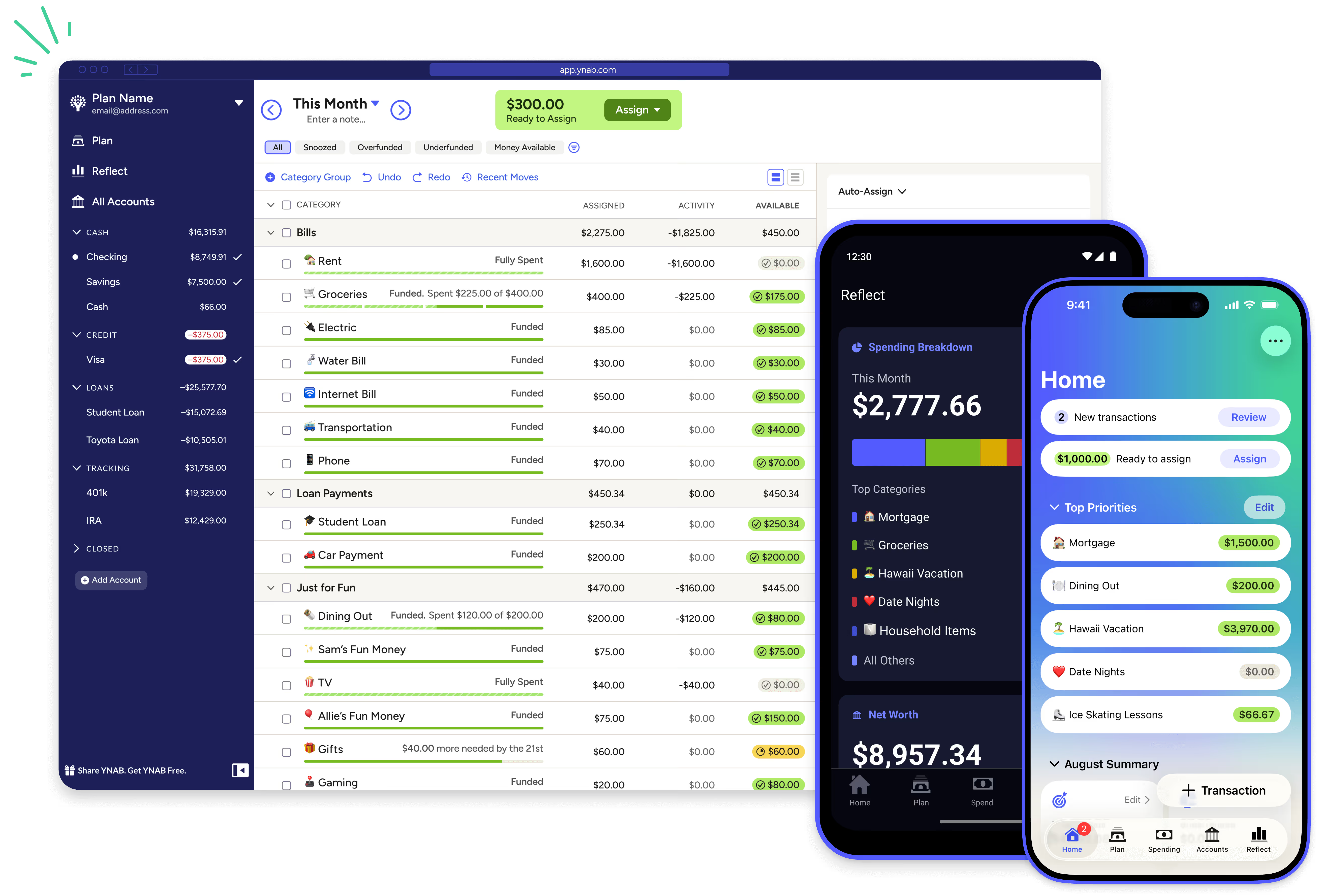
Best For: Individuals fully committed to proactive, zero-based budgeting and aggressive debt reduction.
Key Features: Adheres to the “Give every dollar a job” philosophy, offers extensive cross-platform support, allows for shared budgeting, and provides educational workshops.
Pricing: 34-day free trial; then $14.99/month or $109/year.
Pros: Highly effective for achieving financial goals (claims users save an average of $600 in 2 months, and $6,000 in the first year). It also has a strong community and abundant educational resources.
Cons: There’s a steep learning curve, requiring significant manual engagement and discipline. It’s also on the pricier side. -
D. Monarch Money: Your Holistic Financial Dashboard
-
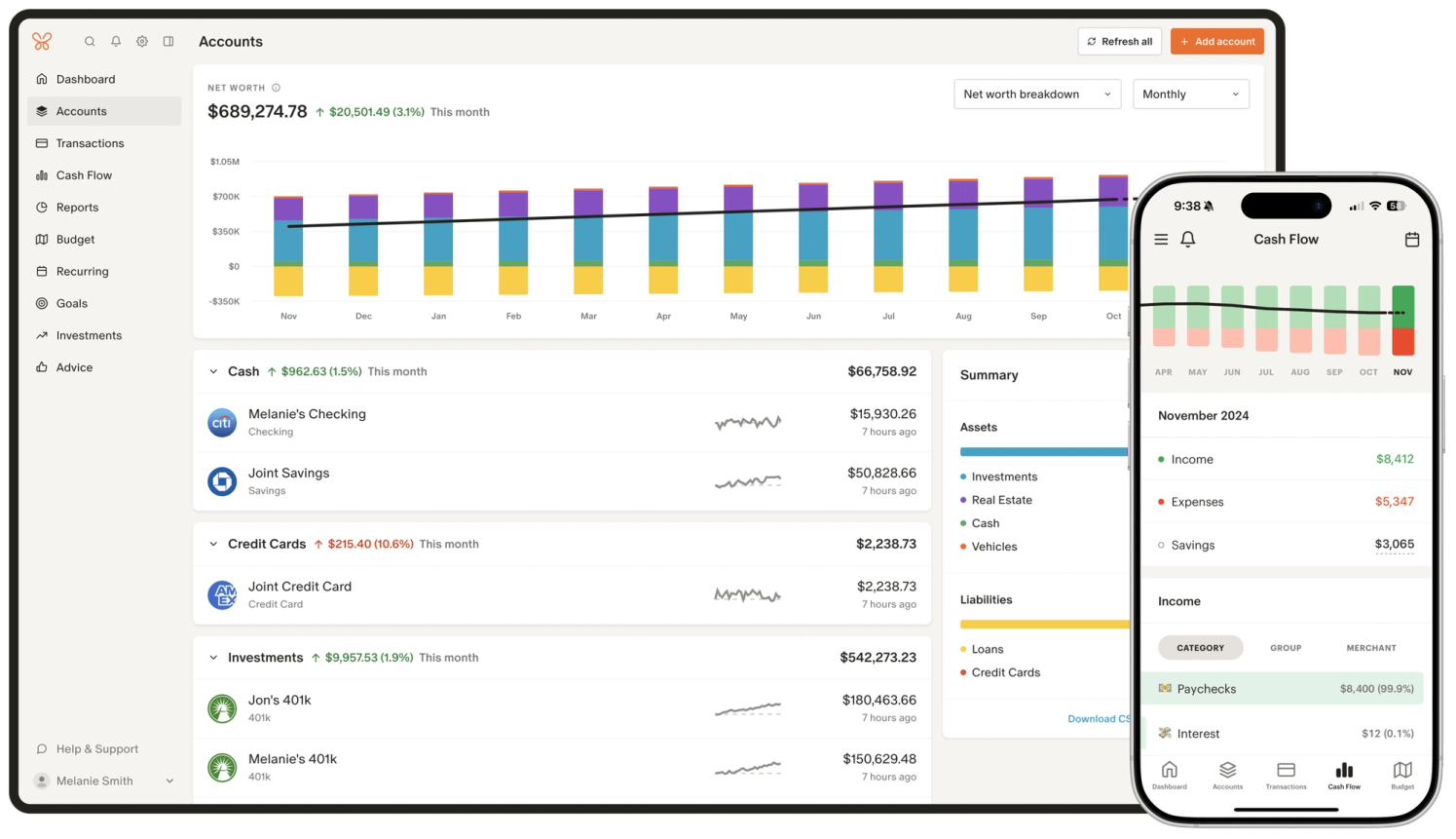
Best For: Users who desire a comprehensive view of all their finances, including investments and net worth.
Key Features: Robust budgeting tools, detailed net worth tracking, investment monitoring, recurring bill alerts, customizable budgets, and financial forecasting.
Pricing: 7-day free trial; then $14.99/month or $99.99/year.
Pros: Excellent for getting a full, holistic financial overview. Many see it as a strong alternative to platforms like the now-defunct Mint, offering robust reporting and goal tracking.
Cons: It’s a paid subscription with a relatively short free trial period. -
E. SoFi®: The Free All-in-One Money Manager

-
Best For: Individuals seeking a free, integrated platform to track various financial accounts.
Key Features: Links banking, investment, and retirement accounts for a unified view; offers straightforward budgeting tools and credit score monitoring.
Pricing: Free (requires SoFi account registration).
Pros: Completely free to use. Provides a comprehensive view of your entire financial picture, including free credit score monitoring.
Cons: You need to register for a SoFi account to access its features. -
F. Goodbudget: Digitising the Envelope System
-
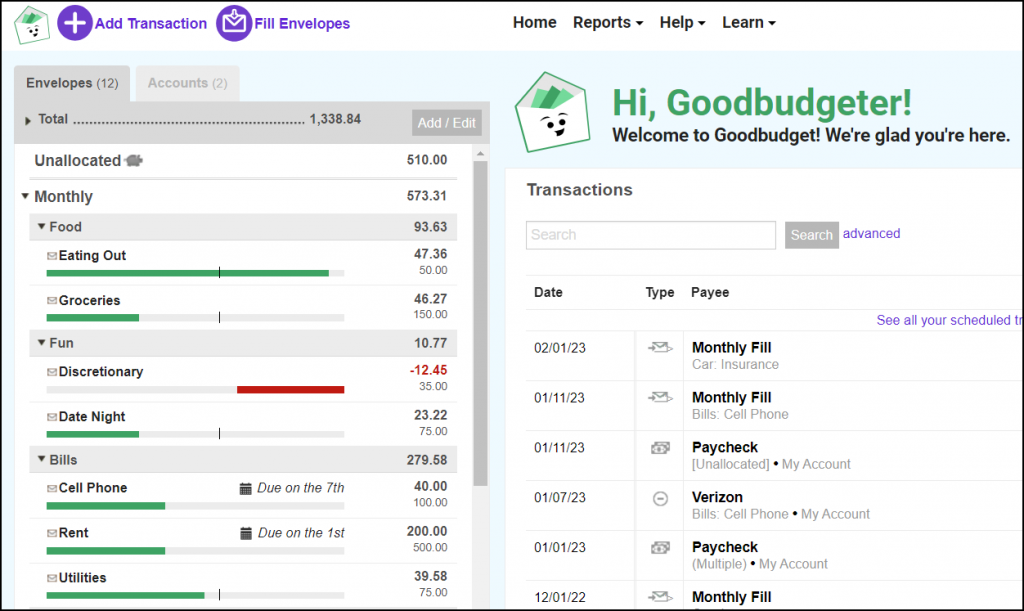
Best For: Those who prefer the classic “envelope system” for budgeting but want a digital format.
Key Features: Digital “envelopes” for spending categories, manual transaction input or file import, debt repayment and savings goal tracking, and support for multiple devices and users.
Pricing: Free version; Premium at $10/month or $80/year.
Pros: Excellent for visual budgeters and for curbing overspending. It offers a very straightforward user experience.
Cons: The free version has limited features, and it doesn’t offer direct integration with external bank accounts, requiring manual entry or file uploads. -
G. Honeydue: Financial Harmony for Couples

-
Best For: Couples who want to manage their finances together efficiently and transparently.
Key Features: Tracks joint and individual expenses and balances, allows customizable information sharing, sets monthly spending limits, helps split expenses, and offers an optional joint Cash bank account.
Pricing: Free.
Pros: Facilitates open financial communication between partners and allows for individual privacy while budgeting together. It’s also completely free.
Cons: Lacks a desktop platform, limiting use to mobile devices. Its reporting can be less comprehensive than some single-user apps. -
H. Lunch Money: The Global Budgeter’s Companion
-
Best For: Digital nomads and international users needing multi-currency support and deep data insights.
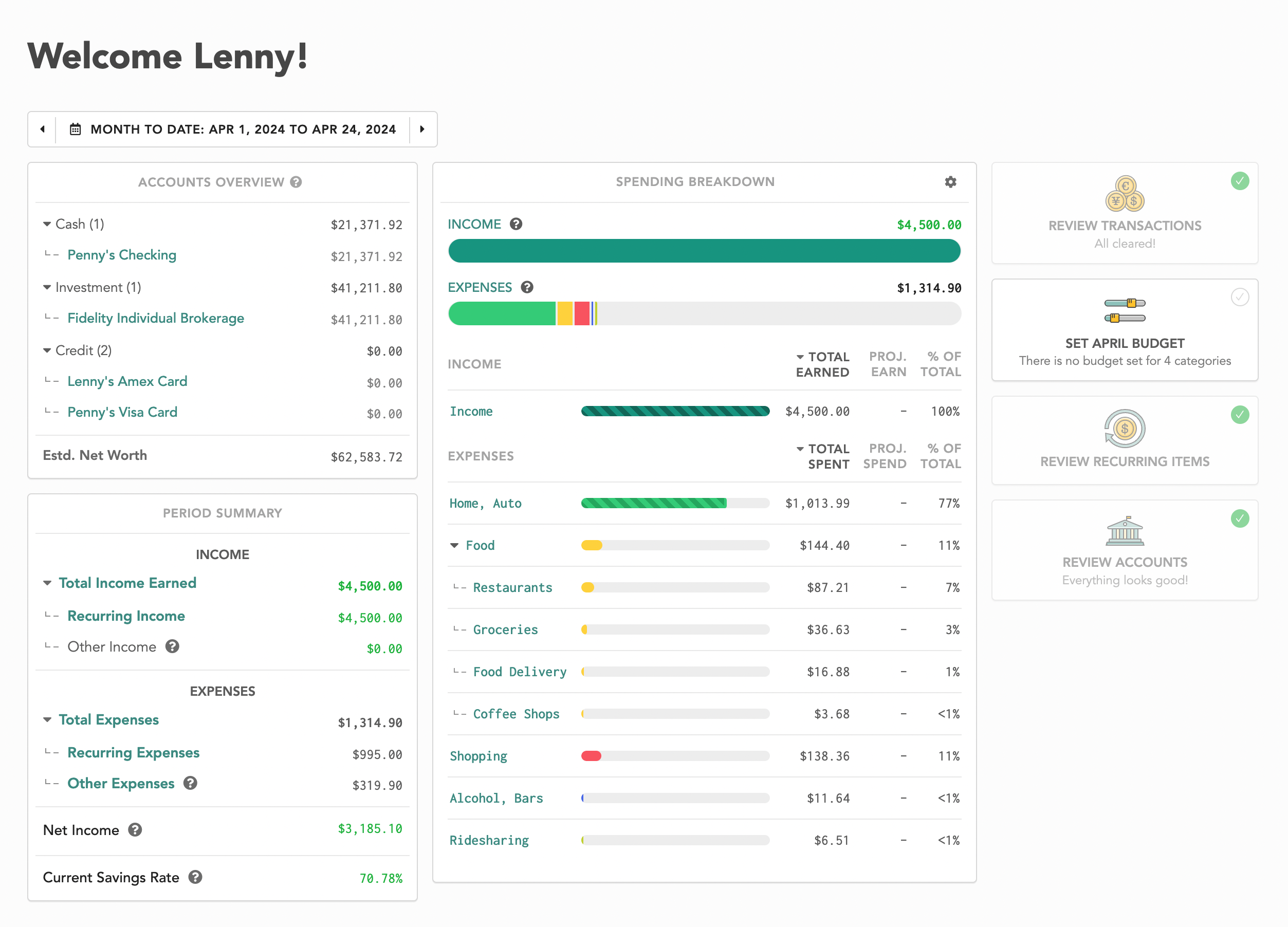
Key Features: Supports over 90 currencies, provides detailed expense breakdowns, allows comparison with previous month’s spending, offers robust net worth tracking, and has customizable stats and a calendar view.
Pricing: 30-day free trial; $10/month or a “pay what you want” annual plan (suggested $100, but can be lower).
Pros: Unique multi-currency functionality is a huge plus. It presents all financial data clearly and offers powerful analytics for discerning spending patterns.
Cons: It caters to a niche audience and might require some initial setup time. -
I. Empower Personal Dashboard: Investment and Fee Tracker

-
Best For: Tracking investments, planning for retirement, and getting a high-level overview of spending.
Key Features: Powerful investment analysis (balances, allocation, performance), a unique retirement fee analyser, portfolio analysis, and a basic budgeting overview.
Pricing: Free.
Pros: Incredibly powerful for investment tracking and identifying hidden fees. It offers free access to what would typically be premium-level financial tools.
Cons: Its budgeting features are quite simplistic, with less focus on granular daily spending control compared to other dedicated budgeting apps. -
J. Tiller: Automated Spreadsheets for Data Aficionados
-
Best For: Spreadsheet enthusiasts who want automated data import and custom financial analysis.
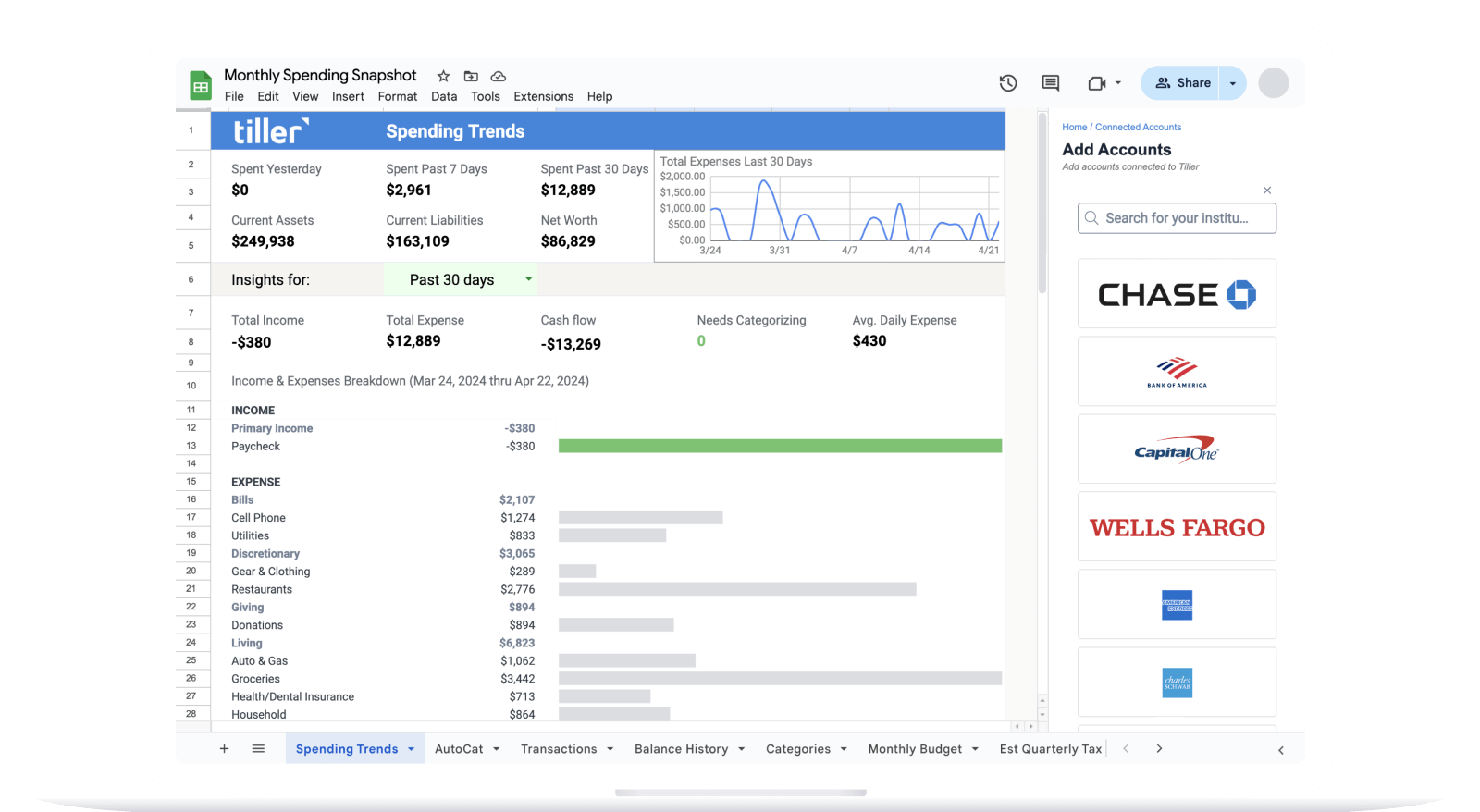
Key Features: Connects your bank accounts directly to Google Sheets or Microsoft Excel, automatically imports transactions, and offers pre-built and community-created templates (e.g., debt payoff planner, savings goal tracker).
Pricing: 30-day free trial; then $79/year.
Pros: Combines the flexibility and power of spreadsheets with automatic data entry. Offers a high degree of customization for reporting and financial analysis.
Cons: Requires comfort and familiarity with spreadsheet software. It also comes with an annual subscription fee.
Choosing the Right Budgeting App: A Personalized Approach
With so many fantastic options, how do you find the right budgeting app for your unique situation? It’s all about a personalized approach.
-
A. Identify Your Financial Priorities
Are you laser-focused on debt reduction, building up your savings account, or growing your investment portfolio? Do you need strict daily spending control, or are you more interested in a big-picture view? Your primary goals will heavily influence which app is the best fit.
-
B. Evaluate Your Budgeting Style
Think about how you like to manage money. Are you a hands-on type who loves categorizing every transaction, or do you prefer a more hands-off, automated approach? Do you thrive with visual charts and graphs, or do you need detailed reports? Understanding your style will guide you to an app that feels intuitive.
-
C. Consider Cost and Features
We’ve seen a range of options, from completely free apps to premium subscriptions. Decide what features are essential for you. Do you need bill negotiation, joint accounts, or robust investment tracking? Factor in any trial periods available and how the cost aligns with your overall budget plan.
-
D. Read Reviews and Test Drive
The best way to know if an app is for you is to try it out. Utilize those free trials! Spend some time connecting your accounts (if available), exploring the features, and seeing if the interface clicks with your personal workflow. Don’t be afraid to test a few before committing.
Beyond the App: Cultivating Lasting Financial Habits
While budgeting apps are powerful tools, they’re only as effective as your engagement. Cultivating lasting financial habits goes beyond simply downloading an app.
-
A. Consistent Engagement is Key
To truly master your money, you need to regularly review your transactions and make budget adjustments as needed. Life changes, and so should your budget. Consistent check-ins ensure you’re always on track.
-
B. Set Realistic and Achievable Goals
Don’t aim for perfection overnight. Start small with realistic goals, whether it’s building a tiny emergency fund or paying off a small credit card balance. Build momentum and celebrate your wins along the way.
-
C. Embrace Financial Education
Many of these apps offer in-app resources to enhance your financial literacy. Take advantage of them! Learning more about how money cards work, understanding interest rates, or exploring different investment strategies will empower you even further.
-
D. Adapt Budgeting Methods
Budgeting apps can support various strategies. Whether you prefer the 50/30/20 rule (50% needs, 30% wants, 20% savings/debt) or the envelope system, there’s an app that can help you implement your chosen method effectively.
Conclusion: Empowering Your Financial Journey
For Millennials and Gen Z, navigating the complex financial landscape can feel daunting, but budgeting apps offer indispensable tools to help us along the way. From AI-powered insights that refine our spending habits to gamified experiences that make saving enjoyable, these modern solutions are designed to empower us.
Remember, the “best” app isn’t a universal truth; it’s the one that aligns perfectly with your individual goals, preferences, and level of engagement. So, take the first step towards financial empowerment today by exploring these incredible budgeting solutions. Your future self will thank you for it!
Disclosure
Please note that this blog post is for informational purposes only and is not intended as financial advice. We are not certified financial planners or investment advisors. The information provided is based on research and general knowledge. Before making any financial decisions, it is recommended to consult with a qualified financial professional.
References
- FinanceBuzz. (2025). 7 Best Budgeting Apps [2025]: Tools To Manage Your Everyday Finances. Retrieved from https://financebuzz.com/budgeting-apps
- Fintellect AI. (2025). Game of Savings: How AI empowers Millennials and Gen Z to take control of their finances. Retrieved from https://www.fintellectai.com/game-of-savings-how-ai-empowers-millennials-and-gen-z-to-take-control-of-their-finances
- Debt Free Millennials. (2025, January 1). Best Budgeting Apps Round Up for 2025! [Video]. YouTube. https://www.youtube.com/watch?v=siW9K2yDFNw
Image Credit
Firmbeehttps://cdn.pixabay.com/user/2020/11/25/09-38-28-431_250x250.png