
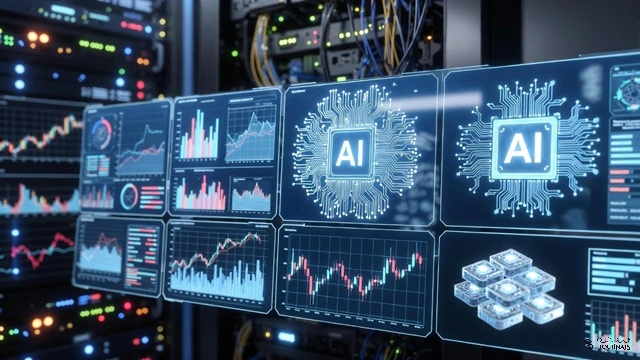
Hey there, fellow finance enthusiasts! Have you ever paused to think about how much our financial lives have transformed over just the past decade? It feels like just yesterday we were primarily relying on traditional banks and physical branches, and now? We’re managing our money, making investments, and even planning for retirement right from the palm of our hands. It’s truly the dawn of a new financial era, and honestly, I find it incredibly exciting!
1. Introduction: The Dawn of a New Financial Era
1.1. The Evolving Landscape of Digital Finance
The truth is, the way we interact with our money has undergone a massive evolution. There’s a growing, undeniable demand for digital financial services that are not just efficient but also super seamless and user-friendly. We want our financial apps to be intuitive, secure, and accessible 24/7. This push for convenience and innovation has made fintech app development a critical driver of change, constantly pushing the boundaries of what’s possible.
1.2. The Transformative Power of AI and Blockchain
At the heart of this revolution are two powerhouse technologies: Artificial Intelligence (AI) and Blockchain. These aren’t just buzzwords; they are fundamentally reshaping how we approach financial applications. From enhancing efficiency and security to offering unparalleled personalization and promoting financial inclusion, AI and Blockchain promise to build a future where our money works smarter for us. Let’s dive into how they’re doing it.
2. Artificial Intelligence (AI) in Web-Based Finance: Enhancing Experience and Efficiency
2.1. Personalized Financial Management
Imagine having a personal financial guide that truly understands your unique habits and goals. That’s exactly what AI brings to the table. Machine learning algorithms can analyze your spending behavior, income patterns, savings goals, and even your risk tolerance. This data allows for incredibly tailored budgeting apps and investment recommendations. For example, an AI could suggest the best way to save for a house or give you personalized tips for building an emergency fund, making your financial plan much more effective. By 2027, many analysts expect that AI-based wealth tools will dominate personal finance, with up to 80% of everyday investors using them for advice [2].
Beyond passive advice, virtual financial assistants, often in the form of chatbots, are revolutionizing customer service. These AI-powered apps offer 24/7 account management, instant query resolution, and even basic financial guidance. Thanks to advanced natural language understanding, interacting with them feels incredibly intuitive, almost like chatting with a human advisor, giving you instant access to your money and information.
2.2. Advanced Fraud Detection and Prevention
When it comes to the security of your money, AI is a game-changer. Traditional fraud detection systems often rely on static rules, which can be easily circumvented. AI, however, continuously learns from vast amounts of data, identifying unusual patterns and real-time anomalies that could indicate fraudulent activity. This proactive approach not only helps prevent new forms of fraud but also significantly reduces false positives, minimizing disruption to legitimate users. It’s like having an always-on, ever-learning guardian for your savings account and credit cards.
2.3. Revolutionizing Credit Scoring and Lending
AI is also transforming how creditworthiness is assessed. Beyond traditional credit history, AI can analyze a broader range of factors, such as spending behavior, utility bill payments, and other alternative data sources. This comprehensive credit assessment allows lenders to get a more accurate picture of a borrower’s financial health, potentially offering better interest rates.
More importantly, this leads to greater financial inclusion. Many people, particularly in underserved populations, have limited or no traditional credit history. AI can help them find access to credit, enabling them to secure loans for business or personal needs, thereby opening up opportunities for economic growth and financial freedom.
3. Blockchain Technology in Web-Based Finance: Security and Transparency Redefined
3.1. Enhanced Security and Transparency
Now, let’s talk about Blockchain, the technology underpinning cryptocurrencies like Bitcoin. Its core innovation is a decentralized and immutable ledger, meaning data is stored across numerous computers (nodes) rather than a single central server. This makes it incredibly resistant to hacking and fraud because altering one record would require altering all subsequent records across the entire network, which is practically impossible. Every transaction is recorded permanently, ensuring data integrity and fostering a trustless system where intermediaries often become unnecessary.
3.2. The Efficacy of Smart Contracts
One of Blockchain’s most powerful features is smart contracts. These are self-executing agreements with predefined conditions written directly into code. Once those conditions are met, the contract automatically executes, eliminating the need for intermediaries like banks or lawyers. This can streamline processes like lending, insurance claims, and asset management, making transactions faster, cheaper, and more reliable. Imagine buying or selling shares without the typical brokerage delays!
3.3. Streamlining Cross-Border Payments and Remittances
Cross-border payments have historically been notoriously slow and expensive, plagued by multiple intermediaries and hefty fees. Blockchain technology enables peer-to-peer international transactions, directly connecting senders and receivers. This dramatically reduces settlement times (from days to minutes) and slashes associated costs, making global money transfers more efficient and accessible for everyone.
3.4. Tokenization and Digital Assets
Blockchain also allows for the tokenization of assets, which involves converting real-world assets into digital tokens. Think about things like real estate, fine art, or even company equity. This allows for fractional ownership, democratizing investment opportunities by lowering entry barriers. For instance, you could own a small “share” of a skyscraper or a famous painting. Blockchain ensures that these ownership records are accurate, secure, and easily verifiable on its transparent ledger.
4. The Powerful Integration: AI and Blockchain Synergy in Fintech
While AI and Blockchain are formidable on their own, their true potential explodes when they work together. This powerful integration is unlocking new levels of automation and efficiency in the fintech sector.
4.1. Unlocking New Levels of Automation and Efficiency
Imagine AI analyzing vast amounts of data recorded on a blockchain to identify market insights and trends with unprecedented speed and accuracy. Or consider AI-driven smart contracts that can dynamically adjust their terms based on real-time market conditions, optimizing blockchain-based transactions for maximum responsiveness and profitability. This synergy creates a financial ecosystem that is not only secure and transparent but also intelligent and adaptive.
4.2. Addressing Critical Fintech Challenges
Together, AI and Blockchain can also tackle some of the most pressing challenges facing fintech today. Data privacy concerns, for instance, can be mitigated by combining Blockchain’s secure, transparent ledger with AI’s ability to process data while preserving anonymity. AI can also assist in monitoring and reporting for regulatory compliance, while Blockchain provides immutable records for auditability. Ultimately, these combined technologies are creating a more accessible, secure, and inclusive financial ecosystem for everyone.
5. Emerging Trends: The Rise of Decentralized AI Finance (DeFAI)
The convergence of AI and decentralized finance (DeFi) is giving rise to exciting new concepts, often dubbed Decentralized AI Finance (DeFAI).
5.1. Agentic Finance and Personalized Agents
We’re seeing the rise of autonomous AI agents that can reason, adapt, and act across various financial protocols. Think of them as super-smart, conversational portfolio agents that go beyond typical robo-advisors. You might say, “Invest $10,000 in low-risk yield,” and the AI would automatically find, evaluate, and execute the best strategies across the DeFi landscape. This offers an incredible level of personalized control and automation for your investments.
5.2. AI-Governed Vaults and Treasuries
Protocols are experimenting with AI-governed vaults and treasuries. These employ reinforcement learning agents to manage decentralized treasuries, dynamically adjusting interest rates or risk thresholds in response to market changes. This means protocols can react to market shifts in minutes, not weeks, with a transparent rationale recorded on the blockchain.
5.3. Cross-Chain Intelligence Layers
The DeFi world spans multiple blockchain networks like Ethereum, Solana, and various Layer 2 solutions. AI routers are emerging as “cross-chain intelligence layers” that evaluate opportunities across these diverse networks. They can abstract away complexities like bridging assets and managing different gas fees, offering users a seamless experience to find the best investment opportunities, regardless of the underlying chain.
5.4. Automated Regulatory Screeners
AI is also being deployed to monitor chain activity for suspicious patterns, wallet clusters, and blacklisted entities, a concept known as KYX (Know Your Everything). These automated regulatory screeners help maintain decentralization while ensuring adherence to jurisdictional compliance, a critical step for broader institutional adoption.
5.5. Community-Trained Models
The future might even see AI models evolving based on contributions from thousands of users, from strategy ideas to training data. This concept of community-trained models shifts governance from just parameter voting to model steering, allowing the community to collectively shape the AI’s decision-making and ethical guidelines.
6. Designing Trustworthy AI for Open Financial Systems
As AI becomes more integral to open financial systems, ensuring trust is paramount. How do we trust autonomous systems in a trustless ecosystem?
6.1. Transparent Logs: Eliminating Black Boxes
The “black box” nature of some AI systems is a concern. In decentralized finance, transparent logs are crucial. On-chain logging of every AI-driven adjustment – be it a parameter change or a transaction flag – ensures auditability and explainability. This fosters user confidence and is essential for attracting institutional adoption, making it clear why an AI made a particular decision.
6.2. Governed Autonomy: AI Proposes, Communities Decide
Full AI autonomy in finance, while powerful, needs careful governance. The emerging best practice is “governed autonomy.” Here, AI proposes changes (e.g., rebalancing a pool or adjusting yield incentives), but token holders or DAO (Decentralized Autonomous Organization) governors ultimately approve or veto these proposals. This maintains decentralization while ensuring the AI operates within clearly defined mandates.
6.3. Privacy-Preserving AI
Personalizing financial risk models often requires analyzing user data. However, in a decentralized system, user anonymity is key. Solutions are being developed that fuse Zero-Knowledge Proofs (ZKPs), federated learning, and secure enclaves. These advanced cryptographic techniques allow AI to analyze data and personalize risk models without compromising individual user privacy, offering the best of both worlds.
7. Conclusion: Charting the Course for Future Finance
7.1. Summary of Transformative Impact
It’s clear that AI and Blockchain are not just incrementally improving our financial apps; they’re revolutionizing them from the ground up. We’re seeing more efficient, secure, and incredibly user-friendly platforms. The benefits are tangible: highly personalized financial services, advanced security measures against fraud, and a significant stride towards a more inclusive financial ecosystem where everyone has better access to financial tools and opportunities.
7.2. The Imperative for Innovation
For businesses, staying competitive in this rapidly evolving landscape means embracing these technologies. The future of web-based finance tools isn’t just bright; it’s a testament to continuous innovation driven by the synergistic power of AI and Blockchain. I believe we’re just scratching the surface of what’s possible, and the journey ahead promises even more incredible advancements for our financial freedom.
Disclosure: The information provided in this blog post is for informational purposes only and does not constitute financial advice. It is essential to conduct your own research and consult with a certified financial planner or professional advisor before making any investment decisions or taking any financial actions. The views expressed are based on current understanding of technology and market trends, which are subject to change.
Recommended Reading
For further reading, we suggest these blogs:
AI vs. Financial Advisors: Which Will Make You Richer?
Goodbye Paperwork: The Automation Tech Replacing Finance Jobs
Explore these articles to get a grasp on the new changes in the financial world.
References
- Corn, S. (2025, February 21). *The Future of Fintech: How AI and Blockchain Are Transforming Financial Apps*. NASSCOM Community.
- Blockchain Council. (n.d.). *Is the Future of Wealth AI-Driven?*. Blockchain Council.
- Broscorp. (n.d.). *How AI and Blockchain Are Redefining Decentralized Finance*. Broscorp.