
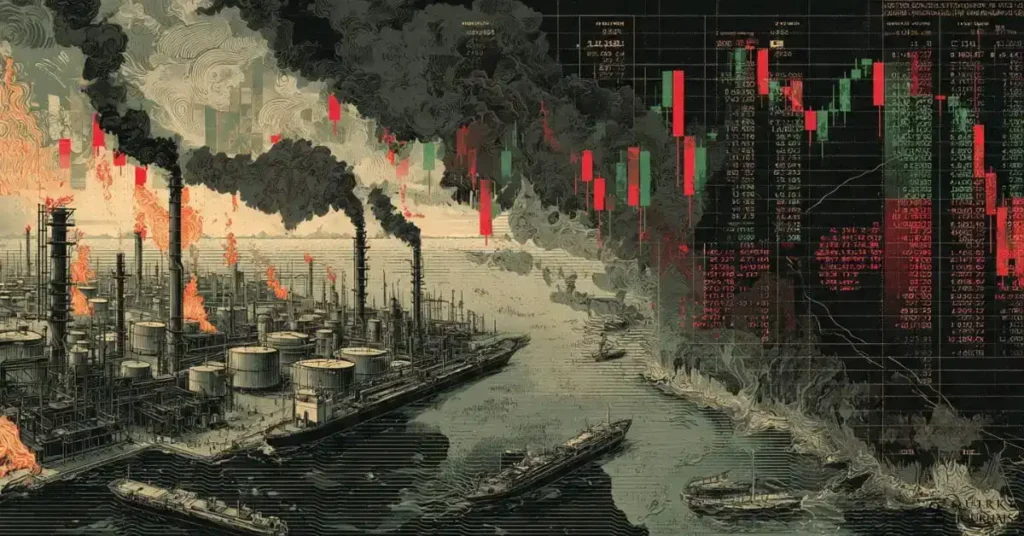
War Economy Chapter 14: Volatility Explained – Why Prices Swing Wildly in Wartime
War does more than reshape borders. It rewires entire economies, disrupts global supply chains, and sends financial markets into a spin. Understanding why prices swing wildly during wartime is not just an academic exercise. For investors, business owners, and everyday consumers, these fluctuations can mean the difference between financial stability and crisis.
Throughout history, armed conflict has consistently triggered unusual behaviour in commodity prices, currency markets, and stock exchanges. Sometimes prices soar. Other times, they crash without warning. Frequently, they do both within the same trading session. The reasons behind this volatility are complex but understandable once you break them down.
This guide explores the mechanics of wartime price swings. We cover everything from oil shocks and currency crises to supply chain breakdowns and the psychology of fear-driven markets. Along the way, we reference real conflicts, real data, and the research of economists who have studied these phenomena for decades.
Whether you are a seasoned investor tracking geopolitical risk or someone simply trying to understand why petrol and groceries cost more when a conflict erupts on the other side of the world, this article has you covered.
What Is Price Volatility and Why Does War Cause It?
Price volatility refers to the speed and magnitude at which prices change over a given period. In stable economic conditions, prices move gradually in response to supply, demand, and monetary policy. During wartime, however, these movements become erratic, sharp, and often unpredictable.
War disrupts the fundamental assumptions that underpin normal market behaviour. Investors can no longer forecast earnings reliably. Supply chains break down overnight. Governments impose sanctions, requisition resources, or print money to fund military operations. Each of these factors introduces uncertainty, and uncertainty is the engine of volatility.
According to research from the National Bureau of Economic Research (NBER), stock volatility is actually 33 per cent lower during periods of conflict compared to peacetime for U.S. equities. This counterintuitive finding is sometimes called the ‘war puzzle’. The reason, researchers suggest, is that massive government spending and guaranteed defence contracts reduce uncertainty about corporate profitability.
However, this pattern does not apply universally. Commodity markets, currency markets, and economies directly involved in fighting often experience the opposite trend. For them, volatility surges dramatically.
Essentially, there are two competing forces at work. On one side, government spending and military contracts can stabilise certain sectors of the economy. On the other side, physical destruction, trade disruption, and investor panic create enormous turbulence elsewhere. Understanding which force dominates in any given conflict helps explain the price swings we observe.
The Mechanics of Wartime Supply Shocks
Supply shocks are among the most powerful drivers of wartime price volatility. A supply shock occurs when the available quantity of a good drops suddenly, forcing prices upward to ration limited supplies. War creates supply shocks across multiple sectors simultaneously.
Consider the impact on agricultural commodities. When Ukraine and Russia went to war in 2022, the world lost access to two of its largest wheat and sunflower oil exporters almost overnight. Both nations together accounted for roughly 30 per cent of global wheat exports. Prices spiked across global futures markets within days of the invasion.
Energy markets face similar disruptions. Major conflicts in or near oil-producing regions immediately threaten global supply. Tanker routes get rerouted or blocked. Pipelines become targets. Sanctions cut off entire national energy industries from global markets. Each of these events reduces supply while demand remains largely constant, pushing prices higher.
Manufacturing supply chains break down just as quickly. Factories in conflict zones stop producing. Workers flee or are conscripted into military service. Transport networks are destroyed or commandeered. Raw materials cannot reach processors, finished goods cannot reach consumers, and prices climb across the entire value chain.
Furthermore, countries neighbouring a conflict often restrict their own exports of essential goods as a precaution, amplifying global shortages even further. This ripple effect means that supply shocks from wars rarely stay confined to the immediate region of conflict.
Oil Prices and Armed Conflict: A Historical Pattern
No commodity illustrates wartime price volatility more dramatically than oil. Because petroleum is essential to transportation, agriculture, manufacturing, and heating, disruptions to oil supply cascade through every part of the economy. Wars in or near oil-producing regions, therefore, tend to create some of the most severe and far-reaching price swings in history.
The 1973 Yom Kippur War produced the most famous oil shock in modern history. Arab members of OPEC imposed an oil embargo on nations supporting Israel, causing oil prices to quadruple from around $3 per barrel to over $12 within months. The economic consequences were devastating for Western economies, triggering stagflation, fuel rationing, and a prolonged recession.
Similarly, Iraq’s invasion of Kuwait in 1990 temporarily halted around four million barrels per day of production, sending prices from around $17 to over $36 per barrel within weeks. Markets stabilised only once the United States and coalition forces intervened, and buyers became more confident about long-term supply.
More recently, the war in Ukraine prompted a surge in European gas prices to record highs as Russia reduced natural gas flows to Europe. The CBOE Crude Oil Volatility Index rose above 100 during the Iran conflict in 2026, its highest level since the COVID-19 pandemic. Oil volatility jumped more than 230 per cent since January of that year.
Analysts at AJ Bell noted that energy market volatility had become extreme even by turbulent market standards. Chris Weston from Pepperstone warned investors to expect continued significant intraday volatility, including price moves that might not always make immediate sense. These expert assessments underline just how destabilising armed conflict can be for energy markets.
Table 1: Oil Price Impact During Major Conflicts
| Conflict | Year | Price Before | Price Peak | % Change |
| Yom Kippur War / OPEC Embargo | 1973 | $3/barrel | $12/barrel | +300% |
| Gulf War (Kuwait Invasion) | 1990 | $17/barrel | $36/barrel | +112% |
| Iraq War | 2003 | $30/barrel | $40/barrel | +33% |
| Russia-Ukraine War | 2022 | $80/barrel | $128/barrel | +60% |
| Iran War (2026) | 2026 | ~$70/barrel | ~$90/barrel | +29% (volatile) |
Source: Compiled from multiple historical records and market data.
Currency Markets Under Wartime Pressure
Currency markets react swiftly to the outbreak of war. Investors tend to flee currencies of nations directly involved in conflict and seek refuge in safe-haven currencies. This capital flight creates rapid and sometimes extreme currency depreciation for warring nations, which in turn drives up the prices of imported goods and further fuels domestic inflation.
The Russian rouble lost nearly half its value against the U.S. dollar within days of Western sanctions following the 2022 invasion of Ukraine. Although the Russian central bank eventually stabilised the currency through emergency interest rate hikes, ordinary Russians faced sharp increases in the prices of imported goods, electronics, and medicines.
Wartime currency weakness creates a vicious cycle. As currencies weaken, import costs rise. Rising import costs push up consumer prices. Higher prices erode purchasing power and reduce consumer confidence. Declining confidence further weakens economic output, putting additional downward pressure on the currency. Breaking this cycle typically requires massive intervention from central banks or international financial institutions.
Meanwhile, safe-haven currencies like the U.S. dollar, Swiss franc, and Japanese yen tend to strengthen during periods of global conflict. Investors rush into these assets, perceiving them as stable stores of value. This strengthening can itself create trade imbalances, as exports from safe-haven countries become more expensive for foreign buyers.
Crucially, gold also tends to surge during wartime. Often described as the ultimate safe-haven asset, gold prices typically rise when geopolitical risk escalates. During the early months of the Russia-Ukraine conflict, gold briefly surpassed $2,000 per ounce as investors sought shelter from the uncertainty gripping global markets.
How Stock Markets Respond to Conflict: The War Puzzle
Stock markets often behave in ways that defy intuition during wartime. Many people assume that the outbreak of war should send stock markets tumbling. In reality, the data tells a more nuanced story. As Motley Fool research shows, U.S. stocks rose 17 per cent during World War II and 19 per cent during the Korean War, well above the average annual market return of 8 to 10 per cent.
This outperformance has several explanations. Government defence spending stimulates industrial production. Guaranteed military contracts give companies predictable revenue streams. Full employment during wartime boosts consumer spending. Together, these factors can override the negative psychological impact of conflict on investor sentiment.
However, the initial outbreak of war frequently triggers sharp short-term sell-offs, especially when the conflict comes as a surprise. Research from the Swiss Finance Institute found that when wars begin unexpectedly, stock prices tend to drop as investors scramble to reprice risk. Once the conflict becomes more certain, investors begin to treat it as a quantifiable risk that can be modelled and hedged.
Mark Armbruster of Armbruster Capital Management studied market performance from 1926 to 2013 and found that stock market volatility was actually lower during periods of war compared to peacetime. The one notable exception was the Gulf War, where volatility aligned roughly with its historical average. This finding reinforces the NBER research described earlier.
LPL Financial data further shows that the average S&P 500 drawdown following major geopolitical events is only 4.6 per cent, with markets typically recovering within around six weeks. A year later, stocks often post strong gains. Following Pearl Harbour, the Cuban Missile Crisis, the Kennedy assassination, and the start of the Israel-Hamas war, the S&P 500 posted double-digit gains in the twelve months that followed.
Defence Stocks and Industry-Level Volatility
While broad market volatility may actually decrease during major conflicts, individual sectors tell very different stories. Defence stocks typically surge when war breaks out. Companies producing weapons systems, military vehicles, ammunition, and cybersecurity solutions see demand spike virtually overnight as governments increase defence budgets.
An analysis of 75 global defence stocks from 2014 to 2023 showed a strong correlation between defence stock performance and geopolitical risk. This correlation was especially pronounced during Russia’s annexation of Crimea and the subsequent invasion of Ukraine, where defence stocks moved most relative to the broader market in the medium term.
NBER research confirms that higher military spending resulted in lower stock volatility for defence companies and related industries such as steel, coal, textiles, and food. Wartime defence contracts provided stable revenue streams, reduced uncertainty about future profits, and made earnings more predictable for analysts.
Conversely, sectors that rely on peaceful trade, tourism, and consumer discretionary spending tend to suffer badly. Airlines, hospitality companies, luxury goods manufacturers, and international retailers often see sharp falls in revenue as conflict disrupts travel, trade, and consumer confidence.
The energy sector occupies a particularly complex position. Oil majors with production in conflict zones may face supply disruptions and write-downs. Yet the same companies may benefit from higher global oil prices caused by the conflict. The net effect on their stock price depends heavily on the specific geography and nature of the conflict.
Table 2: Sector Performance During Major Conflicts
| Sector | Typical Impact | Primary Driver | Example |
| Defence & Aerospace | Strongly Positive | Increased government contracts | Lockheed Martin (2022) |
| Energy (Oil & Gas) | Mixed / Volatile | Price spikes vs. supply disruption | ExxonMobil (Ukraine war) |
| Agriculture / Food | Positive (prices up) | Supply shortfalls, hoarding | Wheat futures (2022) |
| Aviation / Tourism | Strongly Negative | Travel restrictions, fear | Airlines (Gulf War, 9/11) |
| Gold / Precious Metals | Positive | Safe-haven demand | Gold (all modern conflicts) |
| Consumer Discretionary | Negative | Reduced consumer confidence | Retail (WWII rationing) |
Source: Compiled from NBER, Motley Fool, and Investopedia research.
Investor Psychology and Fear-Driven Markets
Beyond the fundamental economic mechanics, investor psychology plays an enormous role in wartime volatility. Markets are not purely rational systems. They reflect the emotions, fears, and biases of millions of individual and institutional investors making decisions under conditions of extreme uncertainty.
Fear is particularly contagious in financial markets. When war breaks out, even investors in sectors or regions unaffected by the conflict may panic and sell simply because others are selling. This herding behaviour amplifies price movements beyond what the underlying economic fundamentals would justify.
During the early days of the Iraq War in 2003, a Reddit analysis of historical trading data found that uncertainty itself was what scared investors, not the war per se. Once the U.S. committed to military action and markets anticipated a swift resolution similar to the first Gulf War, stocks rallied sharply. The market, as one fund manager put it at the time, was ‘going to go up and down more on emotion than valuation’.
Behavioural economists describe this as the uncertainty premium. Investors demand higher potential returns to hold assets whose future value is unclear. During wartime, the uncertainty premium spikes dramatically, causing asset prices to fall across the board until clarity emerges about the conflict’s scope, duration, and likely outcome.
Social media and 24-hour news cycles have amplified this effect in modern conflicts. Rumours, unverified reports, and propaganda spread instantly across global markets. The oil price swing during the Iran war in 2026, triggered by a deleted tweet about a U.S. Navy tanker escort, perfectly illustrates how even momentary misinformation can cause billion-dollar moves in commodity markets within minutes.
Inflation, Government Spending, and the Monetary Impact of War
Governments at war spend at extraordinary rates. Military equipment, personnel, logistics, healthcare for wounded soldiers, and economic support for allies all require massive financial outlays. Funding these expenditures creates significant inflationary pressure, adding another layer of volatility to the broader economy.
Three primary methods exist for wartime government financing: taxation, borrowing, and money creation. Each has different inflationary consequences. Direct taxation is the least inflationary but politically difficult during wartime. War bonds and deficit spending are historically common, deferring inflation but building future debt obligations. Money creation, used when other options are exhausted, is most directly inflationary.
The NBER research referenced earlier found that growth in industrial production, consumer price inflation (CPI), and money supply (M1) are all higher during periods of conflict. This confirms the historical pattern of wartime inflation across multiple economic indicators.
During World War I, U.S. consumer prices roughly doubled between 1914 and 1920 as the government printed money and borrowed heavily to fund the conflict. During World War II, price controls and rationing suppressed official inflation statistics, but the underlying inflationary pressure surfaced in the immediate post-war period. Understanding these wartime monetary dynamics is essential for anyone trying to navigate financial markets during a conflict.
Central banks face an impossible dilemma during wartime. Raising interest rates to combat inflation risks choking an economy already under strain. Keeping rates low allows inflation to run hot, eroding savings and distorting price signals across the economy. Most central banks historically have prioritised economic stability over strict inflation targeting during active conflicts.
Food and Agricultural Commodity Prices in Wartime
Food security becomes one of the most immediate concerns during wartime. Armed conflict disrupts agricultural production in multiple ways: farmers flee conflict zones, fields are damaged or mined, fertiliser supplies are disrupted, and transport networks for moving food from farms to markets break down. Each factor reduces food supply just as demand remains constant or rises due to displaced population movements.
The Russia-Ukraine conflict illustrated this starkly. Ukraine is often called the ‘breadbasket of Europe’ due to its massive agricultural output. Together with Russia, the two nations supply roughly 30 per cent of global wheat, 20 per cent of global corn, and about 80 per cent of the world’s sunflower oil. When the conflict disrupted export flows in 2022, food commodity prices surged globally. Wheat futures hit 14-year highs within weeks.
Countries in Africa, the Middle East, and parts of Asia that depend heavily on Ukrainian and Russian grain imports faced the sharpest price increases. In some nations, bread prices doubled or tripled within months, triggering social unrest and food insecurity for millions of people far removed from the actual conflict zone.
Fertiliser prices add another dimension. Both Russia and Belarus are among the world’s largest exporters of potash and nitrogen fertilisers. Sanctions and export restrictions disrupted global fertiliser markets, raising costs for farmers worldwide. Higher input costs eventually translate into higher food prices at the retail level, often with a lag of several months to a year as growing seasons work through the production cycle.
Agricultural price volatility during conflict is therefore not just an economic issue. It is a humanitarian one. The World Food Programme consistently reports that armed conflict is the leading driver of acute food insecurity worldwide, with price spikes in staple commodities often tipping vulnerable populations into crisis.
The Strait of Hormuz, Critical Chokepoints, and Price Transmission
Geographic chokepoints amplify the price impact of conflict dramatically. When fighting occurs near or at key trade routes, the consequences for global prices extend far beyond the immediate region. The Strait of Hormuz is the most critical example: roughly 21 per cent of global oil supply passes through this narrow waterway between Iran and Oman.
Any threat to Hormuz immediately sends oil markets into volatility spirals. During the 2026 Iran war, a single mistaken tweet from the U.S. Energy Secretary about a Navy tanker escort caused Brent crude to plunge toward $80 before spiking back to nearly $90 within minutes after the White House issued a correction. This episode, reported by Business Insider, shows just how tightly markets are watching developments near critical infrastructure.
The Suez Canal presents another chokepoint concern. When Houthi rebels began attacking commercial shipping in the Red Sea in late 2023, dozens of major shipping companies rerouted their vessels around the Cape of Good Hope. This added weeks and thousands of miles to shipping journeys, raising freight costs and extending delivery times for goods ranging from electronics to clothing to consumer products.
The Strait of Malacca, connecting the Indian Ocean to the South China Sea, serves as a critical artery for Asian trade. Any conflict threatening this route would immediately impact economies across Southeast Asia, Japan, South Korea, and China. The potential price consequences would be felt globally across manufacturing supply chains.
Critically, the vulnerability of chokepoints means that wars need not occur in major economic centres to have massive global price impacts. A relatively small conflict in a strategically located region can disrupt the flow of billions of dollars worth of trade daily, triggering price spikes across the world economy.
Sanctions, Trade Wars, and Secondary Economic Effects
Modern warfare rarely remains purely military. Economic warfare through sanctions, export controls, and trade restrictions has become a central instrument of modern geopolitical conflict. These economic weapons create their own form of market volatility, often with consequences that spread well beyond the targeted nation.
Following Russia’s invasion of Ukraine, Western nations imposed the most sweeping sanctions regime in history. These measures froze Russian central bank reserves, cut major Russian banks off from the SWIFT international payments system, and banned imports of Russian oil, gas, and coal. The economic fallout rippled through global energy, financial, and commodity markets simultaneously.
Secondary sanctions present particular complexity. When the U.S. threatens sanctions against companies in third countries that continue doing business with sanctioned nations, it forces businesses worldwide to make difficult choices about which markets to prioritise. This uncertainty around secondary sanctions freezes trade, investment, and supply chain decisions across many industries far removed from the conflict zone.
Export controls on advanced technology, semiconductors, and dual-use goods represent another form of economic conflict with significant market implications. Restrictions on semiconductor exports to China introduced by the United States have created substantial uncertainty across the global technology industry, affecting supply chains, investment decisions, and stock valuations across multiple continents.
Trade disruptions also affect economies not directly targeted by sanctions. Nations that previously relied on sanctioned countries for imports must find alternative suppliers, often at higher cost. Similarly, countries that export to sanctioned markets must find new buyers, often accepting lower prices. Both adjustments create price volatility across relevant commodity and goods markets.
Table 3: Economic Sanctions and Market Impact – Russia-Ukraine Case Study
| Sanction Type | Target | Market Effect | Price Impact |
| Asset freeze | Russian central bank | Rouble crash | USD/RUB: +100% in days |
| SWIFT exclusion | Russian banks | Trade finance seizure | Trade volumes collapsed |
| Oil import ban | Russian crude oil | European energy shortage | Gas prices: +300% (EU) |
| Export controls | Advanced technology | Supply chain uncertainty | Tech stocks volatile |
| Secondary sanctions | Third-country firms | Global trade disruption | Freight rates surged |
Source: Treasury Department, ECB, and market data records (2022-2023).
Safe-Haven Assets and Capital Flows During Wartime
When geopolitical risk rises sharply, investors engage in a flight to safety. They sell riskier assets such as equities in emerging markets, high-yield bonds, and speculative commodities and move capital into assets perceived as secure stores of value. Understanding these capital flows is essential for anticipating how different asset classes will behave during conflict.
Gold consistently ranks as the premier safe-haven asset during wartime. Its value does not depend on any single government’s creditworthiness or economic performance. It cannot be inflated away. Accordingly, gold prices typically rise during the early stages of conflict as investors seek protection from both financial market volatility and potential currency debasement.
U.S. Treasury bonds represent another critical haven. Even when the United States is directly involved in a conflict, global investors tend to buy U.S. government debt because of its deep liquidity and the strength of U.S. institutions. Paradoxically, American wars have sometimes caused yields on U.S. Treasuries to fall as demand from foreign investors surges.
The Swiss franc maintains its reputation as a safe-haven currency due to Switzerland’s long history of political neutrality, robust financial institutions, and strict monetary discipline. Similarly, the Japanese yen tends to strengthen during global crises despite Japan’s high debt levels, partly because Japanese institutional investors repatriate foreign investments during times of uncertainty.
Cryptocurrencies have emerged as a contested haven. Some investors have turned to Bitcoin and other digital assets during geopolitical crises, arguing that their decentralised nature protects against government interference. However, their extreme volatility makes them unreliable during acute crises. During the Russia-Ukraine conflict, cryptocurrency markets exhibited high correlation with risk assets rather than safe havens in the early stages of the conflict.
How Historical Wars Shaped Modern Market Understanding
Each major conflict of the modern era has added to our collective understanding of how markets behave under wartime stress. Studying these historical episodes provides essential context for interpreting current events and developing more robust investment strategies.
World War II fundamentally reshaped U.S. financial markets. Price controls, rationing, and war bond drives created a highly regulated economic environment quite different from peacetime conditions. Yet within these constraints, industrial production surged, unemployment vanished, and corporate profits climbed as the U.S. economy converted to wartime production. The Dow Jones Industrial Average rose substantially over the course of the war despite the enormous human cost.
The Korean War (1950-1953) produced another surprising market outcome. Despite intense fighting and significant U.S. casualties, American stocks rose approximately 19 per cent over the course of the conflict. Wartime spending on military equipment, combined with continued post-WWII industrial momentum, kept economic activity strong.
The Vietnam War era produced a more complicated picture. Initially, defence spending stimulated the economy. Over time, however, the fiscal strain of simultaneously funding the war and President Johnson’s Great Society social programmes created significant inflationary pressure. The stagflation that emerged in the late 1960s and 1970s ultimately proved more damaging to markets than the war itself.
The first Gulf War (1990-1991) demonstrated how quickly markets can recover once conflict resolution becomes visible. After an initial sharp sell-off when Iraq invaded Kuwait, U.S. stocks climbed strongly once coalition forces began their ground campaign and a swift victory became apparent. Markets correctly anticipated that a short, decisive conflict would be less damaging than a prolonged war of attrition.
The Role of Information, Misinformation, and Market Signals
In the digital age, the relationship between information and market volatility has become more intense than ever before. Markets now react to news within milliseconds, powered by algorithmic trading systems that scan news feeds, social media, and official statements for market-moving keywords. During wartime, when genuine information is scarce and unreliable, this creates conditions for extreme volatility driven by partial, incorrect, or deliberately false information.
The 2026 Iran war oil price episode perfectly illustrated this dynamic. A single post on social media platform X, published by a senior U.S. government official, briefly moved oil prices by more than 10 per cent. When the post was deleted and contradicted by the White House twenty minutes later, prices reversed sharply. This episode, documented by Business Insider, highlights how fragile market equilibrium becomes during active conflict.
Governments and military organisations routinely engage in information warfare during conflicts. Deliberately misleading reports about military progress, casualties, and economic impacts can influence civilian morale, enemy decision-making, and diplomatic negotiations. As a side effect, they also move financial markets. Investors must therefore apply extra caution when interpreting news from conflict zones, even when sources appear official.
Experienced traders develop specific strategies for navigating information uncertainty during wartime. These include waiting for official government confirmation before acting on breaking news, diversifying across asset classes and geographies to reduce single-event exposure, and maintaining higher cash reserves than normal to allow rapid reallocation as clarity emerges.
Furthermore, satellite imagery, shipping data, and other alternative data sources have become increasingly valuable for investors seeking ground truth during conflicts. Hedge funds and institutional investors now routinely monitor ship movements, military logistics activity, and agricultural field conditions to gain an informational edge in conflict-affected markets.
Investment Strategies for Navigating Wartime Volatility
Navigating wartime volatility requires both strategic planning and emotional discipline. History shows that knee-jerk reactions to early conflict news often prove costly. As Motley Fool research demonstrates, sticking to a long-term strategy has historically delivered strong results for investors who hold through chaos rather than trying to time market bottoms and recoveries.
Diversification across asset classes remains the cornerstone of any wartime investment strategy. Holding a blend of equities, bonds, commodities, and alternative assets reduces the impact of any single sector’s distress on the overall portfolio. Geographical diversification matters equally: spreading investments across regions reduces exposure to any single conflict zone.
Specific sector tilts can improve portfolio resilience during conflict. Overweighting defence stocks, energy producers, agricultural commodities, and gold relative to benchmark weightings has historically provided meaningful outperformance during periods of elevated geopolitical risk. Conversely, reducing exposure to travel, luxury goods, and internationally exposed consumer brands can limit downside.
Maintaining liquidity is critically important during wartime volatility. Markets can move extremely rapidly in both directions. Investors who hold sufficient cash reserves can take advantage of dislocations, buying quality assets at depressed prices during panic-driven sell-offs. Those who are fully invested at the outbreak of conflict may be forced to sell at the worst possible moment to meet margin calls or liquidity needs.
Hedging strategies using options and futures markets provide another layer of protection. Purchasing put options on equity indices or specific sector ETFs can limit downside exposure during sharp sell-offs. Similarly, long positions in volatility instruments such as VIX-related products can profit from the spike in implied volatility that typically accompanies the outbreak of conflict.
Finally, professional financial advice becomes particularly valuable during wartime. The complexity of navigating multiple simultaneous market disruptions, from currency moves to commodity spikes to sector rotations, makes the guidance of an experienced adviser more beneficial than at almost any other time.
Global Supply Chains and the Long-Term Price Legacy of War
Wartime price volatility rarely ends when the shooting stops. Armed conflicts leave lasting imprints on global supply chains, trade relationships, and economic structures that continue influencing prices for years or even decades after peace is restored. Understanding these long-term legacies helps contextualise both current price levels and future volatility risk.
The Russia-Ukraine war has already begun reshaping European energy infrastructure on a generational scale. European nations that previously relied heavily on Russian natural gas have invested hundreds of billions of euros in alternative energy sources, LNG import terminals, pipeline connections, and renewable energy capacity. These infrastructure decisions, driven by wartime supply disruptions, will influence European energy prices for decades.
Agricultural trade patterns have similarly shifted. Countries that previously relied on Ukrainian grain have diversified their import sources, often at higher cost. New long-term supply agreements have been established with Australia, Canada, Argentina, and other agricultural exporters. While this diversification reduces future vulnerability, it also permanently raises the cost floor for many agricultural commodities in affected regions.
Manufacturing supply chains have become progressively more fragmented since the early 2000s, partly in response to geopolitical risk. The concept of friend-shoring, moving supply chains to politically aligned nations rather than purely optimising for cost efficiency, has gained significant traction. This trend accelerated dramatically after the Ukraine invasion, as companies scrambled to reduce dependence on potentially adversarial supply sources.
These structural changes all have price implications. Supply chains that prioritise resilience over efficiency are inherently more expensive. Redundant production capacity costs money. Multiple supplier relationships involve higher administrative overhead. Shorter but more secure supply chains often require higher-cost domestic or regional production. The result is a permanent upward adjustment in the cost structure for many goods and services, leaving a lasting inflationary legacy from wartime disruptions.
Case Study: The 1973 Oil Crisis and Its Enduring Price Legacy
The 1973 Yom Kippur War and subsequent OPEC embargo represent perhaps the most consequential single episode of wartime price volatility in modern economic history. Its effects reshaped the global economy, redefined energy policy, and permanently altered the relationship between oil prices and geopolitical risk.
When Arab OPEC members announced the embargo in October 1973, the immediate price impact was dramatic. Oil prices quadrupled within months. Western economies, which had built their post-war prosperity on cheap energy, were blindsided. Petrol shortages led to queues at fuel stations. Speed limits were lowered to conserve fuel. Daylight saving time was extended in the United States to reduce electricity consumption.
The longer-term economic impact was even more significant. The oil shock contributed directly to the stagflation of the 1970s: a toxic combination of high inflation, high unemployment, and low growth that confounded economists who had previously believed such a combination was impossible according to the prevailing Phillips Curve theory of the time.
Notably, as Investopedia research confirms, the 1973 conflict was the notable exception to the general pattern of wars not causing sustained stock market declines. A small initial dip gave way to a 41 per cent decline over the following year as the OPEC embargo choked global energy supplies. This case illustrates that conflicts involving major commodity producers carry genuinely unique risks.
The lasting policy legacy of the 1973 crisis was equally profound. Western nations established strategic petroleum reserves, invested in domestic energy production, and began the long process of diversifying away from oil dependence. These policy responses, directly triggered by wartime price volatility, shaped energy markets for the following five decades and continue to influence global energy policy today.
War and Cryptocurrency: A New Dimension of Volatility
The rise of cryptocurrency markets has added an entirely new dimension to wartime financial volatility. Digital assets did not exist during previous major conflicts, and their behaviour during geopolitical crises is still being understood by both investors and policymakers.
During the Russia-Ukraine conflict, cryptocurrency played several notable roles. Ukrainian citizens and organisations received significant donations in Bitcoin and other cryptocurrencies from international supporters, demonstrating digital assets’ utility for cross-border value transfer in contexts where traditional banking systems were disrupted or unreliable.
Simultaneously, Russian citizens turned to crypto assets to protect savings from rouble depreciation and potential confiscation. Trading volumes on peer-to-peer cryptocurrency platforms in Russia spiked sharply in the weeks following Western sanctions. This demand pushed up prices for certain digital assets in Russian markets, creating cryptocurrency arbitrage opportunities across different exchanges.
However, cryptocurrency has also proven highly volatile during wartime, often moving in correlation with risk assets rather than serving as a stable store of value. Bitcoin fell sharply alongside equity markets in the immediate aftermath of Russia’s invasion of Ukraine before recovering. This behaviour disappointed those who had positioned digital assets as ‘digital gold’ with safe-haven characteristics.
Regulators are increasingly focused on preventing sanctioned nations from using cryptocurrency to evade financial restrictions. As regulatory scrutiny increases, the utility of crypto as a sanction-evasion tool may diminish, potentially affecting its valuation in future conflict scenarios. The intersection of cryptocurrency and geopolitical risk remains one of the most dynamic and contested areas in modern financial economics.
Preparing Your Portfolio for Geopolitical Risk
Given the complexity and unpredictability of wartime market behaviour, preparation is far more effective than reaction. Investors who have thought through their geopolitical risk exposure before a conflict erupts are far better positioned to navigate volatility than those who scramble to respond to breaking news.
Conducting an ageopolitical risk audit of your portfolio is a valuable starting point. This involves identifying which holdings have significant exposure to conflict-prone regions, which rely on vulnerable supply chains or chokepoints, and which would be most affected by commodity price spikes or currency dislocations.
Stress testing your portfolio against historical conflict scenarios can reveal hidden vulnerabilities. How would your holdings have performed during the 1973 oil crisis? What would have happened to your investments if you had held them through the 2022 Ukraine invasion? Answering these questions analytically, rather than emotionally, prepares you to make better decisions under the actual pressure of real events.
Building a strategiclocation too safe-haven assets as a permanent part of your portfolio, rather than only adding them after a crisis begins, ensures you are positioned to benefit from the flight to safety that typically accompanies conflict escalation. A 5 to 10 per cent allocation to gold, for example, has historically improved portfolio risk-adjusted returns over long time periods.
Staying informed through multiple reliable information sources, understanding the economic geography of active conflict regions, and maintaining perspective about long-term historical patterns are ultimately the most powerful tools available to any investor navigating wartime volatility. Markets have always recovered from past conflicts. Nothing in the historical record suggests that future conflicts will permanently destroy long-term value for patient, diversified investors.
Spend some time for your future.
To deepen your understanding of today’s evolving financial landscape, we recommend exploring the following articles:
Bitcoin Climate Impact 2026: Carbon Emissions, Water Use & Mining Footprint Explained
Stealth Wealth: 13 Quiet Strategies to Build Wealth Like the Top 1%
Performance Marketing 101: A Beginner’s Guide to Results-Driven Ads
Building Startup MVP: Lean Guide to Product-Market Fit
War Economy Chapter 13: Which Industries Historically Grow During War
Explore these articles to get a grasp on the new changes in the financial world.
Disclaimer
This article is for informational and educational purposes only. It does not constitute financial, investment, or legal advice. All investment decisions carry risk. Past market performance does not guarantee future results. Readers should consult a qualified financial adviser before making investment decisions. The views expressed reflect publicly available research and analysis, not the opinion of any financial institution.
References
[1] Sias, R., Starks, L., and Turtle, H. (2022). “Stock Volatility and the War Puzzle.” National Bureau of Economic Research Working Paper No. 29837.
[2] Tan, H., Martin, W., and Buchanan, N. (2026). “Oil prices see wild swings as markets digest the latest updates on the Iran war.” Business Insider.
[3] Motley Fool Research. (2024). “Wartime and Wall Street: How War Affects the Stock Market.” The Motley Fool.
[4] Investopedia Staff. (2024). “The Impact of War on the Stock Markets.” Investopedia.
[5] History.com Editors. (2024). “1973 Oil Crisis.” History.com.
[6] U.S. Energy Information Administration. (2023). “World Oil Transit Chokepoints.” EIA.
[7] World Food Programme. (2023). “War and Hunger: A Vicious Cycle.” WFP.
[8] International Energy Agency. (2022). “World Energy Outlook 2022.” IEA.
[9] U.S. Department of the Treasury. (2022). “Remarks by Secretary Yellen on ‘Friend-Shoring’ Global Supply Chains.” Treasury.gov.
[10] Bank for International Settlements. (2021). “Cryptocurrencies and Decentralised Finance.” BIS Working Paper No. 990.
[11] Swiss Finance Institute. (2023). “Geopolitical Risk and World Equity Markets.” CFA Institute Research Foundation.
[12] Federal Reserve. (2023). “Perspectives on Inflation and Stagflation.” Federal Reserve Publications.