
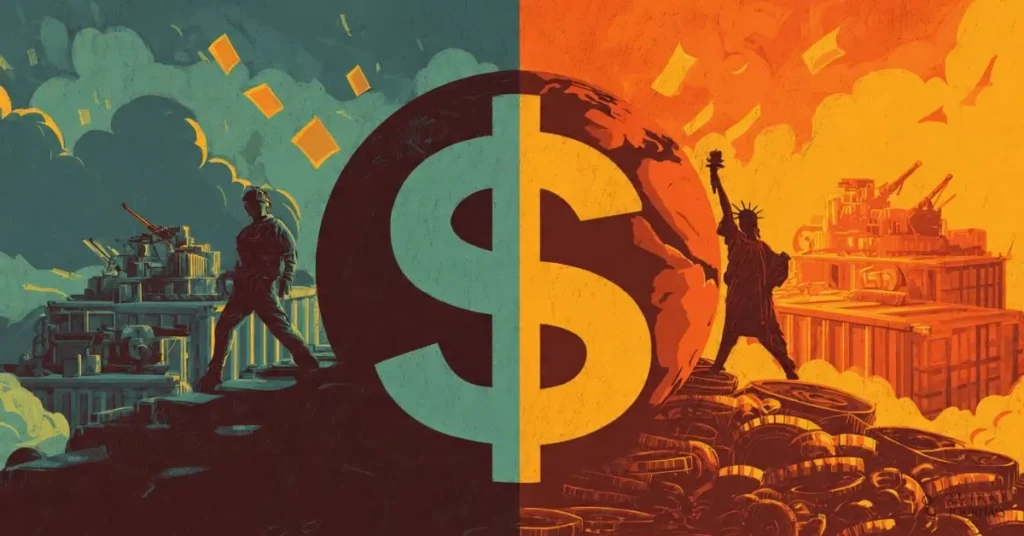
War Economy Chapter 9: Sanctions, Trade Wars, and Economic Weapons Explained – Understanding Modern Economic Warfare
Economic warfare has evolved into one of the most potent tools in modern international relations. Unlike traditional military conflicts, economic weapons operate through financial systems, trade mechanisms, and market access restrictions. Nations wield these instruments to achieve strategic objectives without firing a single shot. This comprehensive guide explores the intricate world of economic warfare, focusing on sanctions and trade wars as primary mechanisms of modern conflict.
Today’s global economy operates through unprecedented interconnectedness. Therefore, economic pressure points have multiplied exponentially. International trade flows amount to trillions of dollars annually, creating complex dependencies among nations. Consequently, disrupting these flows can inflict significant damage on target economies. Understanding these dynamics is crucial for policymakers, business leaders, and informed citizens alike.
Understanding Economic Warfare: A Modern Perspective
Economic warfare is the systematic use of economic instruments to weaken adversaries or coerce behavioural change. Unlike conventional warfare, it operates through markets, currencies, and supply chains. Nations deploy these weapons with calculated precision. Moreover, they often achieve results that military force cannot accomplish alone.
The historical evolution of economic warfare dates back centuries. However, its modern form emerged during the 20th century. World War I saw the first systematic application of blockades and trade restrictions. Subsequently, the interwar period witnessed the League of Nations attempting to enforce collective economic measures. Nevertheless, these early efforts revealed both the potential and limitations of economic coercion.
Contemporary economic warfare operates on multiple levels simultaneously. First, it targets government revenue streams and foreign reserves. Second, it restricts access to critical technologies and resources. Third, it isolates target nations from international financial systems. Each layer compounds the economic pressure, creating cascading effects throughout the target economy.
The Mechanics of Economic Sanctions
Economic sanctions constitute the primary tool of modern economic warfare. They restrict commercial and financial transactions with targeted entities. Governments impose sanctions to achieve specific policy objectives without resorting to military intervention. These measures range from targeted restrictions on individuals to comprehensive trade embargoes.
Sanctions operate through several distinct mechanisms. Trade embargoes prohibit the exchange of goods and services with target nations. Financial sanctions freeze assets and restrict banking relationships. Additionally, travel bans limit the movement of designated individuals. Arms embargoes prevent weapons transfers and military technology exports. Each mechanism serves specific strategic purposes.
Implementation of sanctions requires careful coordination among multiple agencies. The U.S. Treasury Department oversees financial measures through OFAC. Meanwhile, the Commerce Department manages export controls. State Department coordinates diplomatic aspects. This interagency approach ensures comprehensive enforcement across all economic channels.
Types and Categories of Economic Sanctions
Comprehensive Sanctions
Comprehensive sanctions impose broad restrictions on entire economies. These measures target all commercial and financial activities with designated countries. Cuba and North Korea face such comprehensive regimes. Consequently, these nations experience severe economic isolation. Nevertheless, comprehensive sanctions generate significant humanitarian concerns.
The impact of comprehensive sanctions extends beyond government targets. Civilian populations often bear the heaviest burden. Necessities become scarce. Medical supplies and food imports face restrictions. Therefore, international organisations frequently advocate for humanitarian exemptions. Policymakers must balance strategic objectives against humanitarian costs.
Targeted Sanctions
Targeted sanctions focus on specific individuals, entities, or sectors. This approach aims to minimise civilian impact while maximising pressure on decision-makers. Smart sanctions emerged as a response to humanitarian criticism of comprehensive measures. They represent a more surgical approach to economic warfare.
Asset freezes prevent designated individuals from accessing their financial holdings. Banks must identify and block transactions involving sanctioned parties. Compliance departments maintain sophisticated screening systems. Furthermore, violating sanctions carries severe penalties. Financial institutions invest heavily in sanctions compliance infrastructure.
Trade Wars: Economic Conflict Through Tariffs
Trade wars represent another dimension of economic warfare. Nations impose tariffs and quotas to protect domestic industries or retaliate against trading partners. Unlike sanctions, trade wars typically involve reciprocal escalation. Both sides continuously raise barriers, creating a destructive cycle.
The 2018-2019 U.S.-China trade war exemplified modern trade conflict dynamics. Initially, the United States imposed tariffs on Chinese imports worth billions of dollars. China responded with equivalent measures. Subsequently, both nations expanded tariff coverage repeatedly. This escalation disrupted global supply chains and raised consumer prices.
Trade wars generate multiple economic consequences. Domestic producers may benefit from reduced foreign competition. However, consumers face higher prices . Export-dependent industries suffer from retaliatory tariffs. Moreover, uncertainty dampens business investment. Economic modelling shows that trade wars typically reduce overall welfare for all participants.
Export Controls and Technology Restrictions
Export controls constitute a critical component of economic warfare. They restrict access to strategic technologies and dual-use goods. Advanced semiconductors, artificial intelligence systems, and quantum computing fall under strict controls. These restrictions aim to maintain technological advantages over potential adversaries.
The Entity List maintained by the Commerce Department designates foreign entities subject to export restrictions. Companies on this list face severe limitations in accessing American technology. Huawei’s placement on the Entity List demonstrated the power of export controls. The Chinese telecommunications giant lost access to critical American components. Consequently, its global smartphone market share plummeted.
Multilateral export control regimes enhance effectiveness. The Wassenaar Arrangement coordinates controls on conventional arms and dual-use technologies. Similarly, the Australia Group addresses chemical and biological weapons. These forums enable coordinated action among allied nations. However, achieving consensus remains challenging.
Financial Warfare and the SWIFT System
Financial infrastructure provides powerful leverage in economic warfare. The SWIFT system facilitates the majority of international financial transactions. Exclusion from SWIFT effectively cuts nations off from global banking networks. This weapon represents the nuclear option of financial warfare.
Russia’s 2022 invasion of Ukraine triggered unprecedented SWIFT restrictions. Western nations expelled major Russian banks from the system. These measures severely disrupted Russian international trade. Energy exports continued through carve-outs. Nevertheless, the broader economy suffered significant damage. This action demonstrated the extraordinary power of financial exclusion.
Secondary sanctions extend pressure beyond primary targets. Financial institutions face a choice: conduct business with sanctioned entities or maintain access to U.S. markets. Most choose American market access. Therefore, secondary sanctions dramatically amplify the impact of primary measures. This extraterritorial reach generates both compliance and resentment.
Historical Case Studies in Economic Warfare
Iran Sanctions Regime
The Iran sanctions regime represents one of history’s most comprehensive economic campaigns. Beginning in the 1990s, the United States gradually expanded restrictions. Oil exports faced increasing barriers. Banking relationships deteriorated. Eventually, Iran experienced near-total economic isolation from Western markets.
The 2012 intensification targeted Iran’s central bank and oil sector. European nations joined American sanctions. Iranian currency plummeted in value. Inflation soared. Oil revenues contracted sharply. These pressures contributed to Iran’s willingness to negotiate the 2015 nuclear agreement. Subsequently, sanctions relief provided a temporary economic respite.
The Trump administration withdrew from the nuclear deal in 2018. Sanctions snapped back with enhanced provisions. Maximum pressure aimed to force new negotiations. However, Iran adapted through regional partnerships and sanctions evasion. This case illustrates both the power and limitations of sustained economic pressure.
Russia Economic Sanctions
Russian sanctions evolved through multiple phases. The 2014 Crimea annexation triggered initial Western measures. Sectoral sanctions targeted the energy and defence industries. Financial institutions faced funding restrictions. These measures damaged but did not cripple the Russian economy.
The 2022 Ukraine invasion prompted unprecedented escalation. Western nations froze Russian central bank reserves. Approximately $300 billion remained frozen in Western jurisdictions. Export controls blocked technology imports. Energy sanctions targeted oil and gas revenues. These coordinated actions represented the most severe economic warfare campaign in modern history.
Russian adaptation strategies demonstrated economic resilience. Pivot to Asian markets partially offset European losses. Shadow fleet operations circumvented oil price caps. Parallel import schemes maintained consumer goods access. Nevertheless, GDP contracted and technological development suffered. Long-term degradation appears inevitable.
Effectiveness and Limitations of Economic Sanctions
Measuring sanctions effectiveness remains deeply contested. Success rates vary widely depending on objectives and timelines. Academic studies suggest sanctions achieve goals in approximately one-third of cases. However, defining success proves challenging. Policy changes rarely result solely from economic pressure.
Several factors influence sanctions effectiveness. Target economy size matters significantly. Smaller nations prove more vulnerable to economic isolation. International cooperation amplifies impact dramatically. Unilateral sanctions allow easier evasion. Enforcement capabilities determine actual compliance levels. Targeted regime characteristics affect decision-making calculus.
Time horizons complicate effectiveness assessments. Short-term sanctions rarely produce immediate policy reversals. Long-term pressure gradually degrades target capacity. Economic damage accumulates over the years. Nevertheless, target regimes often adapt and entrench. Sanctions become permanent fixtures rather than temporary pressure tools.
Humanitarian Consequences and Ethical Considerations
Economic sanctions generate profound humanitarian impacts. Civilian populations experience reduced access to essential goods. Medicine shortages emerge even with humanitarian exemptions. Banking restrictions complicate medical imports. Food security deteriorates. Children and vulnerable populations suffer disproportionately.
The Iraq sanctions of the 1990s demonstrated devastating humanitarian costs. Infant mortality rates increased dramatically. Malnutrition became widespread. Public health systems collapsed. These outcomes generated international outcry. Subsequently, policymakers developed targeted sanctions to minimise civilian harm.
Ethical debates surround the use. Critics argue that collective punishment violates human rights principles. International law provides limited guidance on economic coercion. Proportionality remains subjective. Defenders contend that sanctions offer alternatives to military force. They argue that economic pressure spares lives compared to armed conflict. Balancing strategic necessity against humanitarian costs challenges every sanctions regime.
Sanctions Evasion and Countermeasures
Target nations develop sophisticated evasion strategies. Shell companies obscure beneficial ownership. Transhipment routes reroute banned goods through third countries. False documentation misrepresents cargo origins. Cryptocurrency facilitates sanctions circumvention. These tactics reduce ssanctions’effectiveness significantly.
North Korea exemplifies creative sanctions evasion. Ship-to-ship transfers occur in international waters beyond surveillance. Front companies operate across Southeast Asia. Cyber operations generate revenue outside traditional banking. Labour exports continue despite prohibitions. These methods sustain the regime despite comprehensive sanctions.
Enforcement agencies deploy counter-evasion tools. Satellite monitoring tracks suspicious vessel movements. Financial intelligence units analyse transaction patterns. Machine learning identifies shell company networks. Nevertheless, determined actors often stay ahead. The cat-and-mouse game continues perpetually.
The Role of International Organisations
The United Nations Security Council authorises multilateral sanctions. Chapter VII powers enable binding economic measures. Member states must implement Security Council sanctions. These multilateral regimes carry greater legitimacy than unilateral actions. However, veto powers limit the Security Council’s effectiveness.
Regional organisations complement UN actions. The European Union maintains its own sanctions framework. The African Union mediates regional disputes. The Arab League coordinates Middle Eastern responses. These bodies provide regional perspectives and enforcement mechanisms.
International financial institutions influence the impact of sanctions. The International Monetary Fund provides economic assessments. World Bank funding decisions affect sanctioned nations. These institutions navigate complex political pressures while maintaining institutional mandates.
Economic Warfare in the Digital Age
Technology transforms economic warfare fundamentally. Digital currencies challenge traditional financial controls. Blockchain enables peer-to-peer transactions outside banking systems. Consequently, sanctions enforcement becomes more complex. Nevertheless, authorities develop new monitoring capabilities.
Cybersecurity emerges as a critical economic warfare domain. Cyberattacks target financial infrastructure directly. Payment systems face disruption threats. Critical infrastructure vulnerabilities create economic leverage. These digital weapons complement traditional economic measures.
Data restrictions constitute new economic weapons. Limiting access to artificial intelligence training data impedes technological development. Cloud computing access restrictions hamper innovation. These information-age controls complement traditional export restrictions.
De-dollarisation and Alternative Financial Systems
Sanctions overuse drives de-dollarisation efforts. Nations seek alternatives to U.S. dollar dominance in international trade. China promotes the yuan. Russia develops alternative payment systems. These efforts aim to escape sanctions vulnerability.
China’s Cross-Border Interbank Payment System provides an alternative to SWIFT. CIPS processes yuan-denominated transactions independently. Russian SPFS offers similar capabilities. However, these systems remain small compared to SWIFT. Network effects favour incumbents strongly.
Central bank digital currencies represent another challenge. CBDCs enable direct sovereign-to-sovereign transactions. They bypass commercial banking intermediaries. Consequently, traditional sanctions mechanisms lose effectiveness. Nevertheless, widespread adoption remains years away.
Comparative Analysis of Economic Weapons
Different economic weapons serve distinct strategic purposes. Understanding their relative strengths and limitations guides effective policy formation. The following table compares key characteristics of major economic warfare tools.
| Economic Weapon | Implementation Speed | Humanitarian Impact | Typical Effectiveness |
| Trade Embargoes | Moderate (weeks) | High | Medium |
| Financial Sanctions | Fast (days) | Moderate | High |
| Export Controls | Moderate (weeks) | Low to Moderate | Medium to High |
| Tariffs/Trade Wars | Fast (days) | Low | Low to Medium |
| SWIFT Exclusion | Very Fast (hours) | High | Very High |
This comparative framework reveals strategic trade-offs. Policymakers must balance multiple objectives when selecting economic weapons. Speed of implementation competes with humanitarian concerns. Effectiveness requires international cooperation. Sustainability depends on enforcement capacity.
Business Implications and Compliance Challenges
Multinational corporations navigate complex sanctions landscapes. Compliance costs consume significant resources. Legal teams screen transactions continuously. Due diligence requirements expand constantly. Violations trigger severe penalties, including criminal prosecution.
Supply chain disruptions result from sanctions implementation. Companies must identify alternative suppliers rapidly. Geographic diversification reduces concentration risks. However, restructuring requires substantial investment. Relationships built over decades dissolve overnight.
Financial institutions bear particularly heavy compliance burdens. Know Your Customer protocols become increasingly stringent. Transaction monitoring systems analyse billions of payments. False positives generate operational headaches. Nevertheless, missing actual violations brings existential risk.
Future Trends in Economic Warfare
Economic warfare continues to evolve rapidly. Climate-related sanctions may target carbon-intensive industries. Green transition metals become strategic resources. Control over rare earth elements provides new leverage. Environmental considerations reshape economic statecraft.
Artificial intelligence transforms both sanctions implementation and evasion. Machine learning algorithms detect suspicious patterns with unprecedented accuracy. However, adversaries employ AI for sophisticated evasion. This technological arms race accelerates continuously.
Multipolar competition reshapes economic warfare dynamics. Rising powers develop independent economic influence. Regional alternatives to Western institutions emerge. Consequently, traditional sanctions lose effectiveness. Coordination becomes more challenging but more necessary.
Strategic Commodities and Resource Warfare
Control over strategic resources constitutes a fundamental aspect of economic warfare. Energy independence determines vulnerability to economic pressure. Nations with diverse energy sources resist sanctions more effectively. Conversely, import-dependent economies face significant leverage points.
Rare earth elements have emerged as critical strategic commodities. China dominates global rare earth production and processing. These materials prove essential for advanced electronics, defence systems, and renewable energy technologies. Therefore, export restrictions on rare earths provide substantial economic leverage.
Food security represents another dimension of resource-based economic warfare. Agricultural exports can serve as diplomatic tools. Grain embargoes have a historical precedent as economic weapons. Modern food systems create complex interdependencies. Disrupting these networks generates immediate humanitarian consequences alongside strategic effects.
Water resources increasingly factor into economic calculations. Transboundary rivers create upstream-downstream power dynamics. Dam construction affects downstream nations profoundly. Climate change intensifies water scarcity. These pressures transform water control into economic warfare potential.
Economic Coercion in the Asia-Pacific Region
The Asia-Pacific region witnesses intense economic warfare dynamics. Rising tensions between major powers manifest through economic pressure campaigns. Trade relationships intertwine with strategic competition. Economic interdependence creates both opportunities and vulnerabilities for all parties.
China has employed economic coercion against multiple neighbours. Australian coal exports faced informal restrictions following diplomatic disputes. South Korean businesses experienced pressure over the THAAD missile defence deployment. These cases demonstrate economic leverage as a regional influence tool.
Technology transfer requirements constitute another coercive mechanism . Market access conditions sometimes include intellectual property sharing. Foreign companies face pressure to establish local partnerships. These arrangements blur the line between voluntary business decisions and economic coercion.
Regional trade agreements create new economic warfare dimensions. RCEP and CPTPP represent competing economic integration visions. Membership decisions carry strategic implications beyond pure economics. Exclusion from major trade blocs imposes high costs. Therefore, trade architecture becomes a tool of economic statecraft.
Middle Eastern Dynamics and Oil Weapon
The Middle East has long exemplified resource-based economic warfare. OPEC coordination enables collective oil production management. Production cuts or increases influence global energy prices dramatically. These decisions carry both economic and political motivations.
The 1973 oil embargo demonstrated petroleum as an economic weapon. Arab nations restricted oil exports to nations supporting Israel. Energy prices quadrupled within months. Western economies entered a recession. This episode revealed the power and limitations of resource-based economic warfare.
Contemporary Middle Eastern economic warfare operates more subtly. Sovereign wealth funds invest strategically in foreign economies. These investments create economic dependencies and political influence. Strategic divestment threats provide leverage in diplomatic negotiations.
Sanctions against Iran have reshaped regional dynamics. Regional powers compete for influence as Iran faces economic isolation . Proxy conflicts partly reflect economic competition for regional resources. Yemen, Syria, and Lebanon become battlegrounds for economic influence. Sanctions’ impact extends far beyond direct targets.
European Approaches to Economic Statecraft
European nations employ distinctive economic warfare approaches. EU foreign policy emphasises multilateral frameworks and normative power. Sanctions require unanimous member state approval. This consensus requirement ensures thorough deliberation but sometimes delays implementation.
The European Union pioneered human rights-based sanctions. Magnitsky-style measures target individuals responsible for serious human rights violations. These targeted sanctions aim to minimise humanitarian impact while maintaining moral clarity. Their effectiveness remains debated.
Energy dependence created significant European vulnerabilities. Russian natural gas supplied substantial European energy needs. This dependence constrained European sanctions policy for years. The 2022 Ukraine crisis forced rapid diversification. European nations accelerated renewable energy transitions while seeking alternative suppliers.
Brexit introduced new complexities to European economic power. The UK sanctions regime now operates independently from EU frameworks. Coordination continues on major issues. Nevertheless, separate systems create potential gaps and inconsistencies. This fragmentation may reduce European economic warfare effectiveness.
Developing Nations and Economic Warfare
Developing nations face unique challenges in economic warfare contexts. Limited economic diversification increases vulnerability . Dependency on commodities creates exposure to price manipulation. Capital flight risks magnify during crises. These structural weaknesses reduce defensive capabilities against economic pressure.
Debt-based economic leverage affects developing nations disproportionately. Sovereign debt crises provide opportunities for creditor nations to extract concessions. Debt restructuring negotiations involve both economic and political elements. Strategic infrastructure investments sometimes create dependency relationships.
Regional organisations provide developing nations with collective bargaining power. The African Union coordinates responses to external economic pressure. ASEAN enables Southeast Asian collective action. These frameworks help smaller nations resist unilateral coercion. However, maintaining unity proves challenging when national interests diverge.
South-South cooperation offers alternatives to traditional economic relationships. BRICS expansion reflects developing nations seeking greater economic autonomy. Alternative development banks provide financing outside Western-dominated institutions. These initiatives gradually reshape global economic power distribution.
Private Sector Role in Economic Warfare
Private sector actors play crucial roles in economic warfare implementation. Multinational corporations serve as enforcement mechanisms for government sanctions. Banking institutions screen transactions and freeze assets. Technology companies restrict service access. These private actions amplify government economic measures.
Over-compliance poses significant challenges. Risk-averse financial institutions often exceed legal requirements . De-risking behaviour cuts off entire regions from banking services. Legitimate transactions face unnecessary barriers. This phenomenon extends the sanctions impact beyond the intended scope.
Corporate political activism intersects with economic warfare. Business boycotts complement government sanctions. Companies voluntarily withdraw from controversial markets. Consumer pressure drives corporate decisions. These private actions sometimes precede or exceed government measures.
Technology platforms wield substantial economic power independently. Digital gatekeepers control access to global markets. App store removals restrict software distribution. Payment processor decisions affect business viability. These private sector choices carry geopolitical implications.
Measuring Economic Warfare Success
Evaluating economic warfare success requires sophisticated metrics. GDP contraction provides one crude indicator. However, economic damage alone does not guarantee policy change. Target nations may endure substantial costs without altering behaviour. Therefore, measuring success demands multidimensional analysis.
Political objectives vary widely across sanctions regimes. Some aim for regime change. Others seek specific policy modifications. Deterrence constitutes another common goal. Punishment for past actions represents yet another objective. Each purpose demands different success criteria.
Attribution challenges complicate effectiveness assessments. Multiple factors influence target nation decisions simultaneously . Domestic politics may drive policy changes independently of sanctions. Regional dynamics contribute to decision-making. International pressure operates through multiple channels. Isolating sanctions’ impact from other variables proves methodologically difficult.
Time horizons significantly affect success evaluations. Short-term metrics may show minimal impact. Long-term degradation accumulates gradually. Some sanctions achieve objectives years after implementation. Premature assessments risk missing delayed effects.
Cybersecurity and Economic Warfare Convergence
Cyber operations increasingly complement traditional economic warfare. Ransomware attacks disrupt critical infrastructure and business operations. These digital assaults create economic damage while maintaining plausible deniability. Attribution difficulties complicate response strategies.
Financial system cyber attacks represent high-impact economic weapons. SWIFT messaging faces persistent hacking attempts. Central bank systems require constant protection. Trading platforms attract malicious actors. Successful attacks could paralyse economic activity.
Intellectual property theft constitutes economic warfare through cyber means. Industrial espionage accelerates technology transfer without compensation. Research and development costs decrease when innovations can be stolen. This cyber-enabled economic warfare erodes competitive advantages systematically.
Critical infrastructure vulnerabilities create economic leverage opportunities. Power grid disruptions threaten economic stability. Water treatment facilities face cyber risks. Transportation networks require digital security. These vulnerabilities enable economic coercion through threatened or actual cyber operations.
Legal Frameworks Governing Economic Warfare
International law provides limited constraints on economic warfare. The United Nations Charter prohibits the threat or use of force. However, economic measures fall into grey areas. Security Council authorization legitimizes certain sanctions. Unilateral economic coercion faces contested legal status.
World Trade Organisation rules restrict some economic warfare tactics. Most-favoured-nation principles limit discriminatory trade measures. Security exceptions allow deviations for national security. Nevertheless, these exceptions receive broad interpretation. Enforcement mechanisms prove relatively weak.
Extraterritorial sanctions generate particular legal controversies. Secondary sanctions affect third-country entities. This extraterritorial reach challenges traditional sovereignty concepts. European blocking statutes attempt to counter American extraterritoriality. These legal conflicts reflect deeper power struggles.
Humanitarian law principles apply to economic warfare. Proportionality requirements theoretically constrain sanctions severity. The distinction between combatants and civilians should guide targeting. However, economic measures inherently affect entire populations. Reconciling humanitarian law with economic coercion remains challenging.
Sanctions Relief and Negotiation Dynamics
Sanctions relief negotiations involve complex bargaining dynamics. Phased relief matches compliance steps with sanction removals. This approach builds trust incrementally. However, sequencing disagreements frequently stalls negotiations. Each side seeks maximum concessions for minimum relief.
Snapback provisions complicate relief agreements. Sanctions automatically reimpose upon compliance violations. The Iran nuclear deal included such mechanisms. These provisions provide enforcement leverage. Nevertheless, they create uncertainty that undermines relief benefits. Investment hesitation persists even after formal sanctions.
Private sector caution extends beyond official sanctions timelines. Reputational risks deter rapid market reentry. Companies fear future sanctions reimposition. Due diligence requirements remain stringent. Therefore, economic normalisation lags behind political agreements significantly.
Verification mechanisms prove essential for sustained relief. Independent monitoring builds confidence in compliance. International inspectors verify agreement terms. Nevertheless, monitoring access disputes arises regularly. These verification challenges can derail entire relief frameworks.
Economic Warfare Impact on Global Trade Architecture
Economic warfare fundamentally reshapes global trade architecture. Supply chain fragmentation accelerates as nations seek security over efficiency. Friend-shoring replaces offshoring. Geographic diversification becomes paramount. These structural changes reduce economic interdependence.
Regional trade blocs gain importance amid global fragmentation. Economic regionalisation creates partially insulated economic zones. These arrangements provide alternatives to global systems. However, they also reduce overall economic efficiency. Trade creation within blocs may not offset trade diversion between them.
Technology decoupling represents a profound shift. Competing technology standards emerge across geopolitical blocs. Internet fragmentation threatens global connectivity. Separate technology ecosystems develop independently. This bifurcation increases costs and reduces innovation spillovers.
Multilateral institutions face credibility challenges. WTO reform debates reflect dissatisfaction with current frameworks. Dispute settlement mechanisms struggle under political pressure. Nevertheless, complete abandonment risks chaotic economic relations. Reform efforts seek the middle ground between preservation and transformation.
Climate Change and Green Economic Warfare
Climate considerations increasingly influence economic warfare strategies. Carbon border adjustments penalise high-emission imports. These measures blend environmental and economic objectives. Critics view them as protectionist trade barriers. Supporters argue climate urgency justifies such tools.
Green technology export controls emerge as strategic tools. Battery technology and renewable energy innovations face potential restrictions. Nations seek to maintain competitive advantages in clean energy sectors. This dynamic creates tensions between climate cooperation and economic competition.
Critical mineral supplies for green transitions become leverage points. Lithium, cobalt, and nickel prove essential for batteries and clean energy. Geographic concentration creates vulnerability. Export restrictions on these materials could severely impact energy transitions. Therefore, diversification efforts intensify.
Climate-linked financial measures gain traction. Divestment campaigns target fossil fuel industries. Green bonds redirect capital flows. Climate risk disclosure requirements affect investment decisions. These mechanisms create economic pressure for emissions reduction.
Emerging Markets and Economic Warfare Resilience
Emerging markets develop increasing resilience against economic warfare. Domestic market development reduces import dependence. Local currency transactions decrease dollar vulnerability. Regional trade agreements create alternative markets. These strategies diminish Western economic leverage gradually.
Technology indigenisation accelerates under sanctions pressure. Nations invest heavily in domestic alternatives . Import substitution programs receive renewed emphasis. Although this approach proves costly initially, it builds long-term independence. Consequently, sanctions may accelerate the very decoupling they aimed to prevent.
Financial system diversification provides additional resilience. Alternative payment systems reduce SWIFT dependency. Regional development banks offer financing alternatives. Gold reserves provide sanctions-resistant value storage. These measures collectively reduce vulnerability to financial warfare.
Strategic partnerships among sanctioned nations create mutual support networks. Trade cooperation compensates for the Western market loss. Technology sharing accelerates development. Political coordination resists external pressure. These alliances potentially create alternative economic blocs.
Intelligence and Economic Warfare
Intelligence gathering proves crucial for effective economic warfare. Financial intelligence identifies sanctions evasion networks. Transaction monitoring reveals hidden ownership structures. Communications intercepts expose illicit arrangements. This intelligence enables targeted enforcement actions.
Economic espionage targets commercial and financial information. Trade secret theft provides competitive advantages. Negotiating position intelligence improves bargaining outcomes. Understanding adversary economic vulnerabilities informs pressure strategies. Therefore, intelligence operations and economic warfare intersect extensively.
Satellite imagery and open-source intelligence supplement traditional methods. Commercial satellite data tracks shipping and production activity. Social media analysis reveals economic conditions. These modern tools democratize intelligence collection somewhat. Nevertheless, advanced capabilities remain concentrated among major powers.
Counter-intelligence protects economic warfare strategies. Operational security prevents adversaries from anticipating measures. Deception operations mislead opponents. Information compartmentalisation limits leak damage. These defensive intelligence activities prove equally important as offensive collection.
Public Opinion and Economic Warfare Legitimacy
Public support significantly influences economic warfare sustainability. Domestic constituencies must tolerate the costs of sanctions implementation. Economic disruptions generate political pressure for policy changes. Therefore, maintaining public support requires effective communication about objectives and progress.
Narrative competition shapes international perceptions of economic warfare legitimacy. Information campaigns frame sanctions as necessary or unjust. Target nations portray themselves as victims of economic aggression. Sanctioning nations emphasise rule violations justifying measures. These competing narratives influence third-party positions.
Humanitarian consequences generate negative publicity. Media coverage of civilian suffering erodes sanctions support. Target governments amplify humanitarian impacts strategically. International organisations document adverse effects. Managing these perception challenges requires balancing effectiveness against humanitarian sensitivity.
Business community attitudes affect implementation effectiveness. Corporate lobbying may seek sanctions relief or exemptions. Lost business opportunities create political pressure. Nevertheless, reputational concerns often outweigh profit motives. This dynamic balance shapes private sector sanctions compliance.
Economic Warfare and Deterrence Theory
Deterrence theory applies to economic warfare with important modifications. Credible threats require demonstrated willingness and capability. Previous sanctions use establishes credibility. However, overuse may reduce threat effectiveness. Therefore, balancing deterrence with actual implementation proves challenging.
Economic punishment differs from military deterrence in several ways. Escalation dynamics operate more gradually. Immediate costs remain limited initially. Consequently, deterrent effects depend on anticipated future damage. This temporal dimension complicates deterrence calculations significantly.
Denial versus punishment strategies shape economic warfare approaches. Technology denial prevents capabilities acquisition directly. Financial punishment inflicts costs for undesired behaviours. Export controls emphasise denial. Sanctions combine punishment with denial. Effective strategies often employ both approaches simultaneously.
Extended deterrence through economic means faces unique challenges. Alliance commitments to impose economic costs must remain credible. However, third-party economic interests may conflict with alliance obligations. This tension potentially undermines extended economic deterrence reliability.
Recommendations for Policymakers and Business Leaders
Policymakers should carefully calibrate economic warfare tools to specific objectives. Clear goals enable effectiveness measurement. Unrealistic expectations undermine policy sustainability. Moreover, combining economic pressure with diplomatic engagement often produces better outcomes than coercion alone.
International coordination amplifies the economic warfare impact significantly. Multilateral sanctions prove more effective than unilateral measures. Building coalitions requires diplomatic investment. Nevertheless, coordinated action closes evasion loopholes substantially. Therefore, alliance management deserves prioritisation.
Business leaders must invest in a robust compliance infrastructure. Sanctions screening systems require continuous updates. Training programs ensure employee awareness. Regular audits identify compliance gaps. These investments protect against severe penalties while supporting legitimate business operations.
Supply chain diversification reduces economic warfare vulnerability. Geographic distribution prevents single points of failure. Alternative suppliers enable rapid adaptation. Although diversification increases costs, it provides crucial resilience. Business continuity planning should incorporate geopolitical risk scenarios.
Humanitarian considerations must guide sanctions design. Exemptions for food and medicine preserve moral authority. Monitoring civilian impacts enables policy adjustments. Balancing strategic objectives against humanitarian costs remains challenging but essential. Sanctions’ legitimacy depends partly on demonstrable efforts to minimise civilian harm.
Conclusion: The Future of Economic Statecraft
Economic warfare has become central to modern international relations. Nations increasingly prefer financial pressure over military force. Sanctions and trade wars offer seemingly cost-effective alternatives to armed conflict. However, their effectiveness remains contested.
The interconnected global economy creates both opportunities and vulnerabilities. Economic interdependence enables powerful coercive tools. Simultaneously, it generates mutual dependencies that limit action. Globalisation paradoxes shape every sanctions decision. Balancing competing interests requires sophisticated analysis.
Looking forward, economic warfare will likely intensify. Technology provides new weapons and defences. Great power competition drives continued innovation. Understanding these dynamics becomes essential for all stakeholders. Economic statecraft shapes the world order as profoundly as traditional military might.
Spend some time on your future.
To deepen your understanding of today’s evolving financial landscape, we recommend exploring the following articles:
How to Identify Profitable Startup Ideas Solving Problems People Pay For
Escape Paycheck Hell: Build Emergency Fund, Kill Debt, Invest
Angel Investing for Beginners: From First Check to Portfolio
War Economy Chapter 8: Geopolitics for Investors: Reading Tensions Without Speculating
Explore these articles to get a grasp on the new changes in the financial world.
Legal Disclaimer
This article provides educational information about economic warfare, sanctions, and trade conflicts. It does not constitute legal, financial, or policy advice. Sanctions regulations change frequently and vary by jurisdiction. Readers should consult qualified legal counsel before engaging in international transactions.
The views expressed herein belong solely to the author. They do not represent positions of any government agency or international organisation. Information presented reflects publicly available sources as of the publication date. Compliance with applicable laws remains the reader’s responsibility.
Economic sanctions carry serious legal consequences for violations. Both individuals and organisations face civil and criminal penalties. Due diligence requirements demand professional guidance. This content should not substitute for competent legal representation.
References
[1] N. Mulder, The Economic Weapon: The Rise of Sanctions as a Tool of Modern War, Yale University Press, 2022. [Online]. Available: https://yalepress.yale.edu/book/9780300259360/the-economic-weapon/
[2] E. Fishman, Chokepoints: American Power in the Age of Economic Warfare, Portfolio Penguin, 2025. [Online]. Available: https://www.lawfaremedia.org/article/a-primer-on-21st-century-economic-weapons
[3] International Monetary Fund, “The Sanctions Weapon,” Finance & Development, June 2022. [Online]. Available: https://www.imf.org/-/media/files/publications/fandd/article/2022/june/mulder.pdf
[4] G. C. Hufbauer, J. J. Schott, K. A. Elliott, and B. Oegg, Economic Sanctions Reconsidered, 4th ed., Peterson Institute for International Economics, 2023. [Online]. Available: https://www.piie.com/publications/books/economic-sanctions-reconsidered
[5] U.S. Department of the Treasury, “Sanctions Programs and Country Information,” Office of Foreign Assets Control, 2025. [Online]. Available: https://home.treasury.gov/policy-issues/financial-sanctions
[6] United Nations Security Council, “Sanctions,” 2025. [Online]. Available: https://www.un.org/securitycouncil/sanctions/information
[7] Y. Yotov, E. Yalcin, A. Kirilakha, C. Syropoulos, and G. Felbermayr, “The Global Sanctions Database,” Centre for Economic Policy Research, 2020. [Online]. Available: https://cepr.org/voxeu/columns/international-trade-and-macroeconomic-dynamics-sanctions
[8] Council on Foreign Relations, “What Are Economic Sanctions?” 2024. [Online]. Available: https://www.cfr.org/backgrounder/what-are-economic-sanctions
[9] Atlantic Council, “Sanctions on Russia Are Working,” 2024. [Online]. Available: https://www.atlanticcouncil.org/blogs/econographics/sanctions-on-russia-are-working/
[10] Peterson Institute for International Economics, “Trump Trade War China to Date: A Guide,” 2023. [Online]. Available: https://www.piie.com/blogs/trade-investment-policy-watch/trump-trade-war-china-date-guide