
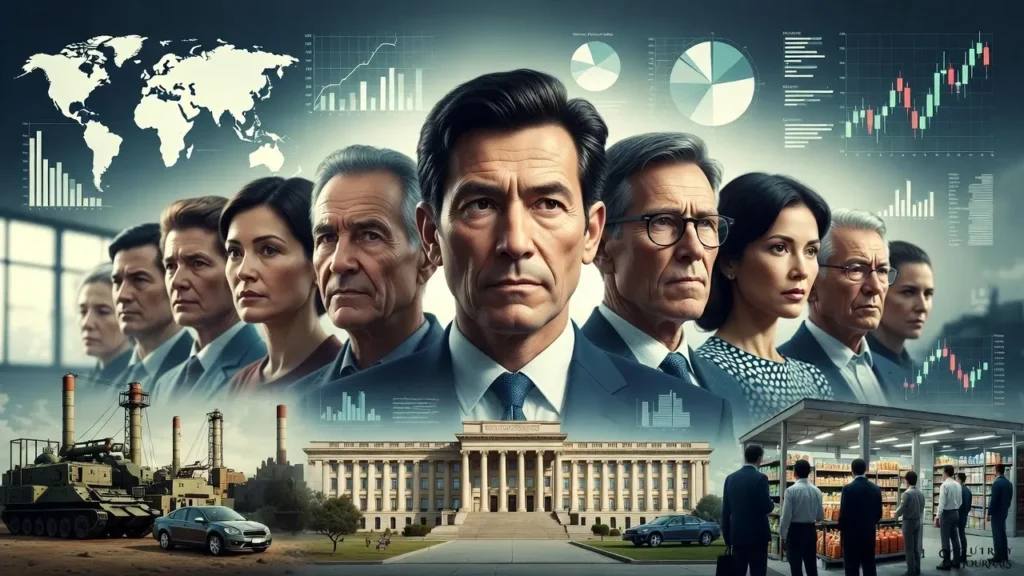
The Economic Lens of Conflict: How Conflict Rewrites the Rules of Money
Have you ever paused to think about how a nation’s entire economic machinery pivots when conflict erupts? It’s a profound shift, often invisible to the naked eye, yet it fundamentally rewrites the rules of money and daily life. What we often see as a destroyer of lives and infrastructure is also, paradoxically, a powerful re-shaper of economic systems, forcing rapid, drastic changes.
At its core, understanding a war economy means recognizing an initial, dramatic redirection. It’s when a country’s priorities fundamentally pivot from meeting civilian needs and fostering traditional economic growth to focusing almost exclusively on military objectives. This isn’t just a minor adjustment; it’s a complete re-evaluation of national resources, labor, and production.
Defining the War Economy
Mobilizing National Resources for Defense
In simple terms, a war economy signifies that a country has mobilized its entire economic capacity – its manufacturing capabilities, natural resources, and its workforce – to support military efforts, whether in preparation for war or during an active conflict [1]. Imagine a giant machine, suddenly recalibrating its purpose.
This means a critical redirection of industrial output. Car factories, for instance, might stop producing sedans and SUVs and instead churn out tanks, military vehicles, or parts for fighter jets. Clothing companies, which once made fashionable apparel, might switch to stitching military uniforms, as Hollie McKay highlights in her analysis of wartime shifts [2]. It’s a complete overhaul of what gets produced and why.
Modern warfare also demands significant investment in advanced technology. We’re talking about sophisticated software, data analytics, satellite systems, and robust cybersecurity infrastructure. These aren’t just luxuries; they are essential components of modern defense strategies, requiring immense financial and intellectual capital, as noted by DW.com [1].
The Roles of Key Economic Actors
When a country shifts to a war economy, the roles of key economic actors change dramatically:
- The State: The government assumes a much more centralized, command-and-control role. It dictates what industries produce, how resources are allocated, and often imposes rationing on essential goods like fuel and food to prioritize military supply lines. This top-down approach largely replaces free-market mechanisms.
- Markets: Civilian markets often contract significantly. You’ll find fewer consumer goods and less focus on traditional market growth. However, military-industrial complexes and specific tech sectors thrive on lucrative government contracts. Financial markets, meanwhile, experience high volatility, rampant inflation, and a sharp increase in public debt as governments scramble to finance war efforts. For individuals, effective personal financial guide during such times would emphasize resilience over growth.
- Households: Ordinary citizens bear a direct and profound impact. Many face conscription into military service, while others (like women entering industrial roles during WWII) are mobilized into the workforce to fill gaps. Higher taxes become commonplace, and rationing becomes a daily reality. Beyond the economic metrics, the psychological toll on households is immense.
Peacetime vs. Wartime Economics: A Fundamental Divergence
Why Normal Economic Incentives Break Down
The transition to a war economy is a fundamental divergence from peacetime economics because the very incentives that drive a normal market break down. National survival and military victory supersede almost everything else, including consumer demand and traditional profit motives. The investment landscape completely transforms.
Government intervention becomes the norm. Centralized planning replaces free-market mechanisms for resource distribution and production targets. What’s deemed “good” for the economy shifts entirely. Labor dynamics also change dramatically; unemployment can plummet due to military recruitment and the surge in defense production. However, this often comes with skills gaps and forced labor shifts, as Hollie McKay pointed out during WWII [2].
The Shift from Consumer to Military Production
This shift is perhaps the most visible aspect of a war economy. Raw materials, skilled labor, and technological expertise are diverted from civilian infrastructure projects or consumer goods to the production of armaments. Think about all the things that aren’t being built or developed because resources are channeled into defense.
This creates significant opportunity costs. For example, the hundreds of billions spent on the Iraq war were, as EconomicsHelp.org highlights, an opportunity cost – money that could have been invested in education, healthcare, or long-term development. This is sometimes referred to as the “broken window fallacy” in economics; while spending on rebuilding creates economic activity, the initial destruction and subsequent redirection mean lost potential elsewhere [3].
Macroeconomic Instability in Conflict
The Dynamics of Inflation and Debt
Conflict is a breeding ground for macroeconomic instability. Inflationary pressures surge due to increased government spending, a scarcity of consumer goods, and sometimes, the printing of money to cover costs. Historically, the US Civil War and instances of hyperinflation (like in Hungary in 1946) demonstrate this clearly. Even during WWII, while price controls limited inflation in some areas, the underlying pressures were immense [3]. Effi Benmelech notes that price levels can rise by nearly 50%, severely eroding the real value of people’s savings accounts [4].
National debt escalates dramatically as governments significantly increase borrowing to finance war efforts. The UK’s national debt, for example, soared to 150-240% of GDP post-WWI and WWII [3]. This reliance on domestic and international loans is a common finance strategy during conflict.
Geopolitical instability can also directly threaten supply chains, leading to sharp increases in prices for essential commodities like oil and gas, as seen during the 1990 Gulf War and the 2022 Russia-Ukraine conflict [3].
Investment, Credit, and Currency Repercussions
In a war economy, real investment can collapse sharply and persistently, with studies showing a nearly 14% decline on average and no recovery even after a decade [4]. This is often attributed to financial frictions, the erosion of collateral, and a significant contraction in domestic credit (a 22% decline). Finding a way to save or invest wisely becomes a massive challenge.
Currency depreciation is another common repercussion, with local currencies sometimes depreciating by 180% over a decade [4]. This can lead to a full pass-through to domestic prices, negating any potential gain in export competitiveness. We also observe a “flight to liquidity,” where households increase their holdings of real money balances despite inflation, reflecting financial turmoil and a lack of confidence in banking systems. The usual best emergency account strategies go out the window.
The Lived Experience: Impact on Ordinary People
Daily Sacrifices and Hardship
Beyond the macroeconomic figures, war economies profoundly impact the daily lives of ordinary people. Essential goods become scarce, leading to widespread rationing as military supply lines are prioritized. I can only imagine the cost and frustration this entails.
Governments also raise taxes to fund escalating defense budgets. Israel, for example, increased VAT, utility prices, and property taxes to support its military efforts [1]. For individuals, financial freedom becomes a distant dream, as every penny is squeezed to support the war. These tips for surviving financially are often about bare necessities.
The psychological costs, though harder to quantify, are immense. Widespread suffering, trauma, and disability affect communities long after the fighting stops [3].
Societal Shifts and Uneven Burdens
War often brings about rapid societal shifts. Women and other demographics traditionally underrepresented in certain industries fill critical roles left vacant by men in military service, transforming the labor force. While some industries, like defense and specific technology sectors, may experience a boom, the overall human cost and long-term economic suffering are disproportionately borne by the general populace, especially in losing nations, which can see a 24% GDP decline [4].
Case Studies and Modern Global Trends
Historical Insights
History offers powerful examples of war economies in action. During World War II, the United States rapidly transformed into a production powerhouse, demonstrating unparalleled economic mobilization and sparking significant societal shifts, as recounted by Hollie McKay [2]. Conversely, post-WWI Germany experienced hyperinflation and economic devastation, a stark reminder of the fragility of post-conflict economies [3]. The Financial Times has even highlighted how economics often decided world war outcomes.
Contemporary Economic Transformations
Today, we see war economies unfolding in real-time. Ukraine’s economy, for example, is highly mobilized for defense, with 58% of its budget dedicated to military expenditure, factories retooled for weapons production, and significant workforce changes. Russia, too, faces increased military spending and capital controls [1].
Geopolitical tensions are also driving a broader European rearmament. The EU’s “ReArm Europe” plan, an €800 billion defense initiative, illustrates how a peacetime economy can shift towards heightened military readiness even without direct involvement in conflict [1].
Research indicates that intrastate conflicts (civil wars) tend to have more devastating and persistent economic impacts, leading to a 20% cumulative GDP decline compared to 10% for interstate conflicts, largely due to direct domestic destruction and weaker institutions [4]. Moreover, low-income countries experience significantly larger investment collapses (21% versus 2.9% for high-income countries) because their financial frictions are more binding [4].
Enduring Legacies and Future Paths
The echoes of conflict linger long after the guns fall silent. Conflicts leave persistent macroeconomic costs, including reduced productive capacity and weakened public finances [4]. The cost of rebuilding can be astronomical.
Yet, amidst the devastation, there can be unintended innovations. Wars often accelerate scientific and technological advancements that later find crucial civilian applications, such as jet engines, radar, and advanced communication systems [1, 2].
The challenge of post-conflict reconstruction is immense, requiring careful planning to convert economies back to peacetime production. International aid and sound fiscal policies are vital for any hope of recovery, aiming to restore a semblance of normal economic life and potentially even achieving retirement freedom for future generations.
Key Takeaways
The concept of a war economy isn’t just an abstract economic theory; it’s a living, breathing transformation of a nation’s priorities, resources, and daily life. From redirected manufacturing to fluctuating financial markets, increased debt, and the profound sacrifices made by ordinary citizens, conflict fundamentally rewrites the rules of money. It’s a powerful reminder of how deeply interwoven geopolitics and economics truly are, forcing us to consider the immense human and financial costs that ripple through societies for decades.
Disclaimer
This blog post is for informational and educational purposes only and is not intended to be financial advice. The content discusses economic concepts related to war economies and should not be taken as recommendations for investing, personal finance decisions, or any other financial activity. Always consult with a certified financial planner or other qualified financial professional for advice tailored to your specific situation. The author and publisher are not liable for any decisions made based on the information provided herein.
References
- DW. (n.d.). ‘War economy:’ Is the European ‘peace project’ at risk? Retrieved from https://www.dw.com/en/what-is-a-war-economy/a-71996625
- McKay, H. (n.d.). Why War Economies Often Boom—But Not How You’d Think. Dispatches with Hollie McKay. Retrieved from https://holliesmckay.substack.com/p/why-war-economies-often-boombut-not
- Pettinger, T. (n.d.). Economic impact of war. Economics Help. Retrieved from https://www.economicshelp.org/blog/2180/economics/economic-impact-of-war/
- Benmelech, E., & Monteiro, J. (2025). THE ECONOMIC CONSEQUENCES OF WAR*. Effi Benmelech. Retrieved from https://effibenmelech.com/wp-content/uploads/2025/10/cost-of-war-paper.pdf
- Financial Times. (n.d.). How Economics Decided World War Outcomes. Retrieved from https://www.ft.com/