
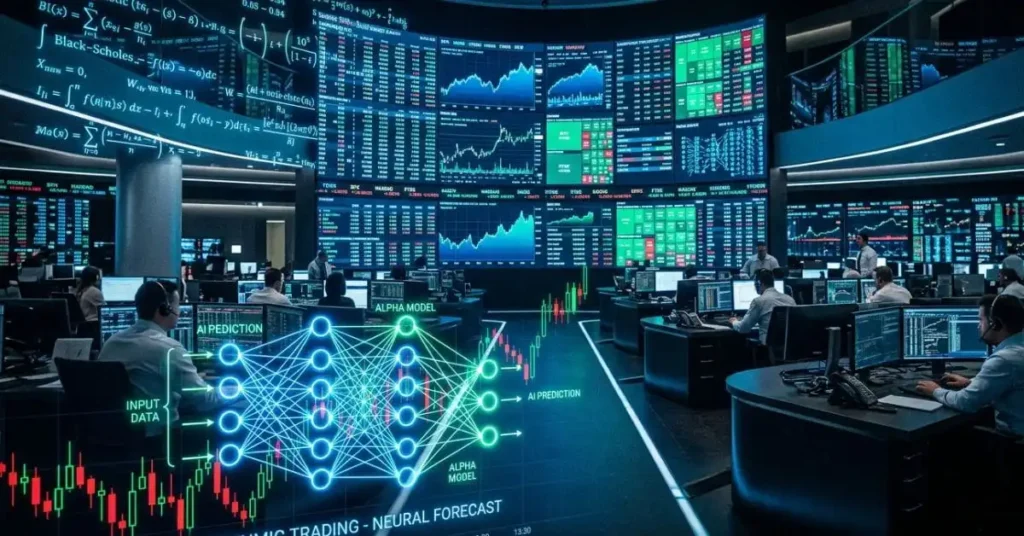
What Is a Quant Firm? A Beginner’s Guide to Systematic Trading
Somewhere in East Setauket, New York, a cluster of mathematicians, physicists, and computer scientists quietly manages one of the most consistently profitable investment operations in financial history. They do not read earnings reports or follow CEO interviews. They do not attend industry conferences or rely on gut instinct. Instead, they feed petabytes of financial data into mathematical models, let the models generate trading signals, and execute those signals automatically, often thousands of times per day. This is quantitative trading, and the organisation is Renaissance Technologies, the most celebrated quant firm ever built.
Most people outside the finance industry have never heard of a quant firm. Yet these organisations now dominate modern financial markets in ways that affect the price of nearly every stock, bond, and currency on earth. Understanding what they are, how they work, and why they exist is increasingly important for anyone who wants to understand how capital markets actually function in the twenty-first century.
This guide starts from the beginning. We will define what a quant firm is, explain the difference between the main types, walk through the core concepts that underpin systematic trading, and introduce the legendary firms that have shaped this world. By the end, you will have a clear mental model of an industry that most financial media barely cover but shapes asset prices worldwide every trading day.
What Makes a Firm a Quant Firm?
A quant firm is an organisation that makes investment or trading decisions using mathematical models, statistical analysis, and computer algorithms rather than human discretion. The word “quant” is short for quantitative, reflecting the numerical and data-driven nature of everything these firms do.
The defining characteristic of a quant firm is that its trading decisions are systematic. Rules are specified mathematically, implemented in code, and executed automatically. A human might write the initial rule and review the system periodically, but no human decides whether to buy or sell in the moment a trade is placed. As the Certificate in Quantitative Finance (CQF) explains, quantitative trading holds an advantage over discretionary trading in its data-driven methods and systematic approach to markets that avoid emotional decision-making.
This is fundamentally different from how most people imagine investing. Traditional portfolio managers read company filings, meet management teams, and form judgments about which businesses are likely to grow. Quant traders rarely do any of this. They look for statistical patterns in historical data, build models that describe those patterns mathematically, test those models on historical data, and deploy them to trade real markets automatically.
Discretionary vs. Systematic: The Fundamental Split
To understand quant firms, it helps to understand what they are not. The financial industry broadly divides investment managers into two camps: discretionary and systematic. Discretionary managers make decisions using human judgment. They form views about the economy, analyse individual companies, and construct portfolios based on those opinions. Warren Buffett’s Berkshire Hathaway is the archetypal discretionary firm.
Systematic managers do the opposite. They define their investment process as a set of rules that can be executed mechanically, without ongoing human judgment. Those rules might be simple, like “buy when this moving average crosses above that one,” or extraordinarily complex, involving hundreds of variables processed through machine learning models. What distinguishes systematic from discretionary is not the complexity of the analysis but the fact that the same inputs always produce the same outputs, without human override.
Many firms sit somewhere between these extremes. So-called “quantamental” approaches combine systematic models with human insights, using algorithms to generate signals but allowing human judgment to override or modify them. According to Hedgeweek’s 2024 year-end analysis, quant hedge funds had a strong showing in 2024, including quantamental approaches that combine systematic algorithms with human insights and trend-following models. Nevertheless, the most celebrated quant firms are fully systematic, with no human intervention in individual trading decisions.
The Four Types of Quant Firms
The term “quant firm” covers a surprisingly diverse range of business models. Lumping all quant firms together, as financial media often does, misses important distinctions in how they make money, what risks they take, and what skills they hire for. The major categories are as follows.
The first type is the systematic hedge fund. These firms raise capital from external investors, charge management and performance fees, and use fully systematic models to invest across multiple asset classes. Renaissance Technologies and Two Sigma are the most famous examples. Their research infrastructure, not any single strategy, is their primary competitive moat. They typically trade on timeframes ranging from intraday to multi-day and target consistent, uncorrelated returns across market environments.
The second type is the multi-strategy hedge fund. Firms like Citadel and Millennium operate a structure in which multiple independent trading teams, called pods, each run different strategies under centralised risk management. Some pods use purely systematic approaches, others blend systematic and discretionary. The edge at these firms comes from capital allocation, talent density, and risk infrastructure rather than any single overarching model.
The third type is the market-making firm. Companies like Jane Street Capital, Optiver, IMC, and Citadel Securities do not take directional bets on whether markets will rise or fall. Instead, they continuously quote bid and ask prices across thousands of instruments, collecting the spread between what buyers pay and what sellers receive. Their edge is execution infrastructure, pricing models, and speed. These firms are essentially quantitative in everything they do, yet their business model is fundamentally different from a hedge fund’s.
The fourth type is the high-frequency trading (HFT) firm. HFT firms execute trades in microseconds, holding positions for fractions of a second. Their edge lies in latency, meaning how quickly they can receive market data, process it, and send orders. They rely on co-location services that place their servers physically next to exchange matching engines, and they often code in low-level languages like C++ to extract every possible microsecond of speed advantage.
The Core of Systematic Trading: How Models Make Decisions
Every quant firm is, at its core, a model-building operation. The models take in data, process it mathematically, and produce trading decisions as output. Understanding the components of these models is essential to understanding how systematic trading actually works.
The starting point is always data. Traditional quant systems use price and volume data, the basic OHLCV (Open, High, Low, Close, Volume) records that exchanges generate with every traded bar. Modern quant firms supplement this with alternative data: satellite imagery of retail parking lots to estimate store traffic before sales data is released, credit card transaction data to measure consumer spending, social media sentiment to gauge investor mood, and even weather models to forecast commodity supply. According to Wikipedia’s account of Renaissance Technologies, the firm uses a petabyte-scale data warehouse to assess statistical probabilities for the direction of securities prices, taking into account data on events peripheral to financial and economic phenomena.
Once data is assembled, the quant researcher looks for signals: measurable features of the data that have historically predicted future price movements. A signal might be a momentum signal (assets that have risen recently tend to continue rising over the short term), a mean-reversion signal (prices that have deviated sharply from their average tend to return toward it), or a statistical arbitrage signal (two historically correlated assets have temporarily diverged in price). The researcher tests these signals against historical data through the backtesting process described in our previous posts in this series.
From Signal to Trade: The Full Pipeline
A validated trading signal does not immediately become a live trade. It passes through several additional layers of processing before a real order reaches an exchange. Understanding this pipeline helps demystify what quant firms actually build and maintain.
After signal generation comes portfolio construction: combining multiple individual signals into a coherent portfolio. No single signal is always right, and signals often produce conflicting recommendations across a portfolio of many assets. Portfolio construction algorithms decide how to weight different signals, how much capital to allocate to each position, and how to balance expected return against risk. This typically involves optimisation mathematics, solving a mathematical problem to find the portfolio weights that maximise some objective (usually risk-adjusted return) subject to constraints (such as maximum position size or maximum sector exposure).
Next comes risk management: a separate layer that monitors the portfolio’s total risk exposure and ensures it stays within pre-defined limits. Quant firms typically employ dedicated risk managers and build automated systems that continuously measure volatility, correlation, and drawdown across the entire portfolio, adjusting or cutting positions when limits are approached. According to QuantStart’s beginner’s guide, a quantitative trading system consists of four major components, of which risk management is a central pillar alongside data management, strategy logic, and execution.
Finally comes execution: the process of actually placing orders in the market at prices as close as possible to the intended entry. For large positions, naive execution would move the market against the firm, driving up the price of assets the firm is trying to buy and pushing down the price of assets it is trying to sell. Smart execution algorithms break large orders into smaller child orders, time them to minimise market impact, and route them intelligently across multiple venues.
Renaissance Technologies: The Benchmark of the Industry
No account of quant trading is complete without exploring Renaissance Technologies in some depth. Founded in 1982 by Jim Simons, a mathematician who had previously worked as a codebreaker for the US National Security Agency and chaired the mathematics department at Stony Brook University, Renaissance has produced returns that remain essentially without parallel in investment history.
The centrepiece of Renaissance’s success is the Medallion Fund. Established in 1988 and named in honour of the mathematical awards Simons and colleague James Axe had won, the Medallion Fund generated average annual returns of approximately 39% before fees over more than three decades, net of fees that were extraordinarily high by industry standards: 5% of assets under management and 44% of profits. As Hedgeweek reported, the Medallion Fund returned 30% in 2024, continuing its remarkable streak. The fund manages around $12 billion of internal capital, available only to Renaissance employees and their families.
What makes Renaissance so extraordinary is its talent strategy. According to Wikipedia, Renaissance is a firm run by and for scientists, employing those with non-financial backgrounds for quantitative research, including mathematicians, statisticians, theoretical and experimental physicists, astronomers, and computer scientists. Wall Street experience is reportedly frowned on; a flair for science is prized. Mathematician Isadore Singer is said to have described Renaissance’s East Setauket office as the best physics and mathematics department in the world. This deliberate rejection of conventional financial expertise in favour of pure scientific talent reflects a core belief: that markets are mathematical systems that yield their patterns only to those with the deepest quantitative tools.
Two Sigma: The Technology-First Quant Firm
Where Renaissance grew from the mathematics world, Two Sigma was founded in 2001 by David Siegel and John Overdeck with a technology-company culture at its core. Two Sigma explicitly describes itself as a technology company that applies the principles of science and technology to investment management. Its website, cited frequently in industry analysis, captures this philosophy directly: “We follow principles of technology and innovation as much as principles of investment management.”
Two Sigma leverages machine learning and distributed computing to analyse vast amounts of market data across multiple asset classes and time horizons. According to Quant Blueprint’s 2025 analysis, Two Sigma combines AI, big data, and quant research to develop systematic investment strategies, employing data scientists over MBAs and focusing on infrastructure from the outset. The firm manages external capital on a fully systematic basis and competes directly with Renaissance, D.E. Shaw, and Citadel’s quantitative strategies unit in the systematic hedge fund space.
Two Sigma’s broader industry influence extends beyond its own trading. The firm has developed significant data analysis infrastructure and research tools, including Venn, a quantitative investment analytics platform, which it sold to Insight Partners in January 2026, according to Young and Calculated’s tier-one quant firm analysis. Two Sigma’s approach of treating technology as a profit centre rather than a cost item has become a model that many other quant firms have adopted.
D.E. Shaw: Blending AI and Computational Finance
David E. Shaw founded D.E. Shaw in 1988 after leaving a computer science faculty position at Columbia University. Forbes dubbed him the “King Quant” for his pioneering work exploiting market inefficiencies with high-speed computer networks. Among the notable figures who worked at D.E. Shaw in its early years was a young Jeff Bezos, who left to found Amazon in 1994.
D.E. Shaw is known for a research-intensive, highly collaborative culture that attracts scientists and engineers from the world’s top universities. According to QuantVPS’s tier list of quant firms, D.E. Shaw blends advanced AI with computational finance to deliver consistent returns. The firm operates a centralised structure, encouraging teamwork across disciplines rather than the pod-based competition that characterises multi-strategy platforms like Citadel or Millennium. This culture offers stability and a collaborative research environment for professionals engaged in advanced quantitative research and trading.
D.E. Shaw’s strategies span a wide range of assets and approaches, from statistical arbitrage and market-neutral equity strategies to macro trading and long-only systematic investment. The firm manages tens of billions in assets and is consistently ranked among the most sophisticated and successful quantitative investment firms in the world.
Citadel and the Multi-Strategy Model
Citadel, founded by Ken Griffin in 1990, represents a different model of quantitative dominance. Rather than a single unified systematic approach like Renaissance, Citadel operates a multi-strategy platform in which independent teams each pursue their own strategies within a framework of centralised risk management and capital allocation. The firm was ranked the number one money manager in the world by net gains since inception by LCH Investments in both 2024 and 2025, according to Young and Calculated, and manages $68 billion in investment capital as of August 2025.
Citadel’s quantitative presence is most visible through two distinct entities. Citadel, the hedge fund, deploys capital across five main verticals: equities, fixed income, macro, credit, commodities, and its Global Quantitative Strategies (GQS) unit, described as one of the most significant quantitative trading teams in the industry. Citadel Securities, the firm’s separate market-making subsidiary, is a staggering force in market structure: according to the same source, it is responsible for approximately 25% of all US equity trading volume.
The Citadel model illustrates how quantitative approaches have permeated every layer of modern finance, from systematic hedge funds placing multi-day directional bets on macro trends all the way down to the market-making infrastructure that processes individual trades on stock exchanges. These are very different businesses operating at very different timescales, yet both are fundamentally driven by mathematical models, statistical analysis, and algorithmic execution.
Jane Street: Market-Making as a Science
Jane Street Capital is perhaps the most unusual of the major quant firms, and in many ways the most intellectually distinctive. Founded in 2000 and headquartered in New York, Jane Street is primarily a market-making and arbitrage firm rather than a directional hedge fund. It specialises in exchange-traded funds (ETFs), options, bonds, and other liquid instruments, continuously providing liquidity and collecting the spread between buyers and sellers.
What sets Jane Street apart from other market makers is its culture of rigorous intellectual curiosity and collaborative problem-solving. The firm is famous for its interview process, which emphasises game theory, probability, and mathematical reasoning rather than financial knowledge. It actively recruits mathematicians, logicians, and programmers. Jane Street’s growth has been extraordinary: the firm reported revenues of approximately $10 billion in 2023, making it one of the most profitable financial firms in the world on a per-employee basis.
Jane Street’s role in the ETF ecosystem is particularly important to understand. When you buy an ETF on a brokerage platform, a firm like Jane Street is often on the other side of that trade, providing liquidity by standing ready to buy or sell shares of the ETF at any time. The firm profits from the spread and from its ability to manage the risk of its ETF inventory through sophisticated hedging models. As Young and Calculated note, ETF AUM continues to grow, which mechanically increases the revenue opportunity for firms like Jane Street and SIG that sit at the centre of ETF creation and redemption.
The Role of Alternative Data in Modern Quant Trading
One of the most striking developments in systematic trading over the past decade is the explosion of alternative data. Traditional financial data, price, volume, earnings, and economic indicators are freely or cheaply available to everyone. Whatever edge can be extracted from purely traditional data has largely been competed away. To find new signals, quant firms now ingest an extraordinary range of non-traditional data sources.
Satellite imagery is one prominent example. By monitoring the number of cars in retail parking lots from space and comparing those counts to historical patterns, quant models can estimate retail sales figures before they are officially released. Web scraping of job postings can reveal hiring trends at companies before any public announcement. Credit card transaction data aggregated across millions of cardholders can provide near-real-time estimates of consumer spending. Mobile device location data can track foot traffic to stores, offices, and factories.
According to QuantVPS, Renaissance Technologies pioneered many of these alternative data approaches, and techniques like analysing satellite imagery, tracking social sentiment, and mining transactional datasets have since become common tools at other quant firms. The alternative data industry has grown into a multi-billion-dollar market in its own right, with specialised vendors building and selling proprietary datasets to quantitative traders around the world. This democratisation of data is constantly raising the bar for what counts as a genuine informational edge.
The People Who Work at Quant Firms: Roles and Skills
Quant firms hire a workforce that looks almost nothing like a traditional investment bank. The most prized credentials are advanced degrees in mathematics, physics, statistics, computer science, and engineering. As Interactive Brokers notes, it is incredibly difficult to get into top quantitative trading firms without a master’s or PhD in a quantitative subject such as computational finance, physics, engineering, or statistics. Getting into a high-frequency trading role without these qualifications is described as nearly impossible.
Within a quant firm, the main roles cluster into a few distinct categories. Quantitative researchers (quant researchers) build and test trading models, searching for signals in historical data and developing the mathematical machinery that translates those signals into trading rules. Quantitative developers (quant devs) implement those models in production-grade code, building the infrastructure that makes models run reliably and quickly at scale. Traders monitor the performance of live strategies, manage execution, and handle the operational aspects of running live books. Risk managers continuously monitor portfolio exposures and enforce the risk limits that keep the firm’s overall risk within acceptable bounds.
The compensation at tier-one quant firms is extraordinary. According to data cited by Quant Blueprint, a junior quant researcher at Renaissance Technologies might earn between $250,000 and $400,000 in total compensation, while a senior researcher could earn $500,000 to more than $2 million per year. These figures reflect the extraordinary intellectual difficulty of the work and the massive profits that successful strategies generate for the firm.
Common Strategies Used by Quant Firms
The specific strategies quant firms use are closely guarded secrets, but the broad categories of approach are well documented. Understanding these strategic families helps explain what quant firms are actually trying to achieve in markets.
Momentum strategies exploit the observation that assets which have risen recently tend to continue rising over the short to medium term, and assets which have fallen tend to continue falling. This pattern, documented extensively in academic finance research, is thought to reflect the gradual diffusion of information through markets and the tendency of investors to underreact to news and then over-correct. Trend-following commodity trading advisors (CTAs) are the most widely known systematic momentum traders.
Mean reversion strategies exploit the opposite tendency: that prices which have moved sharply away from their historical average tend to return toward it. In highly liquid, tightly correlated markets, temporary price dislocations often correct quickly. Statistical arbitrage, one of the earliest and still one of the most widely practised quant strategies, involves identifying pairs of assets whose prices have historically moved together and taking opposite positions when they diverge, expecting the spread to eventually narrow.
Market-making strategies involve continuously quoting both buy and sell prices in a market, collecting the spread between them, and managing the resulting inventory of long and short positions. Market makers profit not from directional bets but from their ability to price risk accurately and hedge their inventory in real time. This requires extremely fast execution, precise pricing models, and sophisticated inventory management algorithms.
Machine learning-based strategies use techniques from artificial intelligence, including neural networks, gradient boosting, reinforcement learning, and natural language processing, to discover patterns in data that are too complex for traditional mathematical models to capture. As Quant Blueprint notes, firms like Two Sigma, Renaissance Technologies, and D.E. Shaw have pioneered quant-driven investing, leveraging alternative data, statistical arbitrage, and AI-powered backtesting to uncover market inefficiencies.
How Quant Firms Have Changed Markets
The rise of quant firms has changed the structure of financial markets in ways that are difficult to overstate. According to Quantified Strategies, in 2024, algorithmic trading accounts for over 80% of US equity volume. The overwhelming majority of trades now executed in developed markets are placed by automated systems, the majority of which operate on quantitative principles. The era in which human traders on exchange floors matched buyers and sellers through open outcry is a fading memory.
This shift has had profound implications for market quality. Bid-ask spreads have narrowed dramatically as market makers compete aggressively to provide liquidity. Price discovery has become faster as algorithms incorporate information almost instantaneously. At the same time, the dominance of algorithmic trading has created new risks, including flash crashes where algorithmic systems interact in unexpected ways to produce rapid, destabilising price moves, and arms races in execution speed that favour well-capitalised firms with the resources to invest in co-location and hardware.
The aggregate size of the quantitative trading industry is significant. According to Quant Savvy, the hedge fund industry controls approximately $3.26 trillion in assets, with quantitative trading funds commanding around $500 billion of that total. Add in the assets managed by quantitative systematic strategies inside multi-strategy funds, and the discretionary assets managed using quantitative screening tools, and the footprint of systematic approaches in modern finance is enormous.
The Evolution of Quant Trading: From Spreadsheets to Machine Learning
The history of systematic trading is, in one sense, a history of technology. Each new technological capability has expanded the frontier of what is possible for algorithmic traders, and each expansion has attracted new competitors until the initial edge is competed away and the next technological frontier must be crossed.
The earliest systematic strategies, developed in the 1970s and 1980s, used relatively simple mathematical rules applied to price and volume data. Edward Thorp, widely regarded as one of the pioneers of quantitative finance, developed the first market-neutral equity strategy in the late 1960s, exploiting statistical relationships between convertible bonds and their underlying stocks. Jim Simons’s early work at Renaissance in the 1980s expanded on these ideas using the mathematical tools of signal processing and pattern recognition borrowed from physics and cryptography.
The 1990s and 2000s saw the rise of high-frequency trading, enabled by the digitalisation of exchange infrastructure and the proliferation of electronic order books. Firms that could process data and execute orders faster than their competitors gained an edge that was entirely independent of the quality of their trading signals. Today, the frontier has moved again: as ZISHI’s historical analysis notes, the integration of machine learning and AI into systematic trading has become the dominant theme, with firms like Two Sigma, D.E. Shaw, and Citadel incorporating deep learning models alongside classical statistical approaches.
Can Individual Traders Build Quant Strategies?
The resources, talent, and infrastructure of firms like Renaissance or Two Sigma are obviously out of reach for individual traders. But the core concepts of systematic trading, testing strategies against historical data, building rules-based models, and executing them without emotional interference, are available to anyone with programming skills and access to market data.
The Python ecosystem, in particular, has democratised quantitative strategy development for individual traders. Libraries like Pandas, TA-Lib, and Backtrader make it possible to build and test systematic strategies with relatively modest technical skills. Broker APIs from platforms like Alpaca Markets allow those strategies to be connected to real markets. Data providers offer historical market data at a fraction of the cost charged even a decade ago.
However, as Interactive Brokers wisely notes, knowing how to play chess and being a chess champion are two very different things. Retail algorithmic traders face real disadvantages compared to institutional firms: slower data feeds, higher execution costs relative to position size, limited access to alternative data, and an absence of the peer review that keeps professional quant researchers honest. The barriers are not insurmountable, but they require clear-eyed realism about the difficulty of competing in markets now dominated by the world’s most sophisticated analytical machines.
The Quant Industry’s Challenges and Future Direction
Despite their extraordinary success, quant firms face persistent challenges that prevent any simple formula from delivering perpetual outperformance. The most fundamental challenge is signal decay: as more traders identify and trade a particular market pattern, the pattern itself weakens and eventually disappears. The edge that generated 30% returns in 2000 might generate 5% returns in 2015 and nothing by 2025. Quant firms must continuously discover new signals to replace those that have been competed away.
A second challenge is regime change: as we discussed in earlier posts in this series, market behaviour changes over time in ways that can rapidly invalidate strategies that worked well in previous environments. A mean-reversion strategy calibrated on the low-volatility environment of 2015 to 2019 might fail catastrophically in the high-volatility, trend-driven environment of 2020 or 2022. Managing this regime risk requires constant monitoring, adaptive systems, and a willingness to reduce or stop strategies that are no longer performing as designed.
Looking forward, the integration of large language models and generative AI into systematic trading research is the next frontier attracting attention across the industry. Early applications include using AI to interpret and trade on news and earnings call transcripts at speeds no human reader could match, and to generate and test trading hypotheses at scales that traditional quantitative research teams cannot approach. As the CQF notes, quant trading can also be subject to the challenges of sudden market regime changes, highlighting that even the most sophisticated systems remain vulnerable to the fundamental unpredictability of financial markets.
Spend some time for your future.
To deepen your understanding of today’s evolving financial landscape, we recommend exploring the following articles:
Startup Cash Flow, Burn Rate and Runway Explained
9 Influencer Scams to Avoid: How to Protect Your Money Online
Why Bitcoin Still Can’t Replace Your Bank Account
ETF vs. Mutual Fund: Minimising Fees for Maximum Growth
Explore these articles to get a grasp on the new changes in the financial world.
Disclaimer
This article is provided for informational and educational purposes only and does not constitute financial or investment advice. References to specific firms, funds, and their performance are included for educational illustration only and do not constitute endorsements or recommendations. Past performance of any firm or strategy discussed here does not guarantee future results. Always consult a qualified financial professional before making investment decisions.
References
- [1] QuantInsti, “Systematic Trading: Strategies, Concepts and Quantitative Approach.” [Online]. Available: https://www.quantinsti.com/articles/systematic-trading/
- [2] QuantStart, “Beginner’s Guide to Quantitative Trading.” [Online]. Available: https://www.quantstart.com/articles/Beginners-Guide-to-Quantitative-Trading/
- [3] CQF Institute, “What Is Quantitative Trading?” [Online]. Available: https://www.cqf.com/blog/what-quantitative-trading
- [4] The Hedge Fund Journal, “Systematic Trading.” [Online]. Available: https://thehedgefundjournal.com/systematic-trading/
- [5] Interactive Brokers, “What Is Quantitative Trading and How Do I Learn It?” [Online]. Available: https://www.interactivebrokers.com/campus/ibkr-quant-news/what-is-quantitative-trading-and-how-do-i-learn-it/
- [6] Hedgeweek, “Renaissance Tech and Two Sigma Lead 2024 Quant Gains,” January 2025. [Online]. Available: https://www.hedgeweek.com/renaissance-tech-and-two-sigma-lead-2024-quant-gains/
- [7] Wikipedia, “Renaissance Technologies.” [Online]. Available: https://en.wikipedia.org/wiki/Renaissance_Technologies
- [8] QuantVPS, “Top 12 Quant Trading Firms in 2026: Tier List and Rankings.” [Online]. Available: https://www.quantvps.com/blog/top-quant-trading-firms
- [9] Quant Savvy, “Best Quantitative Trading Firms: Renaissance Technologies, Two Sigma, D.E. Shaw.” [Online]. Available: https://quantsavvy.com/best-quantitative-trading-firms-renaissance-technologies-two-sigma-shaw-fund/
- [10] Young and Calculated, “The Tier 1 Quant Firms: Who They Are, What They Do, and Why It Matters.” [Online]. Available: https://youngandcalculated.substack.com/p/the-tier-1-quant-firms-who-they-are
- [11] Quant Blueprint, “Top 100 Quantitative Trading Firms to Know in 2025.” [Online]. Available: https://www.quantblueprint.com/post/top-100-quantitative-trading-firms-to-know-in-2025
- [12] Quant Blueprint, “Largest Quant Firms List (Ranked).” [Online]. Available: https://www.quantblueprint.com/post/top-quant-firms-list-comp-up-to-500k
- [13] Street of Walls, “Top Quantitative Hedge Funds.” [Online]. Available: https://www.streetofwalls.com/finance-training-courses/quantitative-hedge-fund-training/quant-firms/
- [14] ZISHI, “A Century in Review: The Evolution of Systematic Trading and the Dawn of AI,” May 2024. [Online]. Available: https://thezishi.com/insights/trading/2024/05/a-century-in-review-the-evolution-of-systematic-trading-and-the-dawn-of-ai/
- [15] Quantified Strategies, “5 Algorithmic Trading Strategies 2026.” [Online]. Available: https://www.quantifiedstrategies.com/algorithmic-trading-strategies/