
Retail Investor Herd Behaviour During Market Stress: What Drives It and How to Break Free
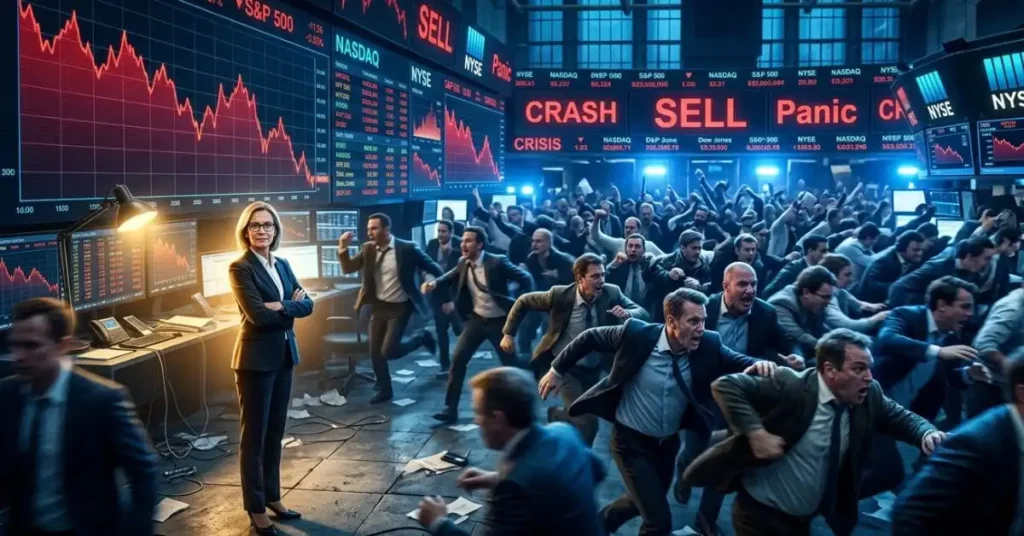
Markets are built on the assumption that prices reflect all available information and that investors, on the whole, act rationally in their own best financial interests. That assumption breaks down in a predictable and often costly way during periods of acute market stress. When prices fall sharply, when headlines turn alarming, and when losses appear on every screen at once, a large portion of the investing population stops making independent decisions. They start doing what everyone else is doing.
This crowd-following tendency is known as herd behaviour, and it is one of the most robustly documented phenomena in behavioural finance. It affects individual investors, professional fund managers, and institutions alike. It has driven some of the most dramatic market events in modern history, from the dot-com bubble and its subsequent crash to the 2008 financial crisis, the March 2020 pandemic sell-off, and the 2021 GameStop short squeeze. In each case, the collective behaviour of investors amplified price movements far beyond what the underlying fundamentals justified.
Understanding why herd behaviour occurs, how to recognise it when it is happening, and what specific strategies can be used to resist it is not merely an academic exercise. For individual investors, the financial consequences of following the herd at the wrong moment can set back a retirement plan by years or lock in losses that patient inaction would have avoided entirely. This guide covers the psychology, the evidence, the history, and the practical tools needed to navigate market stress with greater independence and discipline.
Defining Herd Behaviour in Financial Markets
Herd behaviour in financial markets refers to the tendency for investors to follow the actions of a larger group rather than rely on their own independent analysis. As HeyGoTrade’s behavioural finance guide explains, herd mentality investing occurs when market participants buy or sell primarily based on crowd behaviour rather than fundamentals or a clear plan. The critical feature is that the investment decision is driven by social observation rather than independent evaluation of the underlying asset.
This distinction matters enormously for understanding why herd behaviour is so damaging. When an investor buys a stock because its earnings have grown and its valuation is attractive relative to peers, the decision has a rational foundation that can be evaluated and revised as new information arrives. When an investor buys the same stock because they see others buying it and prices rising, the decision has no independent analytical foundation. Its continuation depends entirely on the crowd continuing to move in the same direction. The moment the crowd turns, there is no fundamental rationale to fall back on.
Research from The Decision Lab’s analysis of herd behaviour in investment places this tendency firmly in evolutionary psychology. Sticking with the group historically increased our ancestors’ survival chances. If everyone around you was running from a predator, questioning the logic was not a luxury you could afford. In modern financial markets, this evolutionary instinct translates into following the crowd’s buying and selling decisions, often to the investor’s significant detriment.
The Psychological Roots of Market Herding
Several overlapping psychological mechanisms drive herd behaviour in financial markets. Understanding each of them separately is valuable because different mechanisms call for different countermeasures. They do not all respond to the same intervention.
Fear of missing out, universally known as FOMO, is the primary driver of herding during market rallies. When an asset class is generating strong returns and media coverage of those returns is widespread, investors who have not participated begin to feel that they are losing something. This feeling is not a rational assessment of the asset’s prospects. It is an emotional response to the observed success of others, amplified by the social proof of watching peers accumulate gains. As The Decision Lab notes, when investors see others buying a particular stock, they often follow suit, fearing they will miss out on potential gains. That fear displaces independent analysis.
Loss aversion operates as the mirror-image driver during market downturns. As documented extensively in behavioural finance research following the work of Kahneman and Tversky, humans feel the pain of financial losses approximately twice as intensely as they feel the pleasure of equivalent gains. When markets fall sharply, this asymmetry creates intense psychological pressure to sell and eliminate the pain, even when the rational response would be to hold or even buy. The herd sells, the selling creates further losses, and the losses intensify the emotional pressure to join the selling, producing a self-reinforcing cascade.
Information cascades add a third psychological layer. When investors observe others making particular decisions and assume those decisions are based on information they do not possess, they rationally defer to the crowd’s apparent judgment. In a world of genuine information asymmetry, this is sometimes a sensible heuristic. During market stress, however, most of the selling is driven by the same emotional mechanisms described above rather than by superior information. Deferring to a crowd that is itself deferring to a crowd produces a cascade of decisions that have no informational foundation.
How Market Stress Amplifies Herding
Herd behaviour is present in markets at all times, but it intensifies dramatically during periods of acute stress. Understanding why stress amplifies herding is critical for investors who want to maintain independent judgment precisely when doing so is most valuable.
Research published in the Advances in Consumer Research journal’s comparative study of herding during financial crises found that herding is usually stronger when the market is stressed or when returns are very high or very poor. The study employed the Cross-Sectional Standard Deviation (CSSD) methodology, which measures how spread out individual stock returns are relative to the overall market return. When this spread narrows during extreme market conditions, it indicates that stocks are behaving more similarly to each other than they typically would, which is a statistical signature of herding. The study found negative and statistically significant coefficients during periods of market stress, confirming that herding intensifies precisely when independent judgment would be most valuable.
The neurological explanation for this intensification is well established. During acute stress, the brain’s fight-or-flight response, governed by the amygdala, becomes dominant over the prefrontal cortex functions responsible for deliberate reasoning and long-term planning. Rapid price declines and alarming financial headlines trigger a genuine stress response that impairs the cognitive functions most needed for independent investment decision-making. Investors under acute stress are not simply choosing to follow the herd. In a meaningful neurological sense, their capacity to do otherwise is temporarily reduced.
Social media and financial news amplify these stress responses by creating a real-time feedback loop between market movements and emotional reactions. Falling prices generate alarming headlines, which trigger emotional responses, which generate more selling, which produces further price declines. This cycle can compress into hours what might previously have taken days or weeks, giving individual investors less time to engage in deliberate reasoning before the emotional pressure to act becomes overwhelming.
Retail vs Institutional Investors: Who Herds More and Why
A common misconception is that herd behaviour is primarily a retail investor problem and that institutional investors, with their professional training and sophisticated analytical frameworks, are largely immune to it. The evidence does not support this comfortable division.
Academic research on herding has documented the phenomenon among mutual fund managers, pension fund trustees, and professional analysts, as well as among retail investors. However, the sources and consequences of herding do differ meaningfully between the two groups, and those differences are worth understanding.
For retail investors, the primary drivers of herding are the emotional and psychological mechanisms described above: FOMO, loss aversion, information cascades, and the social influence of peers and media. As documented in the University of Texas research on herding behaviour in financial markets, retail investors are individual, non-professional investors who buy and sell securities for their personal accounts rather than on behalf of an organisation or institution. They typically rely on publicly available information and may be more susceptible to emotions and media coverage. The emergence of commission-free trading platforms like Robinhood has arguably amplified retail herding by making it easier and faster to act on emotional impulses.
For institutional investors, herding often has a different and more structural origin. Professional fund managers face career risk from underperformance relative to peers. A manager who makes an independent, contrarian bet that subsequently underperforms the herd faces reputational and employment consequences, even if the bet was analytically sound. This creates a rational incentive to herd, even for professionals who understand that the crowd is wrong, because the personal cost of being wrong independently is much higher than the cost of being wrong collectively.
The Role of Social Media and Technology in Modern Herding
The GameStop short squeeze of January 2021 is the defining modern case study in retail investor herd behaviour and is worth examining in detail because it illustrates both the power and the fragility of social media-driven herding at an unprecedented scale.
As described in the University of Texas herding research, GameStop was a struggling video game retailer that was widely regarded as a declining stock during the pandemic. Institutional investors had heavily shorted it, essentially betting on its continued decline. A group of Reddit users, primarily from the r/WallStreetBets forum, began buying the stock, following the lead of a prominent user known as “Roaring Kitty.” The subsequent herd buying drove the stock from around $20 to nearly $500 in a matter of weeks before collapsing back toward its fundamental value.
The GameStop episode illustrates several features of modern social media-driven herding that differ from traditional market crowd behaviour. First, the coordination mechanism was public and explicit rather than implicit. Investors were openly discussing their purchases and encouraging others to join, creating a deliberate social pressure to participate that traditional market herding does not typically involve. Second, the motivations were heterogeneous: some participants genuinely believed in the trade as a short-squeeze opportunity, others were motivated by a desire to inflict financial pain on institutional short-sellers, and others simply followed the crowd. Third, the speed of the episode was unprecedented, with the price movement compressing into days what traditional herding episodes might take months to produce.
The broader technology context extends beyond social media to the trading platforms themselves. Commission-free trading, fractional share ownership, and push notifications from trading apps have collectively reduced the friction between an emotional impulse to buy or sell and the execution of that impulse. As the University of Texas research notes, modern trading platforms like Robinhood have arguably amplified herding behaviours through ease of access, social influence, and gamified interfaces. The gamification element is particularly significant: the visual and interactive design of some platforms rewards frequent trading in ways that reinforce impulsive, crowd-following behaviour rather than disciplined long-term investing.
Historical Episodes of Market Herding and Their Consequences
The GameStop episode is vivid and recent, but it is far from unique. Financial history is punctuated by episodes in which collective investor behaviour produced price movements that bore little relationship to underlying fundamental values. Examining several of these episodes reveals patterns that are remarkably consistent across different eras, asset classes, and market structures.
The dot-com bubble of the late 1990s represents one of the most dramatic and well-documented herding episodes in modern financial history. As internet companies began generating extraordinary returns, capital flooded into the sector regardless of the underlying business viability of individual companies. The mere presence of “.com” in a company name was sufficient to generate investor enthusiasm during the peak of the mania. As behavioural finance research documented by Chavi Behl on Medium notes, during bubbles, the fear of missing out leads investors to overestimate the potential for profits and underestimate the risks involved. This cognitive bias, combined with herd behaviour, fuels the speculative frenzy characteristic of bubbles. The Nasdaq Composite fell approximately 78% from its March 2000 peak to its October 2002 trough, wiping out trillions of dollars of wealth that the herding crowd had bid up.
The 2008 global financial crisis produced the opposite extreme: a herding sell-off of extraordinary breadth and speed. As the mortgage-backed securities market collapsed and the failures of major financial institutions became apparent, investors across virtually all asset classes rushed to sell simultaneously. The cross-sectional correlation of returns across stocks, sectors, and geographies spiked to historically extreme levels as indiscriminate selling replaced asset-specific analysis. High-quality assets were sold alongside distressed ones because the emotional imperative to reduce risk overwhelmed the analytical capacity to distinguish between them.
The March 2020 pandemic sell-off compressed a similar dynamic into a matter of weeks. The S&P 500 fell 34% in 33 days, one of the fastest declines in market history, driven by uncertainty about the economic consequences of COVID-19. Investors who sold during the downturn and waited for certainty before re-entering missed one of the fastest recoveries in history, with the index recovering its losses within six months. The cost of following the panicking herd out of the market was borne entirely by those who sold, not by the market itself.
The Cross-Sectional Standard Deviation: How Academics Measure Herding
For those interested in the methodological tools used to detect herding, the Cross-Sectional Standard Deviation (CSSD) approach developed by Christie and Huang in 1995 provides a conceptually accessible framework. Understanding the measurement approach helps clarify what herding actually looks like in the data and why it is so reliably concentrated during periods of market stress.
The CSSD measures how dispersed individual stock returns are relative to the overall market return at any given time. In normal market conditions, individual stocks have varying returns that reflect their specific fundamentals, risk profiles, and sector dynamics. The dispersion of returns around the market average is relatively wide. During herding episodes, however, individual stocks tend to move more uniformly with the market, producing a narrower dispersion of returns. The CSSD shrinks during herding because stocks that would normally behave differently are being driven by the same crowd behaviour rather than their individual characteristics.
As the Advances in Consumer Research herding study explains, during times of market stress, a significantly positive number for the CSSD would show no herding and instead indicate increasing dispersion, according to rational asset pricing theories. On the other hand, considerably negative values for these coefficients suggest less dispersion in extreme market conditions, which is consistent with herding behaviour. The study found negative and statistically significant herding coefficients during the 2019 to 2021 period, a window that included both the pandemic sell-off and the subsequent recovery, confirming that herding was concentrated in periods of extreme market movement.
This measurement framework is important for individual investors not because they need to calculate CSSD themselves, but because it provides a conceptual model for recognising herding when they observe it. When stocks across completely different sectors and fundamentals start moving together with unusual synchrony, it is a signal that crowd behaviour is driving prices rather than fundamental analysis.
How Herding Differs During Bull and Bear Markets
Herd behaviour manifests differently in bull and bear markets, and the asymmetry between these two forms has specific implications for how investors should calibrate their defences against each.
Upside herding, the kind that drives bubbles, tends to develop gradually. The initial price increase of an asset attracts attention from early adopters who have done substantive analysis. As prices rise and returns are reported, a second wave of investors joins based partly on the fundamental case and partly on the social proof of observing early gains. A third wave follows based primarily on the social proof and the fear of missing out, with progressively less connection to the underlying fundamentals. Each wave validates the next by producing further price increases. This gradual escalation can persist for years, making it extraordinarily difficult for any individual investor to resist participation without accepting the social and financial cost of watching others appear to prosper from their involvement.
Downside herding, the kind that deepens crashes, tends to develop faster. As behavioural finance analysis describes, as prices begin to fall, investors rush to sell their assets to avoid further losses. This panic selling can cause a rapid and severe decline in market prices, exacerbating the crash. Just as herd behaviour drives bubbles upward, it drives crashes downward. Investors follow the crowd in selling off assets, amplifying the downward momentum and creating a self-fulfilling prophecy of declining prices.
The speed asymmetry between upside and downside herding has a practical implication: defensive preparation for downside herding must be done in advance, because the window during which an investor can make a calm, deliberate decision to hold rather than follow the crowd is much shorter during a crash than during a bubble. Plans made during a crisis are almost always of lower quality than plans made before one.
The Social Proof Bias and Its Market Consequences
Social proof is the psychological principle, documented extensively by Robert Cialdini, that people look to the behaviour of others as a guide for their own actions, particularly in situations of uncertainty. In financial markets, social proof manifests as the tendency to infer the quality of an investment from the observed behaviour of other investors rather than from independent analysis of the investment’s characteristics.
The problem with applying social proof in financial markets is that the crowd’s behaviour reflects its collective psychological state as much as any informational advantage. During periods of market stress, the crowd is typically in a state of fear, and its selling behaviour reflects that fear rather than a superior assessment of fundamental value. An investor who uses the crowd’s selling as social proof that they should sell too is deferring to a crowd whose judgment is impaired by the same emotional mechanisms that make independent judgment difficult in the first place.
Social proof is particularly powerful in the era of social media investing because the crowd’s behaviour is now visible in real time and on an enormous scale. Reddit forums, Twitter feeds, financial news tickers, and brokerage platform activity feeds all make the crowd’s actions continuously visible and psychologically salient. The constant visibility of what others are doing creates a persistent social proof signal that makes independent judgment progressively harder to maintain.
Resources from Investopedia’s herd instinct analysis and the CFA Institute’s Financial Analysts Journal document the social proof mechanism in financial markets in detail, providing both the conceptual framework and the empirical evidence for understanding why even sophisticated investors are susceptible to it during extreme market conditions.
Availability Bias and Recency Bias: Cognitive Fuel for Herding
Herd behaviour does not operate in isolation. It is consistently amplified by several related cognitive biases that make the crowd’s recent behaviour seem more informative and more relevant than it actually is.
Availability bias causes investors to assign disproportionate weight to information that is cognitively accessible, which typically means recent and emotionally vivid information. During a market crash, the losses being reported across financial media are extremely vivid and cognitively accessible. The historical data showing that patient investors who held through previous crashes recovered their losses and went on to generate strong long-term returns is also true, but it is less vivid and less accessible. The brain systematically underweights the historical pattern in favour of the available current information, making the crash feel more permanent and more catastrophic than it is likely to be.
Recency bias compounds this effect by causing investors to extrapolate recent trends forward. A market that has fallen 20% in three weeks feels to many investors like a market that will continue falling, even though the historical evidence strongly suggests the opposite. The recency of the decline makes it psychologically dominant over the longer historical context that would support a more optimistic assessment. This extrapolation tendency is a direct contributor to selling at market bottoms, which is precisely when the historical evidence most strongly argues for holding or buying.
Anchoring bias also plays a role, particularly in the downside herding context. Investors who bought an asset at $100 and watched it fall to $70 are anchored to the $100 price as a reference point that affects their judgment about whether $70 is a reasonable current value. This anchoring can produce irrational selling decisions, as investors focus on the distance from the anchor rather than the absolute merit of the investment at current prices. The combination of anchoring and loss aversion makes investors disproportionately likely to sell losing positions precisely when the rational case for holding or adding to them is strongest.
Distinguishing Rational Selling from Emotional Herding
Not all selling during market stress is herding. Not all crowd behaviour is irrational. Distinguishing between selling that is genuinely rational and selling that is emotionally driven crowd-following is one of the most important and difficult judgment calls in investing, and it requires a clear framework rather than simple willpower.
Selling is rational when one or more of the following conditions are met: the fundamental investment thesis that justified the original purchase has been invalidated by new information, the investment represents a risk concentration that poses a genuine threat to the investor’s financial security if it declines further, a rebalancing plan established before the market stress requires trimming the position, or the funds are needed in the short term and the investment was improperly placed in a risk asset given that time horizon.
Selling is herding when the primary driver is any of the following: the investment has declined in price and the decline feels painful, other investors appear to be selling and that creates pressure to do the same, media coverage of the market decline has made holding the position feel psychologically uncomfortable, or there is a vague sense that things will get worse without a specific analytical basis for that view.
The discipline required to make this distinction honestly, in real time, under the psychological pressure of a declining portfolio, is considerable. Having the distinction written down as part of an investment policy statement, prepared during a period of calm, makes the application of this framework significantly easier during the moment of stress when it is most needed.
The Warren Buffett Approach: Contrarianism as a Herd Resistance Strategy
The most famous articulation of the anti-herd investment philosophy belongs to Warren Buffett, whose instruction to be “fearful when others are greedy and greedy when others are fearful” captures the behavioural finance insight that the crowd’s emotional state during market stress tends to produce prices that are systematically divorced from fundamental value in predictable directions.
Buffett’s approach is not simply contrarianism for its own sake. It is a disciplined application of fundamental value analysis that is specifically designed to take advantage of the mispricings that herd behaviour creates. When the herding crowd sells indiscriminately during market stress, driving prices below fundamental value, a disciplined fundamental investor has an opportunity to buy. When the herding crowd buys indiscriminately during rallies, driving prices above fundamental value, the same investor has an opportunity to sell or at minimum to avoid buying.
Implementing this approach requires two things that are straightforwardly described but psychologically demanding in practice. The first is a genuine analytical framework for assessing fundamental value that does not depend on market price as an input. The second is the psychological capacity to act independently of the crowd when the crowd’s emotional pressure is most intense. Both of these requirements are addressed in the practical strategies section below.
Resources from Berkshire Hathaway’s annual letters to shareholders provide the most detailed available articulation of the analytical and psychological framework behind disciplined contrarian investing. They are among the most valuable free resources in financial education for any investor seeking to develop the capacity to maintain independent judgment during market stress.
Practical Strategy One: Build an Investment Policy Statement
An Investment Policy Statement (IPS) is a written document that defines your investment objectives, risk tolerance, asset allocation targets, and the specific conditions under which you will buy, sell, or rebalance your portfolio. Writing one before any market crisis is one of the single most effective defences against emotional herding during one.
The psychological mechanism behind this strategy is straightforward. During market stress, the emotional pressure to follow the crowd is most intense precisely when the capacity for deliberate reasoning is most impaired. A written policy created during a period of calm and clear thinking provides an alternative to in-the-moment emotional judgment. Following the written plan is significantly easier than independently generating a rational response to market stress in the heat of the moment.
An effective IPS for a retail investor should include: a clear statement of investment goals and time horizons, a defined asset allocation and the acceptable range around each target, the specific conditions that would justify deviating from the asset allocation, a rebalancing trigger that specifies when and how to rebalance, and an explicit statement of the investor’s intention to hold through market downturns of a defined magnitude without selling. The last element is particularly important because it makes the commitment to holding concrete and pre-specified, rather than dependent on willpower, during the actual crisis.
Resources from Vanguard’s investor education centre and the CFA Institute provide templates and guidance for building an investment policy statement appropriate for individual investors. Fidelity’s investment policy statement guide offers an accessible starting point for investors who have not previously formalised their approach.
Practical Strategy Two: Automate Investment Decisions Where Possible
One of the most reliable ways to avoid emotional herding is to remove the opportunity for emotional decision-making from the investment process. Automating regular contributions, dividend reinvestment, and rebalancing eliminates the in-the-moment judgment calls that are most vulnerable to emotional interference.
Dollar-cost averaging, the practice of investing a fixed dollar amount at regular intervals regardless of current market price, is the most widely applicable automation strategy. It ensures that contributions continue during market downturns, automatically buying more shares at lower prices without requiring any active decision during the emotionally difficult period of a market decline. The investor who has automated a $500 monthly contribution to an index fund continues to invest at the same rate, whether the market is up 20% or down 30%, which tends to produce superior long-term outcomes compared to emotionally discretionary contribution timing.
Automatic rebalancing, offered by many brokerage platforms and robo-advisors, including Betterment, Wealthfront, and Schwab Intelligent Portfolios, enforces a disciplined buy-low-sell-high behaviour pattern without requiring any active judgment during market stress. When equities decline and fall below their target allocation, automatic rebalancing purchases more equities, implementing the contrarian buying that emotional investors consistently fail to do voluntarily.
Practical Strategy Three: Limit Your Exposure to Financial Media During Crises
Financial news media are structurally incentivised to cover market stress in ways that amplify emotional responses rather than support calm, rational decision-making. Alarming headlines generate clicks and viewership. Calm, contextualised analysis that concludes “stay the course” is not compelling content. The predictable result is that financial media during market crises tends to escalate emotional intensity rather than reduce it.
The practical implication is simple but psychologically demanding: reduce your consumption of financial news during market stress, not increase it. The additional information provided by intensive news monitoring during a crisis is rarely actionable for a long-term investor and consistently increases the emotional pressure to follow the herding crowd. The investor who checks their portfolio weekly during a crash makes better decisions, on average, than the investor who checks it hourly.
This recommendation runs counter to the instinct that more information produces better decisions, which is why it requires a deliberate commitment rather than just good intentions. Consider building a specific media protocol into your investment policy statement: during periods when the market has declined by more than a specified percentage, you will check your portfolio no more than once per week and will read no more than one financial news article per day. This kind of pre-committed protocol is significantly more effective than trying to exercise willpower in the moment.
Practical Strategy Four: Distinguish Between Your Financial Plan and Market Prices
One of the most psychologically powerful reframes available to long-term investors is to separate the question of how their financial plan is performing from the question of how the market is performing at any given moment. These are not the same question, even though declining market prices make them feel identical.
A long-term financial plan is built on the expected return of a diversified portfolio over a horizon of 10, 20, or 30 years. Market prices at any given moment are a snapshot of the crowd’s current emotional state as much as they are a reflection of the fundamental value of the underlying assets. A 30% market decline in a given year does not reduce the expected 30-year return of a diversified portfolio by 30%. It changes the entry point for future contributions and potentially accelerates the timeline to recovery through the compounding effect of reinvested dividends and continued contributions at lower prices.
Framing the question as “has my long-term financial plan changed?” rather than “has my portfolio value declined?” consistently produces more rational responses to market stress. The answer to the first question is usually no, unless the specific circumstances that led to the market decline have also changed the investor’s income, time horizon, or risk tolerance. When the answer is no, holding the course is the appropriate decision, and that decision is much easier to reach when the question is framed correctly.
The Importance of Diversification as a Herding Defence
Proper diversification across asset classes, geographies, and sectors provides a structural defence against the worst consequences of herding behaviour, even for investors who are unable to maintain perfect emotional discipline during market stress.
A well-diversified portfolio includes assets whose prices are not perfectly correlated with each other, meaning that when one asset class is subject to acute herding-driven selling, others may be less affected or may even benefit from the flight-to-safety dynamics that accompany equity market stress. High-quality government bonds, for instance, have historically increased in price during acute equity market sell-offs as investors fled to safety, providing a natural counterweight to equity losses that reduces the portfolio-level drawdown and the associated emotional pressure to act.
Geographic diversification provides a similar benefit. Herding episodes are typically most acute in the markets closest to the source of the stress, with more distant markets affected to a lesser degree. An investor with exposure across US, international developed, and emerging market equities is less exposed to the full force of a US-specific herding episode than one concentrated in domestic equities.
Low-cost index funds and ETFs from providers like Vanguard, BlackRock, iShares, and Fidelity provide the broadest possible diversification at the lowest cost, which makes them particularly appropriate vehicles for investors seeking to build herding resistance into the structure of their portfolio rather than relying on behavioural discipline alone.
The Long-Term Cost of Following the Herd
One of the most persuasive arguments for developing the capacity to resist herd behaviour is the quantified long-term cost of failing to do so. The gap between the returns that markets deliver and the returns that individual investors actually capture due to poor timing decisions, largely driven by herding behaviour, has been extensively documented.
DALBAR, a financial research firm, publishes an annual Quantitative Analysis of Investor Behaviour (QAIB) report that compares the returns earned by actual investors with the returns generated by the indices they invest in. Consistently across multiple decades of analysis, the average equity fund investor has earned significantly less than the market return due to the systematic pattern of buying after strong performance and selling during downturns. The gap has historically been several percentage points per year, which compounds to a dramatically different wealth outcome over a multi-decade investment horizon.
To quantify the impact concretely: an investor who earned the market return of approximately 10% annually on a $100,000 initial investment over 30 years would accumulate approximately $1.74 million. An investor who earned 7% annually due to behaviour-driven timing losses on the same initial investment would accumulate approximately $761,000, less than half as much. The difference is not market risk or manager skill. It is the behaviorally driven pattern of following the herd at the wrong moments.
The DALBAR investor behaviour research, supplemented by academic work from researchers like Terrance Odean at UC Berkeley’s Haas School of Business, provides the most robust quantification of the long-term cost of herd-driven investing behaviour for anyone seeking to understand the full financial stakes of this issue.
Can Experience and Education Reduce Herding?
A natural question is whether experience, financial education, or professional training provides meaningful protection against herding during market stress. The evidence is mixed but instructive.
Experience with previous market stress events does appear to reduce herding behaviour in some contexts. Investors who lived through and held their positions during the 2008 financial crisis, and subsequently observed the strong recovery, have a more emotionally accessible counter-narrative to the stress of a new market decline than those experiencing their first significant drawdown. The availability of this prior positive experience can partially counteract the availability bias toward recent negative information during subsequent crises.
Financial education that focuses on historical market returns, the costs of market timing, and the behavioural mechanisms behind herding also appears to have some protective effect. As HeyGoTrade’s behavioural finance analysis notes, experience does not eliminate herd behaviour, especially during extreme market conditions. However, investors who follow a clear plan, focus on data, and are willing to act independently are better positioned to resist herding when it matters most.
The most honest assessment is that education and experience reduce herding but do not eliminate it. Even professional investors with decades of experience and sophisticated analytical frameworks exhibit herding behaviour during acute market stress. This is why structural defences, including written investment policies, automated investment mechanisms, and diversified portfolios, are so important. They provide herd resistance that does not depend on behavioural discipline alone.
Recognising Herding in Real Time: Practical Warning Signs
Being able to identify when herding dynamics are driving the market you are invested in is a valuable skill that reduces both the risk of being swept up in a bubble and the risk of panic-selling during a crash. Several practical warning signs are consistently present during significant herding episodes.
During upside herding, the warning signs include: assets in a specific sector or category generating returns far above historical norms for sustained periods, widespread media coverage celebrating individual investors who made large gains, the emergence of non-traditional investors entering the market specifically because of the rising prices, significant expansion of valuations beyond historical ranges without a corresponding change in fundamentals, and conversations about the asset class becoming common in social settings among people who do not normally discuss investing.
During downside herding, the warning signs include: prices declining more rapidly than the underlying earnings or cash flow deterioration would justify, extremely high correlation of returns across sectors and geographies that normally behave independently, trading volume substantially above historical norms, media coverage of the decline that is uniformly pessimistic without substantive engagement with the bullish case, and widespread capitulation language in financial commentary suggesting that the decline will continue indefinitely.
When these warning signs are present, the appropriate response is not necessarily to make dramatic portfolio changes in either direction. Rather, it is to be more deliberate about any active decision you make, to check it against your investment policy statement, and to ask specifically whether the action you are considering is driven by your analytical framework or by the emotional pressure of observing the crowd’s behaviour.
Building a Long-Term Mindset as the Foundation of Herd Resistance
All of the specific strategies discussed in this guide rest on a foundational mindset that views market volatility as a normal feature of long-term wealth accumulation rather than as a threat to be responded to in real time. Developing and genuinely internalising this mindset is the deepest and most durable form of herd resistance available to any investor.
The historical record of equity markets is unambiguous on this point. Every significant market decline in recorded history has been followed by a recovery. The investors who retained their positions through the decline captured the recovery. Those who followed the herding crowd out of the market at the bottom did not. The distribution of outcomes between these two groups, measured over long time horizons, is not close.
This historical perspective does not guarantee that any specific future decline will be followed by a recovery. It does, however, establish that the prior probability of recovery is very high and that the prior probability of permanent loss from a diversified, long-horizon equity portfolio is very low. An investor who genuinely internalises this evidence can approach market stress with a fundamentally different emotional orientation than one who experiences each decline as a potentially permanent loss.
For ongoing education on behavioural finance, herd behaviour, and disciplined investing, explore resources from The Decision Lab, the CFA Institute’s Financial Analysts Journal, and foundational behavioural finance texts, including Daniel Kahneman’s “Thinking, Fast and Slow” and Richard Thaler’s “Misbehaving.” Additionally, tools like Portfolio Visualizer allow investors to backtest their specific portfolio’s historical behaviour during past market stress events, providing the empirical basis for a more informed and resilient long-term investment mindset.
Spend some time for your future.
To deepen your understanding of today’s evolving financial landscape, we recommend exploring the following articles:
The Founder’s Guide to Pivoting a Startup
The Algo Trading Blueprint: Backtest Like a Scientist
Roth IRA vs 401(k): Retirement Strategy for Lower Lifetime Taxes
How to Calculate Inflation and Protect Your Money
Explore these articles to get a grasp on the new changes in the financial world.
Disclaimer
The content in this article is for general informational and educational purposes only. It does not constitute financial, investment, or professional advice. Investment markets carry significant risk, and past performance does not guarantee future results. Individual financial circumstances and risk tolerances vary widely. Always consult a qualified financial advisor before making investment decisions. The author and publisher accept no liability for actions taken based on the content of this article.
References
- University of Texas Libraries. “Herding Behaviour in Financial Markets: An Analysis of Retail and Institutional Investors.” https://repositories.lib.utexas.edu/bitstreams/b3e73805-afb9-4f63-8d6d-fadc529dabca/download
- Advances in Consumer Research. “Investor Herding Behaviour During Financial Crises: A Comparative Study.” https://acr-journal.com/article/investor-herding-behaviour-during-financial-crises-a-comparative-study-1560/
- Behl, C. “How Do Investors React to Market Bubbles and Crashes?” Medium. https://medium.com/@ChaviBehl/how-do-investors-react-to-market-bubbles-and-crashes-and-what-are-the-underlying-behavioral-59669d0379af
- HeyGoTrade. “Herd Mentality Explained: Examples and Risks.” https://www.heygotrade.com/en/blog/herd-mentality-in-investing-and-trading
- The Decision Lab. “The Sheep in the Stock Market: How Herd Behaviour Shapes Investment Trends.” https://thedecisionlab.com/insights/finance/the-sheep-in-the-stock-market
- Christie, W. G., and Huang, R. D. “Following the Pied Piper: Do Individual Returns Herd Around the Market?” Financial Analysts Journal, 51(4), 1995.
- Kahneman, D. “Thinking, Fast and Slow.” Farrar, Straus and Giroux, 2011.
- Thaler, R. H. “Misbehaving: The Making of Behavioural Economics.” W. W. Norton and Company, 2015.