
Quirky Journal

Brand Trust Collapse After One PR Crisis Case Studies, Hard Data, and a Survival Playbook

PR Crisis Playbook: Survive Trust Collapse

Trust takes years to build but hours to destroy in the social media era. A Harvard Business Review study ties trust breaches to 15% average stock declines, while 71% of consumers ditch untrusted brands forever per Edelman. This guide breaks down the shock-scrutiny-scepticism arc of trust crashes, dissects real case studies, and delivers a playbook to prevent, respond, and recover from reputational disasters that hit the bottom line hard.

PR Crisis Playbook: Survive Trust Collapse Read More »

How to Choose the Right Retirement Account (401k, IRA, TFSA, RRSP)

How to Choose the Right Retirement Account (401k, IRA, TFSA, RRSP)

The retirement account you choose—401(k), IRA, TFSA, or RRSP—can easily make a five‑ or six‑figure difference to your future net worth. This guide breaks down how each account works in plain English, compares tax treatment (deduct now vs tax‑free later), contribution limits, withdrawal rules, and ideal use cases, and explains how cross‑border workers can intelligently combine accounts instead of guessing or leaving tax advantages on the table.

How to Choose the Right Retirement Account (401k, IRA, TFSA, RRSP) Read More »

India in International Finance How the World's Fastest-Growing Major Economy Is Reshaping Global Capital Markets

India in International Finance: How the World’s Fastest-Growing Major Economy Is Reshaping Global Capital Markets

India’s $4.2 trillion economy expanded at 6.5% while G7 nations averaged under 2%, positioning it as the fastest-growing major market with fiscal space rare among peers. This analysis covers surging equity markets, FTSE Russell bond index entry, retail investor boom and structural strengths making India central to global capital allocation.

India in International Finance: How the World’s Fastest-Growing Major Economy Is Reshaping Global Capital Markets Read More »

Starting a Business in 2026: The Essential Checklist for Modern Founders

Launching a Business in 2026: No-Nonsense Playbook

Starting a business today is paradoxical: it has never been easier to launch, yet never harder to launch well. Low-cost tools, AI, and no-code platforms can get you online in a weekend, but regulatory obligations, fierce digital competition, and rising customer expectations mean guesswork is more expensive than ever. This guide turns the chaos into a clear, step-by-step checklist for modern founders—from validating demand with real data to choosing the right legal structure, building a credible business plan, and setting up compliant operations—so you can launch in 2026 with fewer blind spots and far better odds of survival.

Launching a Business in 2026: No-Nonsense Playbook Read More »

War Economy Chapter 11 What Actually Happens to Stock Markets When War Begins

War Economy Chapter 11: What Actually Happens to Stock Markets When War Begins

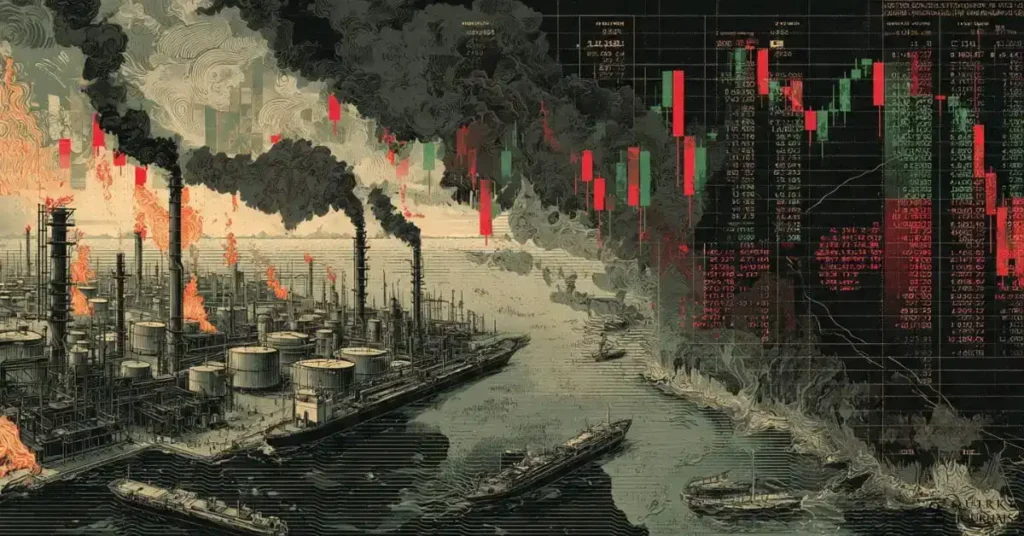
Whenever war breaks out, headlines scream panic while history quietly tells a different story. Across conflicts from World War II to Iraq and Ukraine, equity markets have tended to fall in the tense run‑up to war, then often stabilise or even rise once fighting actually begins. The key is the “war puzzle”: markets price uncertainty more harshly than bad news itself. When the probability cloud collapses into a known conflict, investors can finally quantify risks, capital rotates between sectors instead of fleeing entirely, and long‑term trendlines reassert themselves. This chapter unpacks that pattern, shows how different asset classes behave, and offers a practical playbook for staying invested—rather than reacting emotionally—when the next geopolitical shock hits.

War Economy Chapter 11: What Actually Happens to Stock Markets When War Begins Read More »

The Tesla Killer How BYD's Cheap Strategy Built a Trillion-Dollar EV Empire

From $300K Startup to EV King: BYD’s Vertical Integration Victory

Wang Chuanfu started BYD with a $300K loan copying batteries cheaper than giants like Sony. Vertical integration—from lithium mines to chips—saves 15-30% per car, enabling $7,800 Seagulls while Tesla starts at $39K. Blade Battery 2.0 triples lifespan to 1.2M km with 8C charging. Hybrids added 1.8M sales in 2024. Global factories in Thailand, Hungary, Brazil dodge tariffs. BYD’s manufacturing moat beat Tesla’s software bet.

From $300K Startup to EV King: BYD’s Vertical Integration Victory Read More »

How Power Laws Predict Bitcoin's Price Floor

How Power Laws Predict Bitcoin’s Price Floor

Unlike sentiment-driven models, the Bitcoin Power Law—developed by astrophysicist Giovanni Santostasi—treats price as a power function of time since the 2009 genesis block, plotting as a straight line on log-log scales with 94% historical fit. It currently shows a central trend near $122K and support floor around $51K, suggesting bottoms never breach this line and growth follows natural scaling laws like cities or earthquakes. This guide explains the math (Price ≈ A × time^5.82), its unprecedented accuracy, and what it forecasts for future cycles.

How Power Laws Predict Bitcoin’s Price Floor Read More »

Salary Negotiation Scripts That Actually Work Data-Backed Strategies for Remote Roles

Salary Negotiation Scripts That Actually Work: Data-Backed Strategies for Remote Roles

Remote work has blown up traditional pay playbooks, and “just be grateful for the offer” is now an expensive mistake. This guide shows you exactly what to say when you get a low initial offer, when a company tries to cut your pay for moving, or when you have a better competing offer—and how to back every script with real market data instead of vague “I deserve more” arguments. You’ll learn how to anchor high with credible ranges, negotiate total compensation (salary, equity, stipends, PTO) for remote roles, and avoid common mistakes like negotiating too early or framing requests around personal need rather than business value.

Salary Negotiation Scripts That Actually Work: Data-Backed Strategies for Remote Roles Read More »

Value Proposition Design for Tech Startups From Unmet Need to Scalable Revenue

Value Proposition Design for Tech Startups: From Unmet Need to Scalable Revenue

Most founders rush to build product before they can answer the only question that really matters: why would anyone pay for this? That missing step—defining a clear value proposition and matching it with the right business model—is why so many startups ship features nobody needs, target the wrong buyer, or can’t explain how they’ll make money. This guide breaks value proposition design down into concrete questions and frameworks, then connects it to business model choices like pricing, packaging, and revenue mechanics, drawing on leading startup curricula and practitioner playbooks so you can design the economics before the code.

Value Proposition Design for Tech Startups: From Unmet Need to Scalable Revenue Read More »

War Economy Chapter 10: The Cost of Political Ego: When Decisions Override Economics

War Economy Chapter 10: The Cost of Political Ego: When Decisions Override Economics

The Cost of Political Ego: When Decisions Override Economics in War
Throughout history, wars have been initiated, prolonged, and escalated not by rational economic calculation, but by the unbending pride of leaders who couldn’t admit error. The phenomenon transcends culture, ideology, and era. From World War I’s trench warfare stalemate to the decades-long War on Terror, political egos have consistently overridden economic reality — transforming what should be calculated risk assessments into catastrophic wealth destruction on scales that beggar imagination.
The economic consequences of ego-driven warfare extend far beyond battlefield costs. They encompass lost human capital, environmental devastation that spans generations, technological development diverted from productive civilian uses, and institutional inertia that prevents peace dividends from ever materialising. Moreover, in our interconnected global economy, a single leader’s pride can trigger inflation cascades affecting populations thousands of miles from any combat zone.
This analysis dissects the true economic costs of political ego in warfare. We’ll examine the sunk cost fallacy that keeps conflicts grinding forward long after victory becomes impossible, the overconfidence bias that makes leaders grotesquely underestimate war duration and costs, and the brain drain that creates economic collapse persisting decades after peace treaties are signed. Understanding these dynamics matters because they continue operating today — and the next major conflict driven by political ego may already be in its planning stages.
The Sunk Cost Fallacy: ‘Too Much Sacrificed to Quit Now’
Perhaps no cognitive bias has proven more deadly in military history than the sunk cost fallacy. The logic appears deceptively compelling: ‘We’ve already sacrificed so much — 7,000 soldiers dead, $2 trillion spent. How can we quit now and let those deaths mean nothing?’ This argument surfaces reliably whenever withdrawal from failing conflicts is proposed. It sounds honourable. It sounds patriotic. It’s also completely irrational from any economic perspective.
The economic principle is straightforward: sunk costs are expenditures that cannot be recovered once made. Therefore, rational decision-making should ignore them entirely and focus only on future costs versus future benefits. If continuing a war will cost another $500 billion with minimal probability of achieving stated objectives, the $2 trillion already spent is irrelevant to whether continuation makes sense. Past costs cannot be changed. Only future costs can be avoided.
Yet political leaders repeatedly reject this logic. As military analyst Carl Forsling observes, ‘The military, more than any other institution, lives by sunk costs. Once a man is lost, seizing a piece of ground, it becomes hallowed. How can we give this up after all we’ve sacrificed?’ This emotional attachment transforms military decisions into monuments to past sacrifice rather than rational assessments of future options.

War Economy Chapter 10: The Cost of Political Ego: When Decisions Override Economics Read More »