
Quirky Journal

The New Arms Race Is Defence Stocks 2026's Big Bet

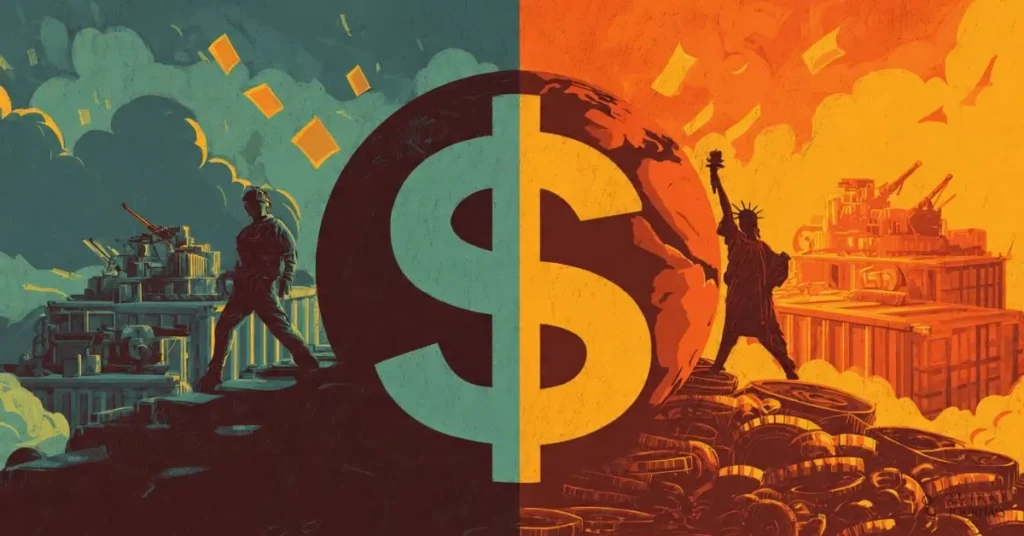
Defence Stocks in 2026: Geopolitical Tailwind or Late-Stage Arms Race?

Global military budgets have exploded past $2.4 trillion, with a $900.6 billion Pentagon authorization, European rearmament, and an Asia–Pacific arms race turning defence into one of 2026’s most powerful secular themes. But this is not the old steel-and-tanks trade: AI-enabled electronic warfare, autonomous drones, hypersonics, space assets, and directed-energy weapons are driving a technology super-cycle that benefits primes like Lockheed, Raytheon, and Northrop alongside growth names such as Kratos and AeroVironment. For investors, that means genuine multi-year visibility—yet also stretched valuations, dependence on government budgets, and the ever-present risk of a “peace dividend” selloff, making position sizing, ETF usage, and clear risk limits just as important as picking the right contractors in this new arms race.

Defence Stocks in 2026: Geopolitical Tailwind or Late-Stage Arms Race? Read More »

Why Big Firms Are Dumping Crypto: The Impact of the U.S. Debt Crisis Explained

Why Big Firms Are Dumping Crypto: The U.S. Debt Crisis No One Priced In

Bitcoin’s 30% slide from $126,000 to the high $80Ks isn’t just about Fed policy—it’s about Washington’s $38 trillion debt, $3 trillion of bonds maturing in 2026, and institutions scrambling for dollars. As real Treasury yields rise and refinancing costs spike, leveraged “digital asset treasury” firms, miners, and hedge funds are being forced to dump crypto to meet debt, margin, and funding obligations, while stablecoins quietly sit on over $100 billion of short-term Treasuries that link crypto directly to the U.S. bond market. This sell pressure is mechanical, not ideological: big players still believe in the long-term crypto thesis, but the debt crisis is forcing them to raise cash now, creating pain for overleveraged holders and opportunity for disciplined, long-horizon investors.

Why Big Firms Are Dumping Crypto: The U.S. Debt Crisis No One Priced In Read More »

Goodbye, Data Plans Why Your Next Smartphone Might Come With Built-in LoRa

Goodbye, Data Plans: Why Your Next Smartphone Might Come With Built-in LoRa

Forget $50/mo data plans. LoRa radios in phones (Spec5 Spectre) + Meshtastic create 1-10mi mesh networks for free encrypted texts/GPS sharing. No towers needed—devices relay messages. Urban: 1-3mi/node. Rural: 5-10mi+. Solar relays extend 30mi+. Hike/disasters/privacy/rural without cellular dependency. USB adapters upgrade existing phones $30-60.

Goodbye, Data Plans: Why Your Next Smartphone Might Come With Built-in LoRa Read More »

The Great Rotation Why Investors Are Finally Ditching Big Tech for Small Caps

Great Rotation: Small Caps Surge as Investors Dump Magnificent 7

After 10 years of Big Tech dominance, capital rotates to small/mid-caps: Russell 2000 +7% YTD, 14-session win streak not seen since ’96. Lower rates cut small cap debt costs, Trump tax cuts boost earnings, AI productivity helps small biz compete. Equal-weight S&P (RSP inflows $4B) outperforms cap-weighted. Regional banks, industrials, energy lead as valuations normalise.

Great Rotation: Small Caps Surge as Investors Dump Magnificent 7 Read More »

Set It and Forget It How Smart Investors Simplify Decisions Without Losing Control

Set It and Forget It: How Smart Investors Simplify Decisions Without Losing Control

Most investors don’t lose money because they pick terrible assets—they lose because constant decisions lead to stress, overtrading, and emotional mistakes. By automating contributions, rebalancing, and tax optimisation through robo-advisors or simple rules, you cut 90% of the noise while still controlling your goals, risk level, and big-picture strategy. A “set it and forget it” system doesn’t mean abdication; it’s how disciplined investors protect returns and reclaim their time.

Set It and Forget It: How Smart Investors Simplify Decisions Without Losing Control Read More »

The $100k Net Worth Blueprint How to Hit Six Figures on a $60k Salary

The $100k Net Worth Blueprint: How to Hit Six Figures on a $60k Salary

A $60k salary feels like “real money” until taxes, rent, and loans hit—leaving roughly $3,900/month to work with. Yet plenty of people still reach $100k net worth on similar incomes by tracking every dollar, using a 50/30/20 framework, building a $3–5k emergency fund, grabbing every dollar of employer match, and automating $500–$800/month into simple index funds for 8–12 years—long enough for compounding to finally make the money start working harder than you do.

The $100k Net Worth Blueprint: How to Hit Six Figures on a $60k Salary Read More »